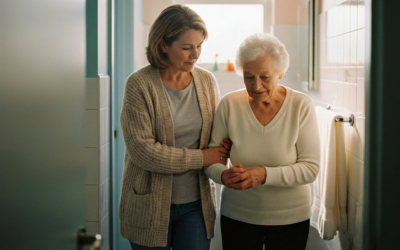
The bathroom can become one of the most dangerous rooms in the home for someone living with Alzheimer’s disease or another dementia.
Wet floors, hard surfaces, poor lighting, getting on and off the toilet, and stepping into a shower or tub can already increase the risk of falls and injuries.
But dementia can add challenges we don’t always see.
Changes in the brain can make it harder to judge distances, recognize hazards, follow several steps in order, maintain balance, or understand what something in the bathroom is for.
Your loved one may even see and understand a familiar bathroom differently than they once did.
That’s why dementia bathroom safety isn’t only about adding a grab bar.
It’s about looking at the bathroom through the eyes of the person living with dementia and asking:
What could be confusing, frightening, or unsafe for them today?
Why Bathrooms Become More Dangerous With Dementia
Think about something as ordinary as stepping into the shower.
The brain has to recognize where the shower begins, judge the height of the threshold, lift one foot, balance on the other, find something safe to hold, adjust to a different surface, and then move safely on a wet floor.
Most of us do these things without thinking about them.
A person with dementia may have difficulty with one or several parts of that process.
Dementia can affect:
- Vision and depth perception
- Balance and coordination
- Judgment
- Processing speed
- Memory
- Problem-solving
- Ability to follow steps in order
- Ability to recognize objects and surroundings
- Communication
Physical abilities may also change because of weakness, pain, illness, medications, or other health conditions.
A bathroom that was safe six months ago may not be safe today.
That’s why bathroom safety needs to be reassessed as your loved one’s abilities change.
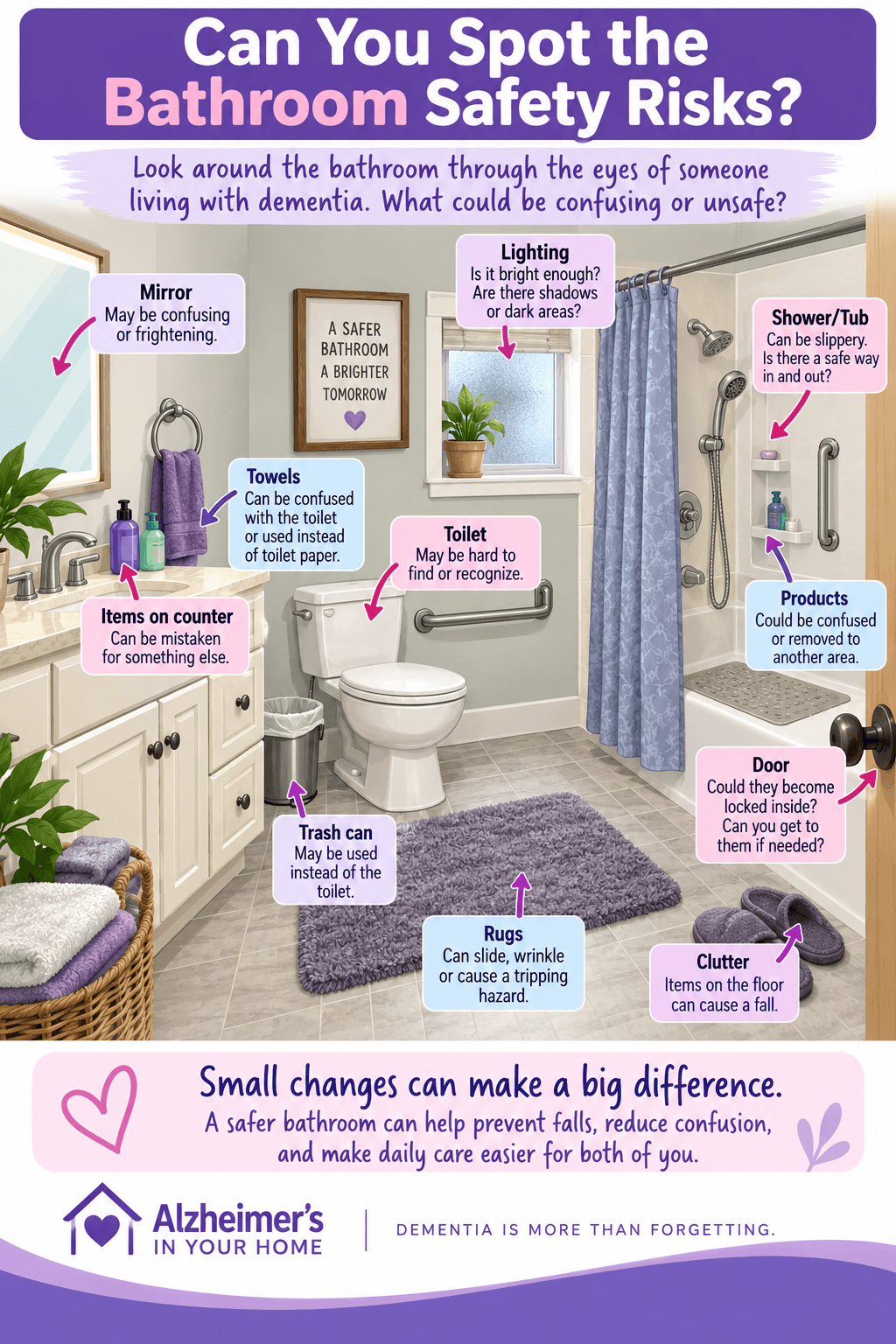
🔎 Walk Through the Bathroom With Fresh Eyes
Walk into the bathroom and try to look at it as though you have never seen it before.
Instead of looking at what has always worked, look for what could now be confusing or unsafe.
Ask yourself:
- Is there enough light?
- Are there dark areas or shadows?
- Could anything on the floor cause a fall?
- Is the toilet easy to see?
- What would my loved one grab if they suddenly lost their balance?
- Can they reach what they need without bending or stretching?
- Could they accidentally turn the water too hot?
- Are medications, cleaners, or sharp objects accessible?
- Could they become locked inside?
- Can they safely get to the bathroom during the night?
Sometimes the risks are small things we have stopped noticing because we see the room every day.
1. Improve Bathroom Lighting
Good lighting becomes increasingly important when dementia affects vision and perception.
Make sure the bathroom is bright enough to see the toilet, sink, shower, floor, and walking path clearly.
Pay attention to shadows, too.
A dark area on the floor may look like a hole, step, or object to someone whose brain is having difficulty interpreting what they see.
But don’t stop at the bathroom door.
Look at the entire path to the bathroom.
If your loved one gets up during the night, they may need to travel from the bedroom, through a hallway, and into the bathroom while sleepy or disoriented.
Nightlights or motion-activated lighting can help make that route easier to see.
2. Remove Tripping and Slipping Hazards
athrooms can quickly become slippery.
Look for:
- Loose rugs
- Wet floors
- Electrical cords
- Clutter
- Shoes or clothing on the floor
- Items stored in the walking path
- Uneven thresholds
- Slippery shower or tub surfaces
Loose bathroom rugs can slide, wrinkle, or curl at the edges.
If you use a bathroom mat, choose one designed to stay securely in place and reassess whether it continues to be safe for your loved one.
Keep walking paths as open as possible and wipe up water promptly.
3. Install the Right Grab Bars
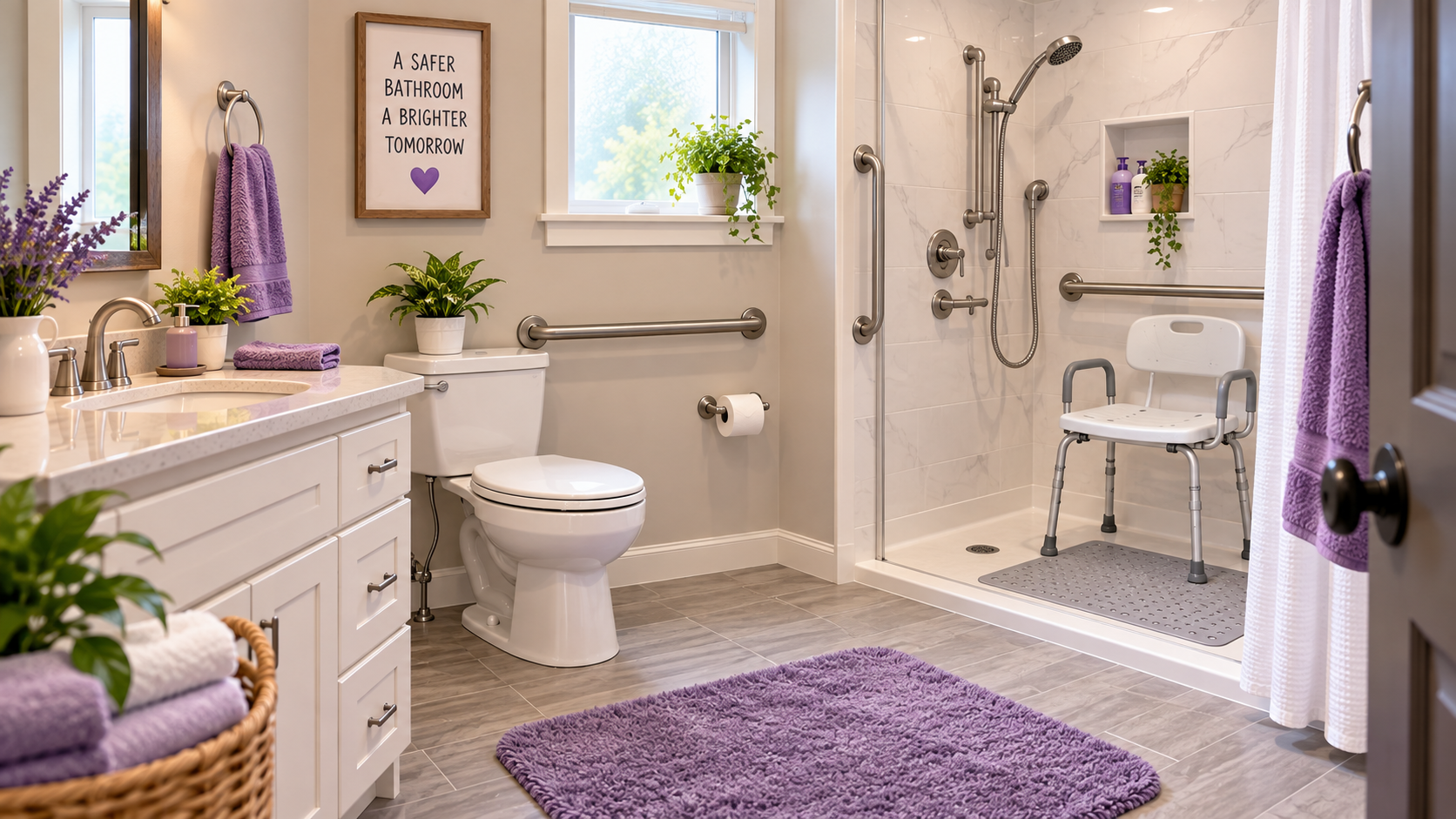
Grab bars can provide important support near the toilet, shower, and bathtub.
But placement matters.
Watch where your loved one naturally reaches when they:
- Sit down
- Stand up
- Step into the shower
- Step out
- Turn
- Lose their balance
Never rely on a towel rack as a grab bar.
A towel rack usually isn’t designed to support a person’s body weight and could pull away from the wall during a fall.
Properly installed grab bars should be designed for weight-bearing support.
If you’re unsure what equipment or placement is appropriate, an occupational or physical therapist may be able to evaluate your loved one’s individual needs.
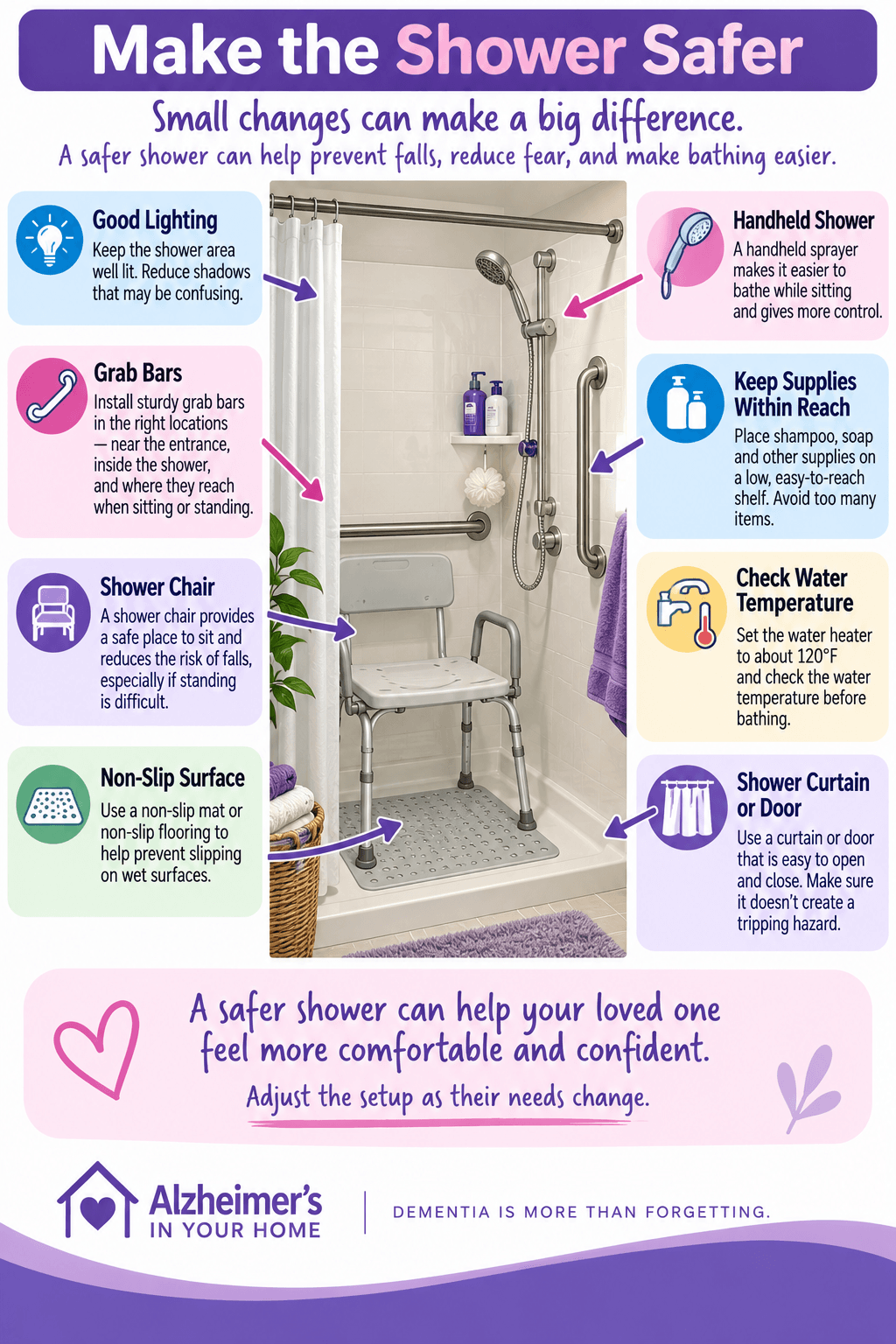
4. Make the Shower or Tub Safer
The shower combines several potential risks at once:
Water + slippery surfaces + balance + stepping + turning + temperature + sensory changes
Depending on your loved one’s abilities, helpful changes may include:
- Properly installed grab bars
- A shower chair
- A tub transfer bench
- Non-slip surfaces
- A handheld shower sprayer
- Good lighting
- Bathing supplies within easy reach
A shower chair can allow someone to sit while bathing rather than trying to maintain balance throughout the shower.
A transfer bench may be helpful when stepping over the side of a bathtub has become difficult.
The right equipment depends on the person and the bathroom setup.
If someone who previously showered without difficulty suddenly refuses to step inside, don’t immediately assume they are being stubborn or difficult.
Ask why.
Maybe they can’t judge the edge of the shower.
Maybe the floor looks slippery or unfamiliar.
Maybe they feel unsteady.
Maybe the sound or sensation of the water is frightening.
Maybe they experienced pain or nearly fell during a previous shower.
Or maybe they no longer understand what you are asking them to do.
Fear can be a clue.
Changing your approach may help more than trying harder to convince them.
5. Prevent Burns and Water-Temperature Problems
Dementia can make it harder to judge temperature, remember which faucet is hot, or adjust the water safely.
Check the home’s hot-water settings and consider ways to reduce the risk of scalding.
If your loved one can no longer judge the water temperature reliably, check it for them before bathing or washing.
Depending on the bathroom setup, anti-scald devices or simpler faucet controls may also help.
The goal is to reduce the chance that someone accidentally exposes themselves to dangerously hot water.
6. Keep Medications, Cleaners and Sharp Items Secure
As dementia progresses, familiar bathroom products may no longer be used safely.
Someone may:
- Mistake one product for another
- Forget how much medication they have taken
- Put something unsafe in their mouth
- Use a product in an unexpected way
- Forget that an object is sharp
Check what is stored in:
- The medicine cabinet
- Drawers
- Under the sink
- Countertops
- Shower or tub areas
Secure medications, cleaning products, razors, and other potentially dangerous items according to your loved one’s current abilities.
Remember: something they used safely for years may eventually become confusing.
7. Make the Toilet Area Safer
Getting on and off the toilet requires balance, coordination, leg strength, and the ability to judge where the toilet is.
Properly placed grab bars may help.
Some people may benefit from a raised toilet seat, toilet safety frame, or commode, depending on their height, mobility, transfer ability, and bathroom setup.
A bedside commode may sometimes be appropriate when getting to the bathroom during the night becomes difficult or unsafe.
Bathroom equipment should fit the person, not just the room.
If you’re unsure what is appropriate, ask the healthcare team whether an occupational or physical therapy assessment would be helpful.
8. Reduce Bathroom Confusion
Bathroom safety is about more than preventing falls.
Confusion can create safety problems, too.
Try to make the bathroom simple and easy to understand.
You might:
- Keep countertops uncluttered
- Remove unnecessary bottles and products
- Keep commonly used items in consistent locations
- Make the toilet easy to see
- Use contrast when it helps important objects stand out
- Use a simple bathroom sign or picture if finding the room has become difficult
Mirrors can sometimes become confusing as dementia progresses.
A person may no longer recognize their reflection or may believe someone else is in the room.
If the mirror begins causing fear or confusion, try covering it temporarily and see whether the behavior improves.
You don’t need to make every possible dementia modification.
Make changes based on what your loved one is showing you.
9. Think About the Bathroom Door
Privacy is important.
So is being able to reach your loved one if they fall or need help.
Consider whether a bathroom lock could accidentally leave someone trapped inside.
If a lock is needed for privacy, caregivers should be able to gain access in an emergency.
The goal is to balance:
Dignity + Privacy + Safety
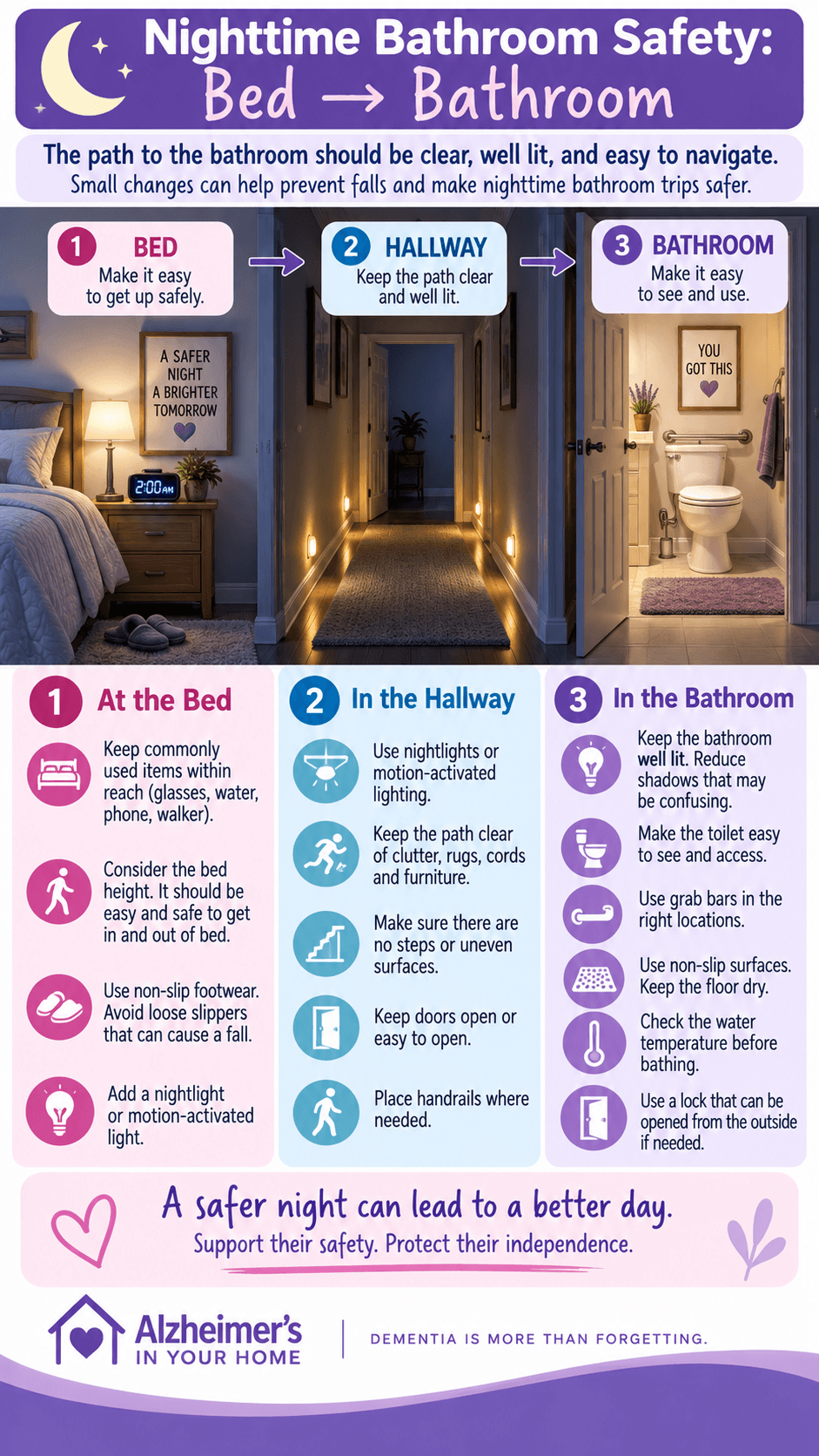
10. Make Nighttime Bathroom Trips Safer
Nighttime bathroom trips deserve special attention because several fall risks can happen at once:
Darkness
Sleepiness
Urgency
Poor balance
Disorientation
Getting out of bed quickly
Look at the entire route:
BED → HALLWAY → BATHROOM → TOILET
Is the path clear?
Is there enough light?
Are there cords, rugs, furniture, or clutter in the way?
Can your loved one easily see the bathroom?
Can they see the toilet once they get there?
Is there something safe to hold if they become unsteady?
If your loved one frequently gets up during the night, pay attention to when and why it happens.
You may begin to notice a pattern.
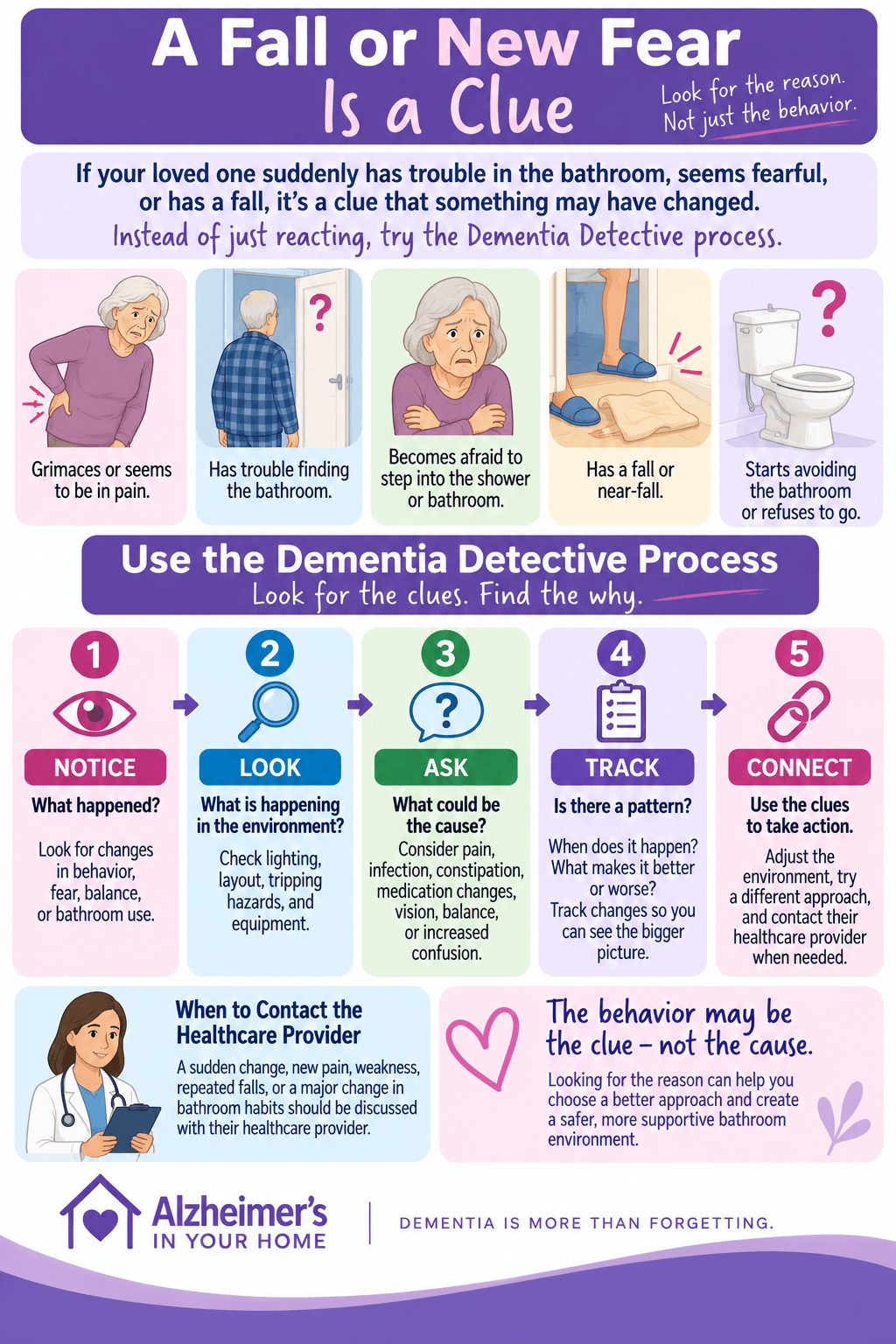
A Fall or New Bathroom Fear Is a Clue
If your loved one suddenly:
- Grabs the wall or furniture
- Seems unsteady
- Refuses to step into the shower
- Has trouble getting off the toilet
- Has a fall or near-fall
- Starts avoiding the bathroom
- Becomes frightened in a bathroom they have used for years
Don’t look only at the behavior.
Ask:
What changed?
This is where becoming a Dementia Detective can help.
NOTICE
What happened?
LOOK
What was happening around them?
Check the lighting, floor, layout, equipment, noise, and other things in the environment.
ASK
What could be causing the change?
Consider pain, weakness, balance, vision, fear, constipation, illness, medication changes, or increased confusion.
TRACK
Does it happen at a certain time?
What happened beforehand?
What makes it better or worse?
CONNECT
Put the clues together.
Then decide whether you need to change the environment, change your approach, or contact the healthcare provider.
The behavior may be the clue—not the cause.
When a Bathroom Safety Change Needs Medical Attention
Not every new bathroom problem means dementia has progressed.
A sudden change may sometimes be related to another health problem.
Contact your loved one’s healthcare provider for new or concerning changes such as:
- New weakness
- New balance problems
- New or worsening pain
- Repeated falls or near-falls
- Difficulty standing or walking
- Dizziness
- A sudden significant increase in confusion
- Major changes in bathroom habits
- A new fear or behavior that is very different from usual
Seek urgent medical care for severe symptoms, significant injuries, or sudden major changes that may be an emergency.

Bathroom Safety Changes as Dementia Changes
One of the most important things to remember is:
Bathroom safety isn’t a one-time project.
You may install grab bars today and think the bathroom is finished.
But dementia changes.
Mobility changes.
Vision changes.
Balance changes.
Judgment changes.
The amount of help your loved one needs changes.
Walk through the bathroom again periodically and anytime you notice a change in your loved one’s abilities.
Instead of asking:
“Didn’t we already make the bathroom safe?”
Ask:
“Is this bathroom still safe for the person they are today?”
Track Changes Instead of Trying to Remember Them
When falls, near-falls, bathroom accidents, sleep changes, behaviors, medications, or other health concerns begin changing, it can be difficult to remember exactly what happened and when.
Writing things down can help you see patterns that are easy to miss from one day to the next.
It also gives you clearer information to share during healthcare visits.
💜 Stop Trying to Remember Every Change
The Dementia Caregiver’s Notebook gives you one place to track important changes, look for patterns, and have better information ready when you need it.
The Goal Isn’t a Perfect Bathroom
You don’t need an expensive bathroom remodel to start making things safer.
Begin with the risks that matter most for your loved one.
Improve the lighting.
Clear the pathway.
Reduce slipping and tripping hazards.
Provide safe support.
Keep dangerous items secure.
Simplify the environment.
Then keep watching how your loved one actually uses the room.
Because one of your most important bathroom safety tools isn’t something you can buy.
It’s noticing when something has changed.
More Help With Dementia Bathroom Care
Bathroom safety is only one part of dementia bathroom care. These guides can help with other common challenges.
🚽 Dementia Bathroom Challenges: Toileting, Incontinence & Hygiene Tips
Learn why accidents, difficulty finding the bathroom, clothing problems, toilet refusal, and other bathroom challenges happen—and what caregivers can try.
🛁 Why Bathing Becomes Difficult With Dementia
Learn why someone with dementia may suddenly resist bathing, become afraid of the shower, or insist they have already bathed.
💩 The Truth About Dementia Poop Problems
Get practical help with constipation, diarrhea, bowel incontinence, bathroom accidents, poop smearing, and other difficult bowel changes.
🏠 Dementia Fall Prevention
Learn why dementia can increase fall risk and how to look for clues, identify patterns, and make the home safer.
💜 Get Dementia Caregiving Help Each Week
Caring for someone with dementia means constantly adjusting as their needs and abilities change.
My Alzheimer’s & Dementia Pearls of Wisdom newsletter gives caregivers practical dementia education, nursing insights, and ideas they can use at home.