

Is Your Loved One Still Living Independently With Dementia?
Stay Ahead of Changes — Before a Crisis Forces You to Step In
Your loved one may still be living in their own home.
They may still be driving, preparing meals, taking medications, paying bills, and handling many of the things they’ve always done.
But you’ve started noticing little things.
Maybe Mom forgot to take her medication.
Dad got confused driving somewhere familiar.
There isn’t much food in the refrigerator.
A bill was paid twice.
An appointment was forgotten.
Or maybe you can’t point to one big problem.
You just have that feeling that…
something is changing.
And you’re wondering:
How do I know when it’s time to step in?
💜 You Don’t Want to Take Away Their Independence Too Soon
This is one of the hardest parts of early dementia.
You want your loved one to stay independent for as long as they safely can.
You don’t want to take over things they can still do.
But you also don’t want to wait until there’s a medication mistake, a fall, a driving accident, or another crisis before realizing they needed more help.
The answer isn’t watching their every move.
And it isn’t waiting for one big event.
It’s learning to recognize changes over time.
🔎 Small Changes Can Be Important Clues
One forgotten medication may not seem like a big deal.
One missed meal may be an accident.
One unpaid bill may be a simple mistake.
One confusing phone call might just be a bad day.
But what happens when you start seeing several of those things?
Or the same thing keeps happening?
That’s when a clue may be becoming a pattern.
One event tells you what happened today.
A pattern helps you see what may be changing.
And when your loved one is still living independently, those patterns can be especially important because you aren’t there to see everything that happens.
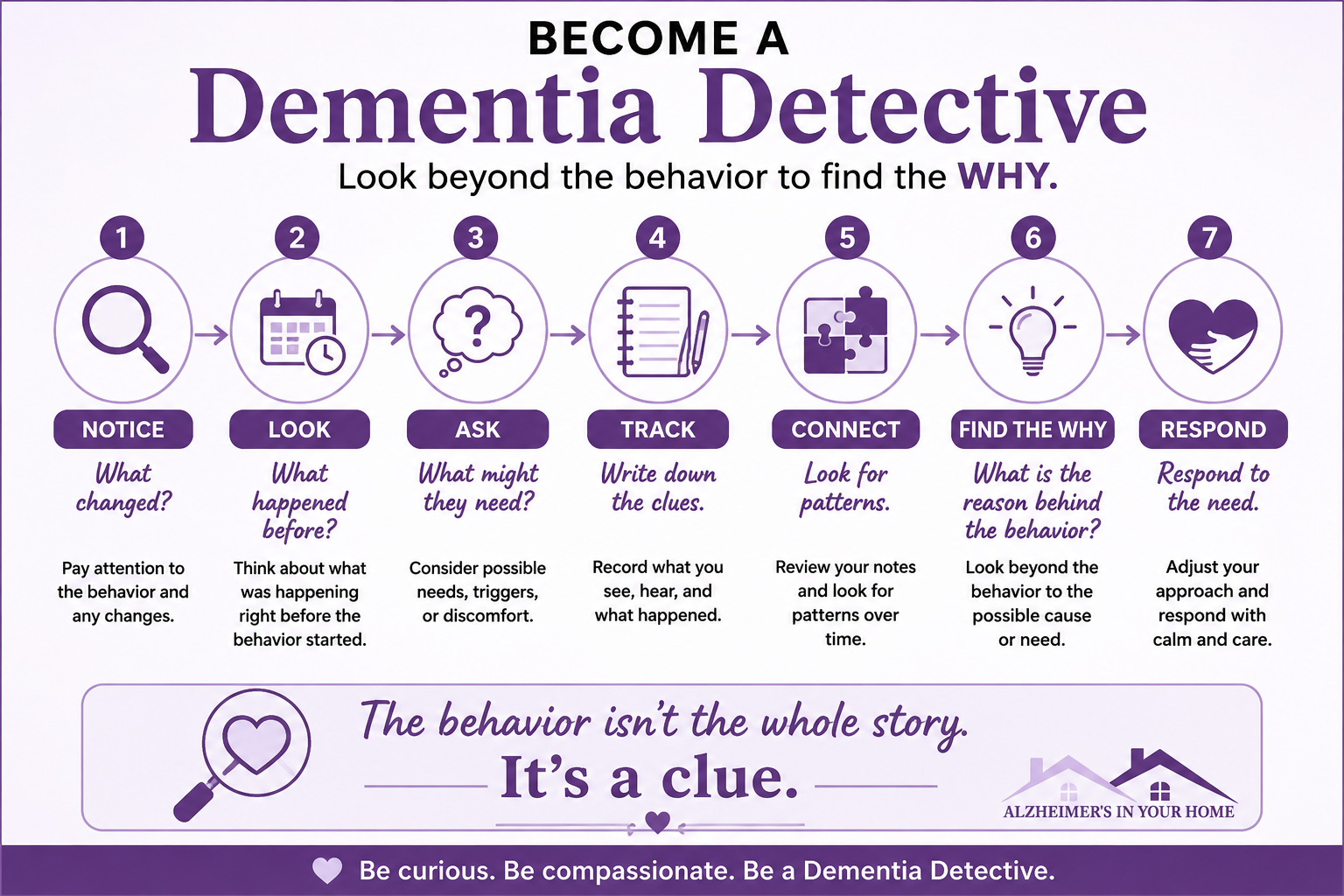
Your job isn’t to watch everything. It’s to notice what’s changing and keep track of the clues.
👀 What Should You Be Watching?
You don’t need to track every little thing your loved one does.
Instead, watch for changes from what is normal for them.
💊 Medications
Are medications being missed?
Are pills left in the organizer?
Are doses being taken twice?
Are prescriptions running out unexpectedly?
🍽 Meals & Nutrition
Is there enough food in the house?
Are they eating regular meals?
Is food spoiling in the refrigerator?
Have they lost weight?
🚗 Driving
Are they getting lost on familiar routes?
Have there been new dents or scratches on the car?
Are they avoiding places they used to drive to?
Are they becoming confused while driving?
💵 Bills & Money
Are bills being forgotten?
Are bills being paid more than once?
Are there unusual purchases?
Are they struggling with things they used to manage easily?
🏠 The Home
Is the house becoming noticeably different?
Is trash piling up?
Is laundry being done?
Are appliances being left on?
Are doors being left unlocked?
🚿 Personal Care
Are they bathing regularly?
Are they wearing clean clothes?
Are they wearing the same clothes repeatedly?
Does their appearance look different than usual?
🧠 Memory & Thinking
Are familiar tasks becoming harder?
Are they repeating questions more often?
Are they becoming confused in familiar places?
Are they having more difficulty following conversations or instructions?
❤️ Behavior & Mood
Are you noticing new anxiety?
Suspicion?
Agitation?
Withdrawal?
Unusual phone calls?
Changes in personality or routines?
⚠️ Safety
Have there been falls?
Are they wandering?
Are they leaving the stove on?
Are they answering the door to strangers?
Are there other situations that make you wonder whether they’re still safe alone?
The Question Isn’t Just “Can They Still Do It?”
This is an important difference.
Someone with dementia may still be able to perform a task.
But that doesn’t always mean they can manage it safely and consistently without help.
Instead of only asking:
Can Mom still take her medication?
Ask:
Is Mom taking it correctly every day?
Instead of:
Can Dad still drive?
Ask:
Is Dad still driving safely and finding his way home?
Instead of:
Can they still cook?
Ask:
Are they eating regularly and using the kitchen safely?
Look at what is actually happening over time.
That’s where tracking can help.
✏️ Don’t Try to Keep It All in Your Head
You notice something unusual during a visit and think:
I need to remember that.
A week later, something else happens.
Then something else.
A month later you know things seem different, but you can’t remember:
When did this start?
How many times has it happened?
Is it really happening more often?
What else was happening around the same time?
That’s why writing things down is so helpful.
You don’t have to decide whether something is important when it happens.
Just record the clue.
You can look back later and see whether it was an isolated event — or part of a bigger pattern.
📝 What Should You Write Down?
Keep it simple.
When something seems different, write down:
What happened?
When did it happen?
Has it happened before?
How often is it happening?
Was anything else different that day?
What did your loved one say about it?
Did someone need to step in and help?
You aren’t creating a medical chart.
You’re creating a record of what you’re seeing.
🔎 Here’s What a Pattern Might Look Like
At first:
Mom forgot her Tuesday evening medication.
You write it down.
A week later:
You discover two more doses still in her pill organizer.
You write that down too.
Later that month:
Mom tells you she can’t remember whether she took her morning pills, so she takes them again.
Now you aren’t looking at one forgotten pill.
You’re seeing a pattern.
That pattern tells you something important:
Mom may need more help managing her medications.
And because you wrote it down, you can also give her doctor much clearer information about what has been happening.
🩺 Your Notes Can Help at Doctor Visits Too
It can be difficult to explain gradual changes during a short doctor appointment.
Instead of saying:
“Dad seems worse.”
you can say:
“Dad has gotten lost twice this month driving home from places he knows. He also missed three appointments and I found several unpaid bills when I visited last week.”
That’s much more useful information.
Your loved one’s doctor only sees a small piece of their life.
You and your family see what is happening between those appointments.
Those observations matter.
🚦 When Does a Clue Mean It’s Time to Step In?
There isn’t one checklist that can tell every family exactly when someone with dementia should stop living independently.
Instead, look at the whole picture.
Ask yourself:
Is this happening more often?
Could this put my loved one or someone else in danger?
Are several areas of daily life becoming harder?
Is someone already quietly stepping in to keep things going?
Would this task be completed safely if nobody reminded or helped them?
Am I seeing a pattern instead of an isolated mistake?
The answer may not mean your loved one needs to move.
Stepping in doesn’t always mean taking over.
Sometimes it simply means adding a little support.
🌱 More Help Can Happen One Step at a Time
Your loved one may need help with medications before they need help with meals.
They may need someone to handle finances but still be able to dress and bathe independently.
They may need transportation while still being perfectly comfortable living in their own home.
Support might begin with:
- Medication reminders
- Grocery delivery
- Meal preparation
- Help with bills
- Transportation
- More frequent family visits
- Home safety changes
- A medical alert system
- In-home caregiving help
- Help with appointments
The goal isn’t to take everything away.
The goal is to add the right amount of help at the right time.
💜 Protect Independence by Planning Ahead
Sometimes families think tracking is about proving that their loved one can’t live independently anymore.
I look at it differently.
Tracking can actually help protect independence.
When you know exactly where someone needs help, you don’t have to take over everything.
Maybe Dad doesn’t need someone with him all day.
Maybe he just needs help organizing medications and transportation to appointments.
Maybe Mom can continue living at home if someone checks in each day and helps with meals.
Recognizing the specific problem gives you a chance to add just the support they need.
📒 A Simple System Can Help You Stay Ahead
This is one of the reasons I created The Dementia Caregiver’s Notebook.
You shouldn’t have to rely on memory to figure out whether things are changing.
The Notebook gives you one place to record the clues you’re noticing and look back over time.
It can help you:
✔ Track changes
✔ Notice patterns
✔ Keep medication and medical information organized
✔ Prepare for doctor appointments
✔ Document concerns
✔ Share information with family members
✔ Plan ahead as care needs change
You don’t have to fill out every form.
You don’t have to track everything every day.
Use the pages that help you answer the questions you have right now.

You Don’t Have to Predict the Whole Dementia Journey Today
You just need to understand what’s happening right now.
Pay attention to the little changes.
Write them down.
Look back.
And ask:
Is this a clue — or am I beginning to see a pattern?
Those patterns can help you decide when to add support, when to talk with the doctor, and when it may be time to make a change
💜 Ready to Start Tracking the Changes?
You don’t have to wait for a crisis to start paying attention to the little changes.
The Dementia Caregiver’s Notebook gives you a simple way to write down what you’re seeing, look back over time, and recognize patterns that may tell you when more help is needed.
Choose the version that works best for you and start tracking today.
📄 Instant Download – $39
Print only the pages you need or create your own binder at home.
📚 Printed Binder – $79
Receive a professionally printed binder that’s ready to use right out of the box.
Look for the clue.
Write it down.
Watch for the pattern.
That’s how you stay one step ahead.