


What Dementia-Friendly Communication Really Means
Talking with someone who has dementia isn’t just about getting information across — it’s about protecting their sense of security.
Dementia-friendly communication focuses on:
- Keeping your language simple
- Using calm tone and reassuring body language
- Allowing extra time for responses
- Validating feelings even when the facts don’t match
- Meeting the person where they are mentally and emotionally
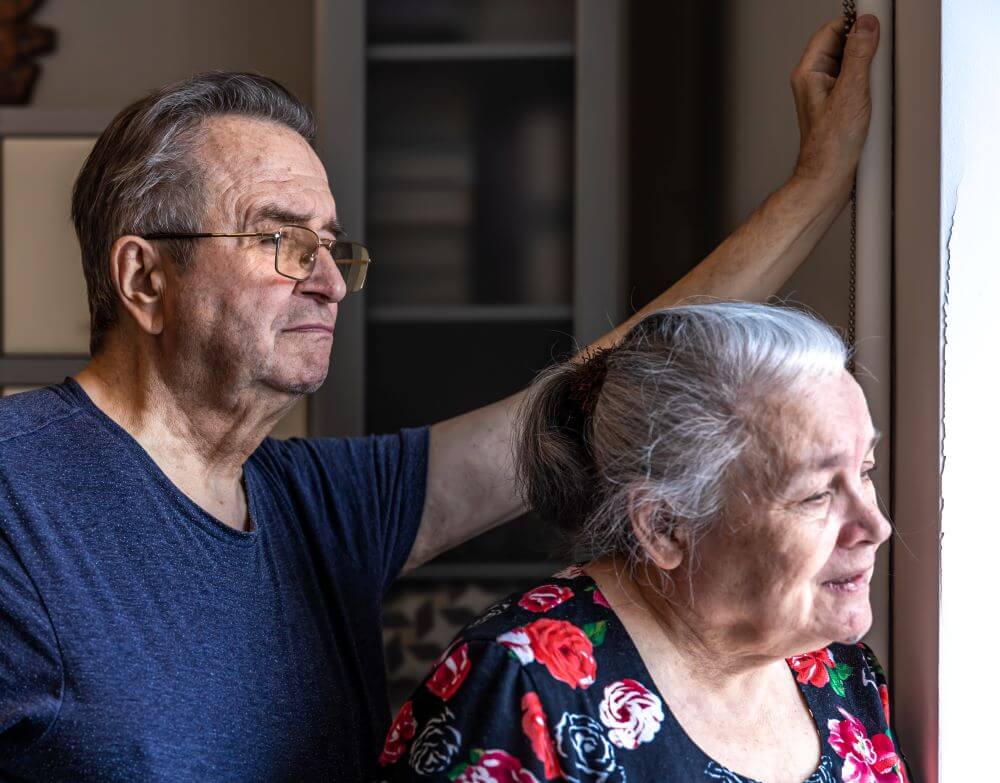
When “Lying” Becomes an Act of Love
Sometimes honesty can make things worse — even dangerous. This isn’t about deceiving your loved one. It’s about reducing fear, protecting dignity, and helping them feel safe.
💜 “Compassion is sometimes more healing than the truth.”

John’s Story: When Reality Feels Terrifying
John lived with Lewy Body dementia and struggled with frequent hallucinations. One afternoon, he was convinced the room was on fire. His whole body shook with fear.
Telling John, “There is no fire,” wouldn’t have helped — his brain was showing him something terrifyingly real.
So instead, with a calm voice, I told him:
“John, the fire department is on the way. Let’s step outside so we can stay safe.”
He relaxed instantly. His shoulders loosened, his breath slowed, and the panic faded from his eyes.
That wasn’t deception. That was compassion — giving him peace when reality couldn’t.

Irene’s Story: Protecting a Tender Heart
Irene asked for her husband every single day… even though he had passed away the year before.
Each time she asked, a caregiver had two choices:
💔 Tell her the truth — and watch her relive the grief
💜 Or gently redirect — and protect her from heartache she couldn’t process
When we said, “He’s out in the field today,” her shoulders relaxed.
“Oh, that’s right,” she would say, and the worry left her face.
The lie wasn’t harmful. It was a soft landing for a heart that could no longer hold that kind of pain.
🌿“When dementia changes reality, choose the path that brings peace.”

Why Therapeutic Lying Works
Therapeutic fibbing is not about tricking your loved one. It’s about:
- Reducing agitation
- Preventing fear
- Avoiding repeated grief
- Keeping conversations calm
- Protecting emotional safety
This approach is especially helpful when your loved one is experiencing:
- Hallucinations
- Delusions
- Repetitive distressing questions
- Poor time orientation
- Fear of imaginary threats
If anxiety or agitation is a frequent issue, I wrote a full guide that may help:
👉 Link: How to Recognize and Manage Agitation and Anxiety in Dementia Care
🫂“You’re not lying — you’re lifting a burden your loved one can’t carry.”

💜 How Dementia-Friendly Communication Works
Here are some simple tools that truly help:
💬 Simplified language
Short sentences, one idea at a time.
😊 Warm non-verbal cues
Soft tone, reassuring smile, gentle touch (if welcomed).
⏳ Extra time to respond
Their brain needs a slower pace.
❤️ Validate feelings
Their emotions are real — even when the facts aren’t.
🔄 Redirect instead of correcting
Arguing increases distress. Redirection removes it.
🤝 Protect dignity
Their sense of self is still there. Always honor it.
If you want to grow in patience and understanding, you may enjoy this article:
💬 Common Caregiver Questions About
Q1: Is it really okay to lie to my loved one with dementia?
A: Yes. When the truth causes fear, grief, or confusion, a gentle fib can actually protect your loved one’s emotional safety. This isn’t dishonesty — it’s compassion.
Q2: What do I say when they ask for someone who has passed away?
A: Redirect with kindness. Saying, “He stepped out for a bit,” prevents your loved one from reliving the same heartbreak again and again.
Q3: What if they’re seeing something that isn’t there?
A: Instead of trying to correct them, focus on their emotion. Say things like, “You’re safe,” or “Let’s step over here,” to ease the fear.
Q4: How do I respond when they’re “stuck” in another time period?
A: Meet them where they are. If they believe they’re late for work, “Everything is already taken care of today,” or “today is your day off” keeps them calm without forcing your reality on them.
Q5: Does therapeutic fibbing make agitation worse later on?
A: No. In fact, it usually prevents agitation. By avoiding arguments and emotional triggers, you help your loved one feel secure and supported.
💬“The kindest words aren’t always the factual ones… but the ones that comfort.”

💜 When Lying Is the Kindest Choice
There will be days when the truth helps.
And there will be days when the truth harms.
Therapeutic lying isn’t about taking the “easy way out.” It’s about reducing suffering for someone whose brain can no longer make sense of what’s real, what’s past, or what’s possible. Their world shifts from day to day — sometimes from minute to minute — and your job is to make that world feel safe again.
When your loved one’s brain can’t process the truth, insisting on it can actually create more fear, confusion, or heartbreak. This is when a gentle, compassionate fib becomes an act of love, not deception. It’s choosing kindness over correctness.
Here are the most common times when therapeutic lying may be not only appropriate — but truly necessary:
1. Hallucinations or Delusions
When your loved one sees or hears something that isn’t there, their fear is real even if the threat is not.
Trying to “prove” the truth often makes panic much worse.
A comforting fib like:
“Let’s go somewhere quieter,”
or
“I already checked — everything is safe,”
helps calm their brain and their body.
💜 You’re not feeding the delusion. You’re soothing the fear.
2. Repetitive Questions
Sometimes your loved one asks the same painful question again and again — especially about someone who has passed away.
If telling the truth causes them to grieve as if it’s the first time every single time…
it’s more compassionate to redirect gently.
A truth that causes repeated heartbreak is not kindness — it’s harm.
💜 A soft redirect protects their heart from breaking over and over.
3. Time Orientation Problems
As dementia progresses, it’s common for someone to believe they’re living in a different decade.
Correcting them — “No, that was 40 years ago” — can be confusing or upsetting.
Instead, responding in a way that matches their emotional reality keeps them calm.
If someone believes they’re late for work, saying,
“You already called in — everything’s taken care of,”
is far kinder than explaining they retired 20 years ago.
💜 You’re honoring the emotional truth, not the factual timeline.
4. Personal Safety Concerns
Your loved one may believe there’s danger — a fire, intruder, storm, or other threat — when there isn’t.
Correcting them (“There’s no danger at all!”) can make the fear explode.
Offering safety-focused reassurance like,
“The fire department already handled it,”
or
“We’re going to step into the other room where it’s safe,”
relieves the fear instead of fighting it.
💜 In these moments, the goal isn’t truth — it’s safety.
💜 Compassion Over Accuracy
Therapeutic lying is never about tricking the person you love.
It is always about preventing suffering in a brain that can no longer keep up with reality.
Choosing compassion over accuracy doesn’t make you dishonest.
It makes you a caring, thoughtful dementia partner.
It means you understand that:
-
their feelings are real, even when the facts are not
-
their emotional safety matters more than the literal truth
-
your job is to comfort, not to correct
And that, my friend, is the heart of dementia care.
💖 “Your loved one’s feelings are real, even when the facts aren’t.”
💜 YOU’RE NOT ALONE IN THIS
Dementia changes the rules of communication, and it can feel overwhelming trying to keep up. But please hear this: you are not supposed to figure this out on your own. None of us were born knowing how to respond to hallucinations, repeated questions, shifting realities, or sudden fear. These are skills we learn — slowly, with practice, and often through trial and error.
Every caregiver grows into this role one day at a time.
Every caregiver makes mistakes, learns, adjusts, and keeps going.
And every caregiver discovers their own rhythm, their own patience, and their own voice along the way.
You’re doing the best you can with what you have — and that’s more than enough.
If your loved one struggles with anxiety, fear, or agitation, you don’t have to guess what’s happening or why. This article can be a real help when you’re trying to understand those hard moments:
👉 How to Recognize and Manage Agitation and Anxiety in Dementia Care
And if you’re tired of piecing everything together on your own, and you’d like clear, simple guidance that walks you through dementia step-by-step — from early changes to late-stage care — I’ve created a course just for you:
👉 Understanding Dementia Course
Inside the course, I break things down in a way that’s easy to follow, with real examples, caregiver stories, and strategies you can use right away. It’s like having someone sit beside you and say, “Here’s what’s happening… and here’s what you can do.”
No matter where you are in this journey — overwhelmed, exhausted, confused, or just needing a little reassurance — I’m right here walking it with you.
Hi, I’m Larea, a Registered Nurse, Faith Community Nurse, and Certified in Dementia Care with 30 years of experience supporting families living with Alzheimer’s and other dementias. Both of my parents have Dementia, so I understand the journey personally as well as professionally. My heart is in helping family caregivers feel supported, prepared, and confident every step of the way.





0 Comments