

Most people don’t realize how common choking and aspiration can become as dementia progresses…
Until it happens.
Eating and drinking are things we don’t usually think twice about. But in dementia, the brain changes can begin to affect how a person chews, swallows, and even recognizes when something is going down the wrong way.
And that can quickly turn into a serious safety concern.
If you’re caring for someone with dementia, this is something you need to be aware of—because the signs are often easy to miss.
💛 A Story From This Week
This week, my own mom choked three different times.
Once in a restaurant while trying to talk and eat…
and twice at home while eating in her recliner.
It was a reminder of how quickly things can change—and how easy it is to miss the small risks that can lead to a scary moment.
We were at her favorite restaurant, a Chinese buffet, with one of my grandsons. He was talking to her, and when she started to answer him, she suddenly choked.
It happened fast.
A small piece of rice went into her airway.
She couldn’t talk. She was scared.
And it took a long time for her to finally clear it.
She had only taken a few bites of her meal, but after that… she couldn’t eat anymore.
And in that moment, I wasn’t just thinking about the choking.
I was thinking about what could come next.
Because in dementia care, moments like this are often a sign that something is starting to change.
What many caregivers don’t realize is that the choking itself is not always the biggest concern… it’s what can happen afterward.
💬 “Sometimes the smallest changes are the ones that keep our loved ones the safest.”
Even when things seem to settle down afterward, the risk may not be over.
Sometimes, even when the person seems “okay” afterward, small amounts of food or liquid can still enter the lungs.
This is part of what makes choking so serious in dementia care.
When this occurs, it can lead to a serious infection called aspiration pneumonia.
As a nurse, I have seen firsthand how often elderly individuals—especially those with dementia—develop aspiration pneumonia.
And I have also seen how quickly it can turn into a life-threatening situation.
A moment that seems small can turn into something more serious over the next few days.
And many caregivers don’t make that connection.
💬 “Aspiration pneumonia doesn’t always happen in the moment—it often shows up later.”
Aspiration pneumonia is actually one of the leading causes of illness and death in people living with dementia.
Not because caregivers are doing anything wrong…
but because these changes are easy to miss if you don’t know what to look for.
That’s why moments like this matter.
They are not just “scary situations.”
They are warning signs.

⚠️ Why Aspiration Pneumonia Is So Serious
Aspiration doesn’t always cause a big, obvious choking episode.
Sometimes it’s small… quiet… and easy to miss.
Food, liquid, or even saliva can slip into the lungs without a lot of coughing.
And when that happens, bacteria can enter the lungs and cause an infection called aspiration pneumonia.
💬 “What makes aspiration pneumonia dangerous is not just what happens in the moment… it’s what happens in the days that follow.”
In the early stages, it may not look like much.
You might notice:
- A little more coughing
- Slight shortness of breath
- Increased fatigue
- A low-grade fever
- More confusion than usual
But in older adults—especially those living with dementia—things can change quickly.
Because their bodies are already more vulnerable, this type of infection can become serious in a short amount of time.
🧠 Why It’s More Dangerous in Dementia
Dementia doesn’t just affect memory—it affects the body’s ability to protect itself.
That includes:
- A weaker cough reflex
- Difficulty clearing the airway
- Reduced awareness of swallowing problems
- Slower response to illness
This means the body may not react as strongly or as quickly when something is wrong.
By the time symptoms become obvious, the infection may already be more advanced.
💬 “Often, the first sign isn’t choking—it’s a change in how your loved one is acting.”
🚨 What Caregivers Should Watch For After a Choking Episode
If your loved one has had a choking episode—even a mild one—watch closely over the next few days.
Look for:
- New or worsening cough
- Fever
- Chest congestion
- Shortness of breath
- Increased confusion or sleepiness
- Decreased appetite
👉 These can be early signs of aspiration pneumonia.
If you notice these changes, it’s important to contact a healthcare provider.
💛 A Gentle but Important Reminder
Aspiration pneumonia is one of the most common complications in advanced dementia.
Not because caregivers are doing something wrong…
but because these changes are part of how the disease progresses.
The goal is not to eliminate all risk.
The goal is to recognize the signs early and respond quickly.
⚠️ What Is Aspiration?
Aspiration happens when food, liquid, or saliva goes down the wrong way—into the airway instead of the stomach.
Sometimes it causes choking right away.
But other times…
👉 It happens quietly.
This is called silent aspiration, and it can lead to serious complications like pneumonia.
Now that you understand why this matters, let’s take a closer look at what aspiration actually is.
🧩 Why Dementia Increases Choking and Aspiration Risk
Dementia affects the brain’s ability to control many automatic functions—including swallowing.
As the disease progresses, you may start to see:
- Slower chewing
- Holding food in the mouth
- Trouble coordinating swallowing
- Reduced awareness while eating
- Forgetting to swallow
- Weak cough reflex
All of these increase the risk of food or liquid going into the airway.
These changes are often part of what caregivers see with
💛 “Dementia doesn’t just affect memory—it changes how the body works in ways we don’t always expect.”

⚠️ Signs of Choking and Aspiration Risk in Dementia
Some signs are obvious. Others are very subtle.
Here are some important things to look for:
- Coughing or choking during meals
- Clearing the throat often
- Wet or gurgly voice after eating or drinking
- Food left in the mouth after meals
- Taking a long time to finish meals
- Refusing certain foods
- Frequent chest congestion
- Recurrent pneumonia
👉 Even one of these signs is worth paying attention to.
If you notice these signs, it may be time to learn
👉 how to recognize when it’s time to get more help
Sometimes it helps to see it all in one place. Here’s a simple breakdown:
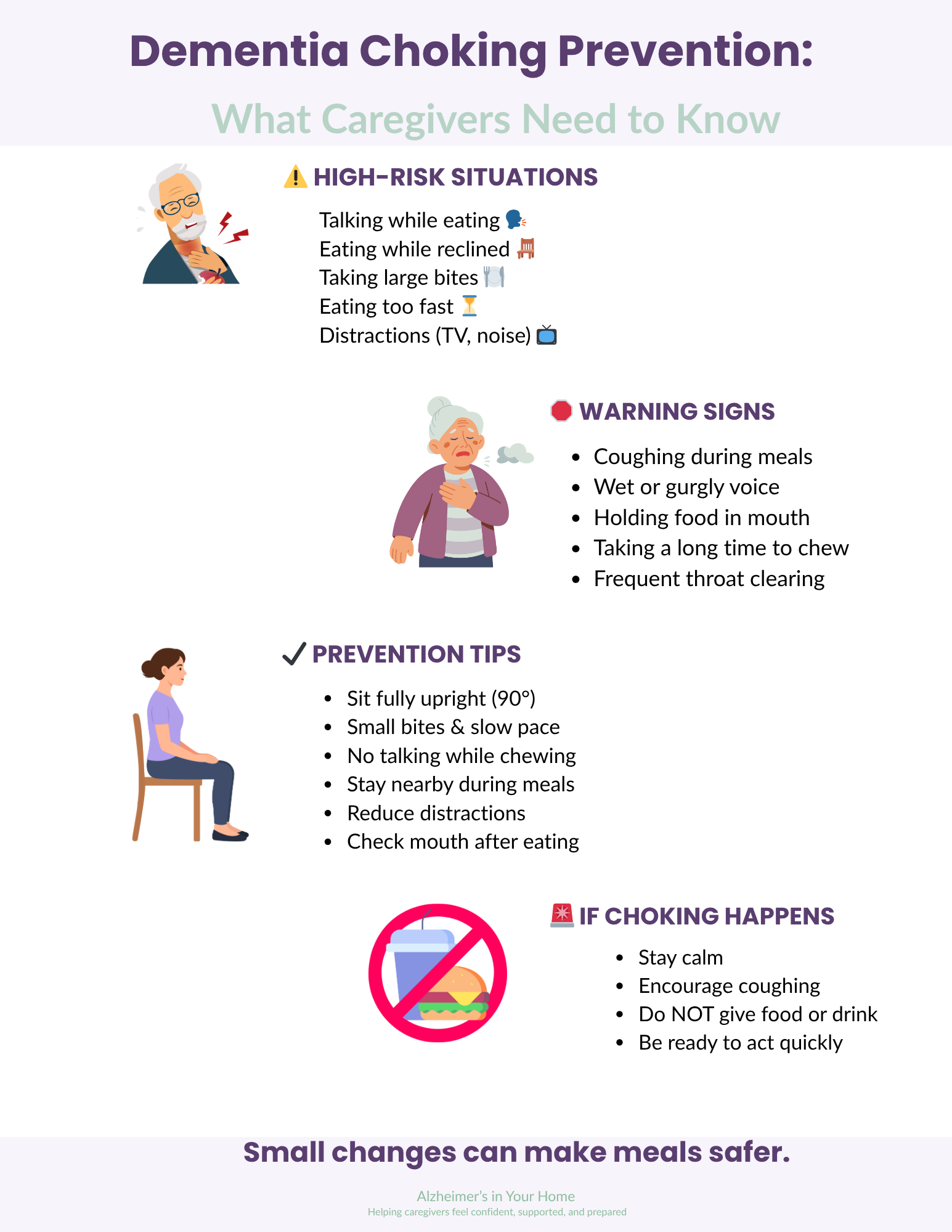
If you noticed any of these signs, it’s worth taking a closer look at mealtime safety.
🛠 The Good News: There Are Simple Ways to Reduce the Risk
The good news is—there are simple things you can do during meals that can make a big difference.
Most choking and aspiration risks are not caused by one big mistake…
They happen from small things that are easy to overlook in the moment.
And once you know what to watch for, these are things you can start adjusting right away.
You don’t have to change everything all at once.
Even a few small changes can help make meals safer.
💬 “Small adjustments during everyday moments can make a big difference in safety.”
🏡 Want to Make the Entire Home Safer?
Choking risk is just one part of a bigger picture when it comes to dementia care.
There are many small changes around the home that can help reduce risks and make everyday life safer.
If you’re not sure where to start, I put together a simple guide to help you:
👉 Creating a Safe Haven: Dementia-Friendly Living
It walks you through practical ways to create a safer environment—without making things feel overwhelming.
💜 You can get it here:
https://alzheimersinyourhome.com/dementia-friendly-living-lp/
Here are some of the most important things to focus on during meals:
Here are some of the most important things to focus on to help prevent choking and aspiration:
Sit Upright
Make sure your loved one is sitting fully upright during meals and for at least 30 minutes afterward.
Slow Down
Encourage small bites and sips. Rushing increases the risk.

No Talking While Eating
Talking while chewing can interfere with the body’s natural timing, making it easier for food or liquid to enter the airway.

Reduce Distractions
Turn off the TV and reduce noise so they can focus on eating.

Stay Nearby
Stay nearby during meals so you can notice early signs of difficulty.

Check the Mouth
Sometimes food stays in the cheeks or under the tongue.
💛 “Safety during meals is often about the small details we don’t think about.”
🚨 High-Risk Situations
These situations can increase the risk of choking:
- Talking while eating
- Eating while reclined
- Taking large bites
- Rushing meals
- Eating with distractions
These can be worse if your loved one has
👉 dementia agitation and behavior changes
🚨 When to Get Help
It may be time to talk to a healthcare provider if you notice:
- Frequent coughing during meals
- Ongoing swallowing difficulties
- Unexplained weight loss
- Repeated respiratory infections
A speech therapist can evaluate swallowing and recommend safer strategies.
🚨 Emergency Preparedness: What If Choking Happens?

Even with the best prevention, choking can still happen.
That’s why it’s important to be prepared.
Learning how to respond quickly in a choking situation is critical, and some caregivers choose to have additional tools available in case of an emergency.
One option some families look into is the LifeVac Anti-Choking Device, which is designed to help remove an airway obstruction when someone is choking.
👉 You can learn more about it here:
LifeVac Suction Rescue Device
It is not a replacement for proper training or emergency response, but it may provide an added layer of support for some caregivers.
Always follow recommended emergency procedures and seek proper training for choking response.
In more serious cases, complications may require care, so it’s important to know
👉 how to prepare for a dementia hospital stay
🌿 “Preparation doesn’t mean something bad will happen—it means you’re ready if it does.”
❓ Caregiver Questions
How do I know if my loved one is having swallowing problems?
Look for coughing, slow eating, or holding food.
What is silent aspiration?
Food or liquid enters the airway without obvious choking.
Should I worry after one choking episode?
Yes, it can be an early warning sign.
Who evaluates swallowing?
A speech therapist.
When things start to change, having the right kind of support can make this feel much more manageable.
Need Help Right Now?
If this feels overwhelming, you are not alone. You can find simple tools and support in the caregiver support toolbox.
Keeping Track of Changes Can Help
When choking risk changes, it’s hard to remember everything.
Tracking patterns like coughing or slow eating can help you stay organized and better communicate with doctors.
Understanding the “Why” Behind These Changes
When you understand how dementia affects the brain, these changes start to make more sense.
🌿 Final Thoughts
Choking and aspiration risk are not always talked about early…
but they matter more than most people realize.
When you start to notice the small changes, you can respond sooner.
And sometimes, that’s what makes all the difference.