


Causes, and What to Do Before It’s Too LateMost people do not realize how heavy dementia caregiving really is until they are living it.
It is not just helping with memory. It is managing behaviors, watching for safety, losing sleep, handling appointments, and carrying the emotional weight of watching someone change right in front of you.
At first, many caregivers push through and tell themselves, “I can handle this.”
But over time, something starts to shift.
You may feel tired all the time.
You may get irritated more easily.
You may stop taking care of yourself.
You may feel like you are running on empty.
And before you even realize it, you may be dealing with dementia caregiver burnout.
If that sounds familiar, you are not alone. Burnout is very common in dementia caregiving, and it does not mean you are weak. It means you have been carrying too much for too long without enough support.
💛 A Story You May Recognize

I remember a caregiver who told me, “I do not even feel like myself anymore.”
She was caring for her husband at home. He was needing more help, sleeping poorly, and becoming more confused. She had not slept through the night in months. She stopped going places. She stopped seeing friends. She stopped doing the little things that once helped her feel like herself.
One day, she snapped over something small.
Afterward, she went into the bathroom, shut the door, and cried.
Not just because of what had happened in that moment, but because deep down she knew the truth.
She had nothing left to give.
That is what caregiver burnout can look like.
It does not always show up all at once. Sometimes it creeps in little by little until one day you realize you are exhausted in every way possible.
💛 “Burnout does not mean you do not care.
It means you have cared for too long without enough support.”
What Is Dementia Caregiver Burnout?

Caregiver burnout happens when the physical, emotional, and mental stress builds up over time and starts affecting your health, mood, and ability to cope.
Dementia care is different. Needs increase, behaviors change, and you may feel like you’re always “on alert.”
👉 That kind of stress can wear anyone down.
💜 Burnout doesn’t mean you don’t love them. It means you need support too.
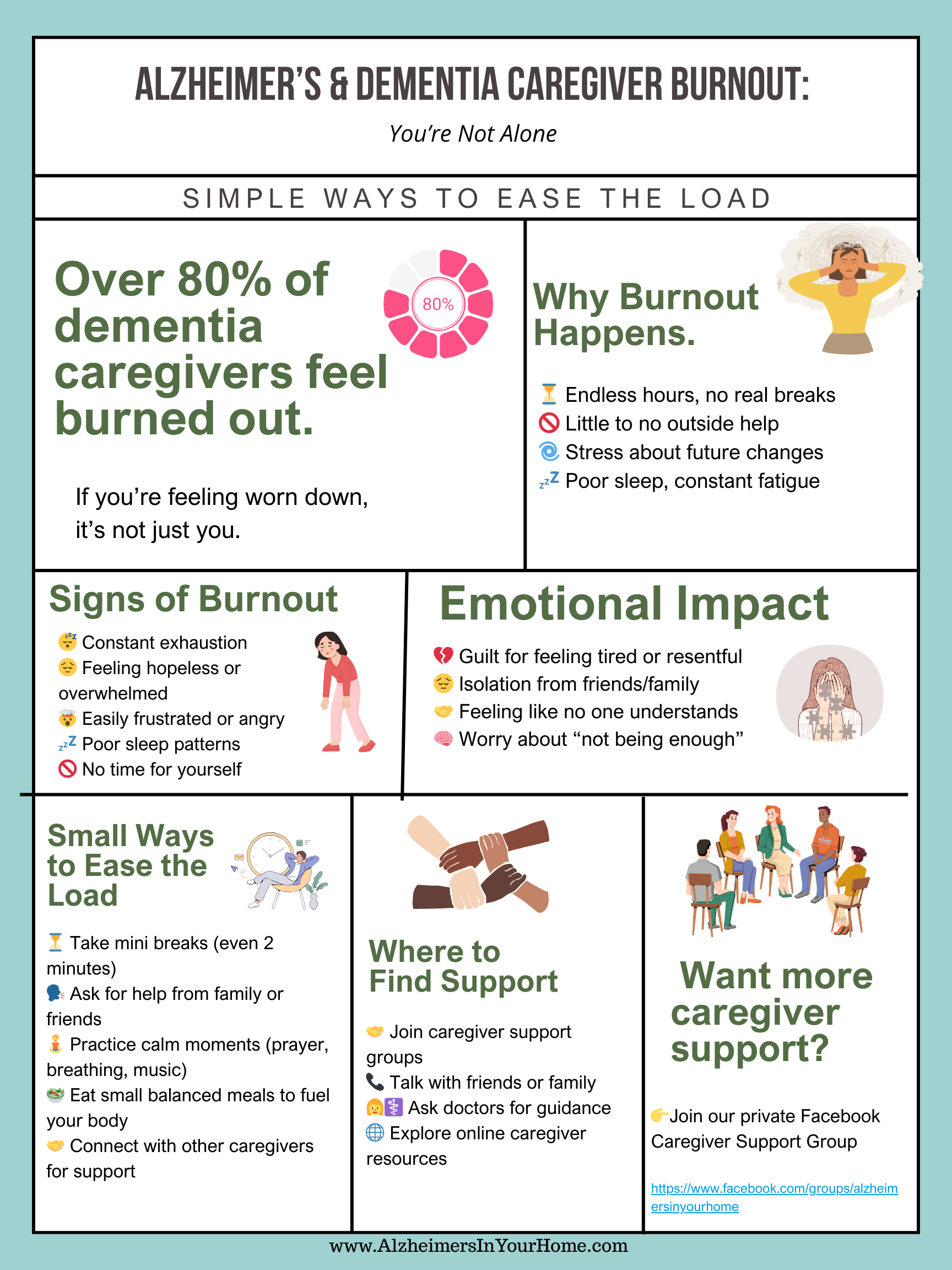
⚠️ Signs You May Be Experiencing Caregiver Burnout
Burnout does not always show up all at once. Sometimes it builds slowly. Here are some signs to watch for:
Constant Exhaustion
You feel tired all the time, even when you do get some sleep. Your body and mind never fully feel rested.
Irritability
Little things start to bother you more than they used to. You may feel short-tempered or snap more easily.
Feeling Alone
Even if people are around, it can feel like no one truly understands what you are going through.
Withdrawal
You stop reaching out, cancel plans, or avoid social situations because you feel too drained.
Sleep & Appetite Changes
You may not be sleeping well, or your eating habits have changed without even realizing it.
Loss of Joy
Things you used to enjoy just do not feel the same anymore. You feel numb or disconnected.
If you saw yourself in more than one of these… it may be time to pause and take a closer look at how much you are carrying.
🌿 “You cannot pour from an empty cup.”
You may feel guilty for needing a break…
but needing a break doesn’t mean you don’t care.
It means you’re human 💛
See the Signs Clearly
Many caregivers don’t realize how burned out they are… until they see it.
They just keep going.
Pushing through.
Putting themselves last.
If that sounds like you, take a moment to look at this.
👉 View the Caregiver Burnout infographic
💜 You never know who else might need this today—feel free to share it with another caregiver.
🧩 Why Dementia Caregivers Burn Out

Dementia caregiving brings a unique kind of stress. It is not just the workload. It is also the emotional strain of watching someone change while still needing more and more from you.
Here are some of the biggest reasons burnout happens:
The care keeps increasing
Dementia is progressive. What starts as reminders and supervision can turn into hands-on help with nearly every part of daily life.
You may be on duty all the time
Many caregivers feel like they can never fully relax. Even when they sit down, they are still listening, watching, and worrying.
Behavior changes are hard
Agitation, wandering, resistance, poor sleep, repeated questions, and confusion can make each day feel unpredictable.
You may feel like no one else understands
Caregivers often feel very alone, even when other people are around.
You try to do too much by yourself
A lot of caregivers wait too long to ask for help. They keep thinking they should be able to handle it all alone.
Burnout does not happen because you are not strong enough.
It happens because dementia care is heavy.
your loved one is safe.
💛 A Quick Self-Check
Sometimes it’s hard to see burnout when you’re in the middle of it.
You may be pushing through each day without realizing how much it’s affecting you.
Take a moment and look through this simple checklist:
👉 Do any of these sound like you?

If you found yourself saying “yes” to several of these…
it may be time to start looking at ways to get more support.
🤍 “You are allowed to need help.”
🛠 What To Do If You Are Experiencing Dementia Caregiver Burnout
If you are feeling burned out, the answer is not to push harder. It is to start lowering the load in small, manageable ways.
Ask for Help
You do not have to do this alone, even if it feels like you should. Start by telling one person you trust that you need help. It could be family, a friend, someone from church, or even a support group. Help might not look perfect, but it can still make a difference.
Take Small Breaks
You may not be able to take a full day off right now, and that is okay. Even small breaks can help reset your mind and body. Step outside for fresh air, sit quietly for a few minutes, or take a shower without rushing. These small moments matter more than you think.
Let Go of Perfect
Dementia caregiving is not about doing everything perfectly. It is about keeping your loved one safe, cared for, and as comfortable as possible. Give yourself permission to do what is “good enough” and let go of the pressure to do it all.
Write Things Down
When your mind is overwhelmed, trying to remember everything makes it worse. Start writing things down—changes you notice, questions for the doctor, sleep patterns, behaviors, and concerns. Getting it out of your head can bring a sense of relief and control.
Even though these steps may seem simple, they can be hard to do when you are already overwhelmed.
Many caregivers struggle with asking for help because they feel like they should be able to handle it all. Others feel guilty taking a break or worry that no one else will do things the “right way.”
But the truth is, dementia caregiving is not meant to be done alone for long periods of time.
Sometimes burnout is not just about being tired. It is your body and mind telling you that something needs to change.
This might mean:
- Bringing in help sooner than you planned
- Letting others take over small tasks
- Creating a little space for yourself each day
- Finding tools that help you stay organized instead of trying to remember everything
The goal is not to do everything perfectly.
The goal is to make caregiving more manageable so you can keep going without losing yourself in the process.
🌿 “Taking care of yourself is part of taking care of them.”
You do not have to do all of these at once. Even choosing one small step can begin to ease the pressure.
When Everything Feels Like Too Much
There are moments in dementia caregiving where everything feels overwhelming.
You are tired.
You are trying your best.
And you just need a little help figuring out what to do next.
That is exactly why I created the Caregiver Support Toolbox.
It is filled with simple tools, checklists, and guidance to help you through the hard moments—one step at a time.
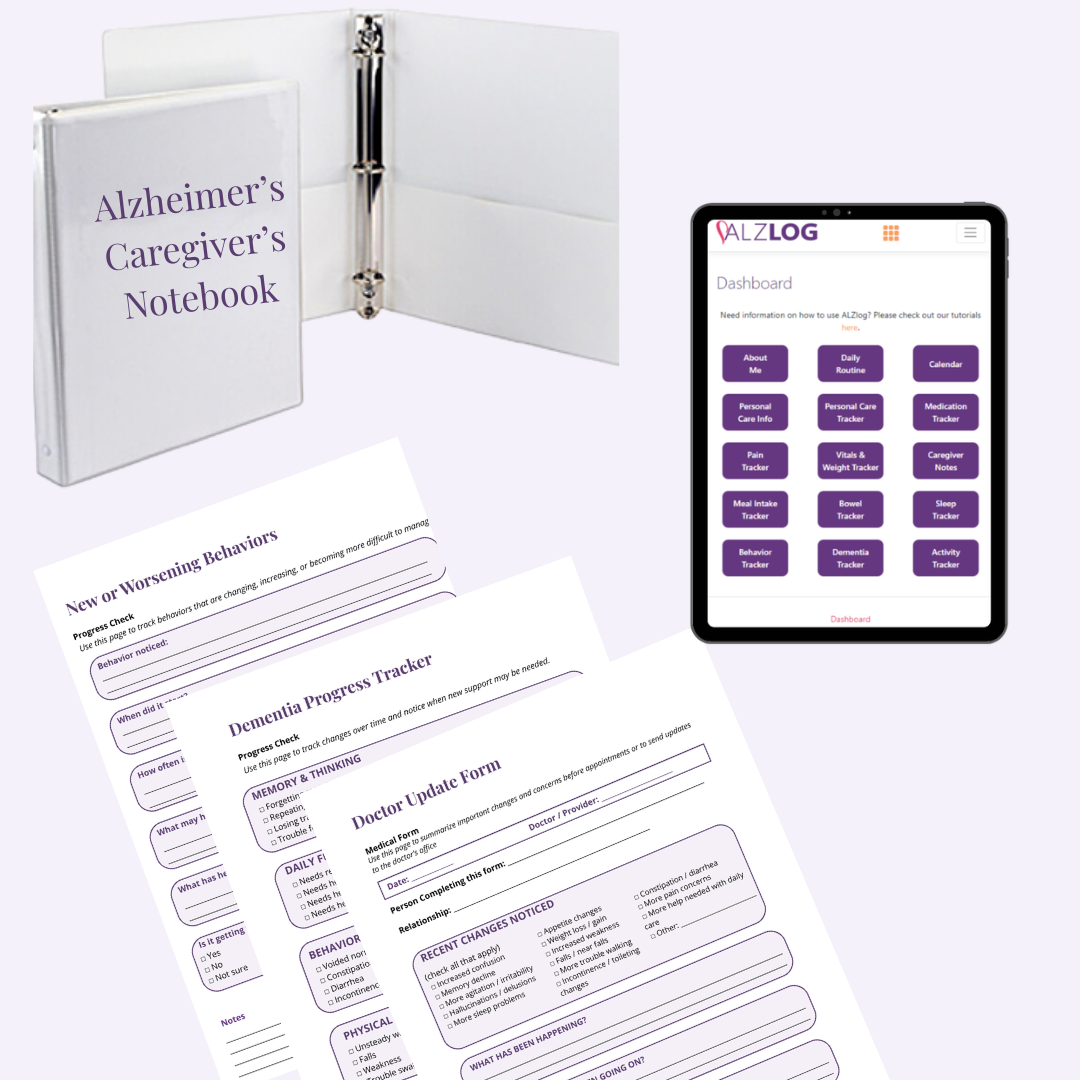
Feeling Mentally Overloaded?
When you are trying to remember behavior changes, sleep problems, appointments, medications, questions for the doctor, and everything else, it is easy to feel overwhelmed.
Alzlog helps you track important changes, stay organized, and keep helpful information all in one place.
Sometimes burnout is not just about being tired.
It is also about feeling confused, unsure, and constantly trying to figure things out on your own.
When you understand how dementia is changing the brain, many of those frustrating moments start to make more sense.
And when things make more sense, it becomes easier to respond with patience instead of frustration.
If you feel like you are constantly trying to figure things out as you go, learning more about dementia can make a big difference.
👉 You can learn more about that here:
Understanding Dementia Course
How Burnout Can Affect Both of You
Caregiver burnout does not just affect the caregiver. It can also affect the person living with dementia.
When you are worn down, it becomes harder to stay patient, think clearly, and respond calmly during difficult moments. That does not mean you are a bad caregiver. It means your tank is empty.
Burnout can lead to:
- More tension in the home
- Less patience during care tasks
- More mistakes or missed details
- More guilt and emotional pain
- A greater chance that the caregiver’s own health will suffer
Taking care of yourself is not selfish. It is part of good dementia care.
When It May Be Time To Get More Help
Sometimes burnout is your warning sign.
It may be time to bring in more help if:
- You are losing sleep on a regular basis
- Your own health is slipping
- You feel angry or overwhelmed most days
- Your loved one is no longer safe alone
- Care needs have become physical and constant
- You feel like you are always in crisis mode
Getting more help could mean asking family to step in, hiring in-home help, using respite care, connecting with your church, or starting to explore care options.
You do not have to wait until you are completely falling apart.
❓ Frequently Asked Questions About Dementia Caregiver Burnout
How do I know if I have caregiver burnout?
If you feel physically drained, emotionally overwhelmed, easily irritated, and no longer like yourself, burnout may be part of what you are experiencing.
Is dementia caregiver burnout common?
Yes. Dementia caregiving is one of the most demanding types of caregiving because the needs often increase over time and can affect every part of daily life.
Can caregiver burnout affect my health?
Yes. Ongoing stress can affect sleep, mood, immune health, blood pressure, and emotional well-being.
Is it okay to need help?
Yes. Dementia care is not meant to be carried by one person alone for long periods of time without support.
What is the first thing I should do if I feel burned out?
Start by admitting that you are overwhelmed and tell someone you need help. Then look for one small way to lower the load
Related Dementia Caregiver Support
If this article speaks to where you are right now, these may help too:
💜 “Even the strongest caregiver needs support sometimes.”
Final Thoughts
Dementia caregiving is one of the hardest roles many people will ever have.
It asks so much of you physically, mentally, and emotionally.
If you are feeling burned out, please hear this: you are not failing.
You are carrying something very heavy.
Let this be your reminder to pause, breathe, and start looking at where you need more support. Your health matters too. Your peace matters too.
And you do not have to walk this journey alone.