

Caregiver Support Toolbox: Free Alzheimer’s & Dementia Resources
Practical tools. Clear guidance. A little more confidence at home.
Caring for someone with Alzheimer’s or another dementia can leave you with questions you never expected to ask.
Why are they doing that? What should I write down? How do I explain these changes to the doctor? Where do I even begin?
You don’t have to figure everything out today.
This toolbox brings together free forms, guides, and caregiver education to help you understand changes, prepare for appointments, and manage everyday care.
Start with the challenge you’re facing today. Take what helps, and come back when you need something else.
💜 Bookmark this page so your caregiver tools are easy to find.
💜 Not Sure Where to Start?
Something Has Changed—Now What?
Maybe your loved one is acting differently, struggling with a familiar task, or needing more help than before. You know something has changed, but you aren’t sure what it means.
My free guide, Something Has Changed—Now What?, gives you a gentle place to begin.
Learn how to notice changes, look for clues, and gather information to share with your loved one’s healthcare team.
You don’t need to have all the answers. Start by noticing what’s different.
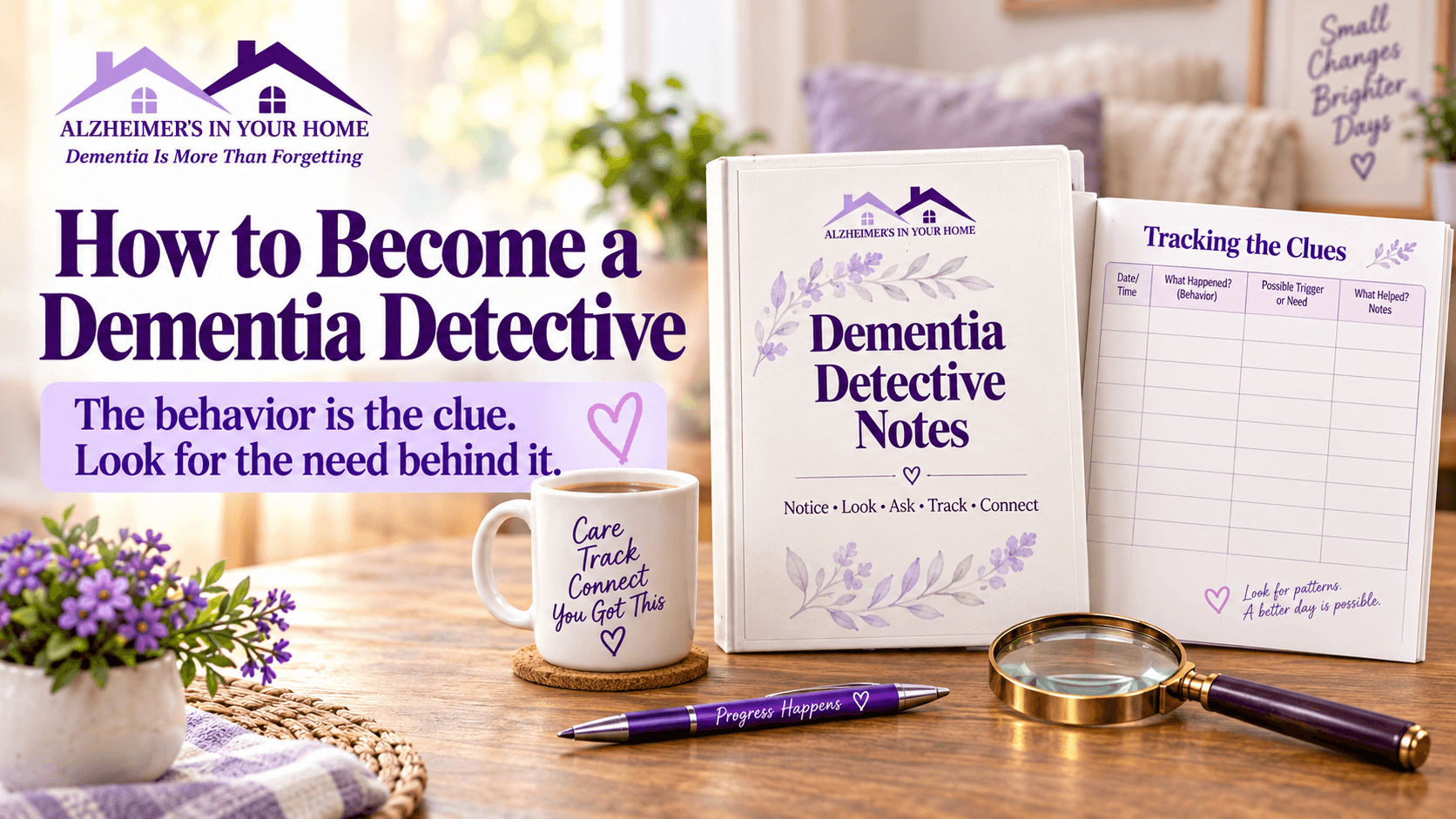
🔎 Become a Dementia Detective
Look beyond the behavior.
Look for the clues.
Your loved one pushes away dinner. Refuses a bath. Paces through the house. Keeps getting up at night.
It’s easy to see the behavior. Understanding what may be behind it takes a closer look.
Being a Dementia Detective means getting curious about what your loved one may be experiencing—and what might help.
Use these five steps:
- Notice: What’s different from their usual routine?
Look: What clues might explain the change?
Ask: What might they need?
Track: Write down what happened and what helped.
Connect: Share your observations with the care team.
You don’t have to solve every problem yourself. Your observations can help the care team understand what is happening.
📝 Free Caregiver Forms & Checklists
You may notice a change at breakfast and forget the details by the time you speak with the doctor.
Writing things down helps you hold on to those clues.
Choose the tool that fits your needs. You don’t have to use every form or track everything every day.
📝 Tracking Changes at Home
Use these free forms to record daily observations, notice changes over time, and recognize possible warning signs.
Choose the form that best fits what you’re noticing.
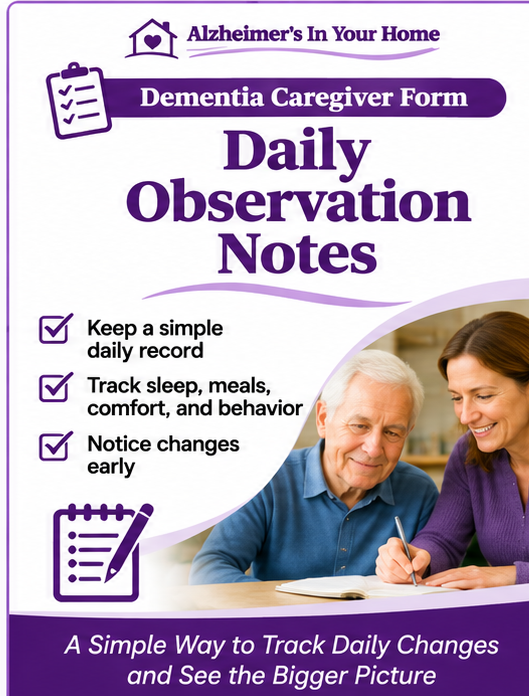
Daily Observation Notes
Keep a simple record of changes in sleep, meals, comfort, behavior, and daily routines.
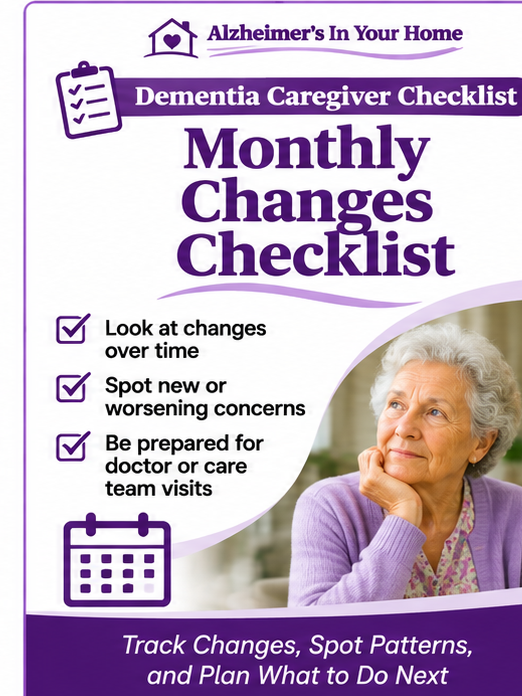
Monthly Changes Checklist
Track changes over time, spot patterns, and prepare for conversations with your loved one’s healthcare team.
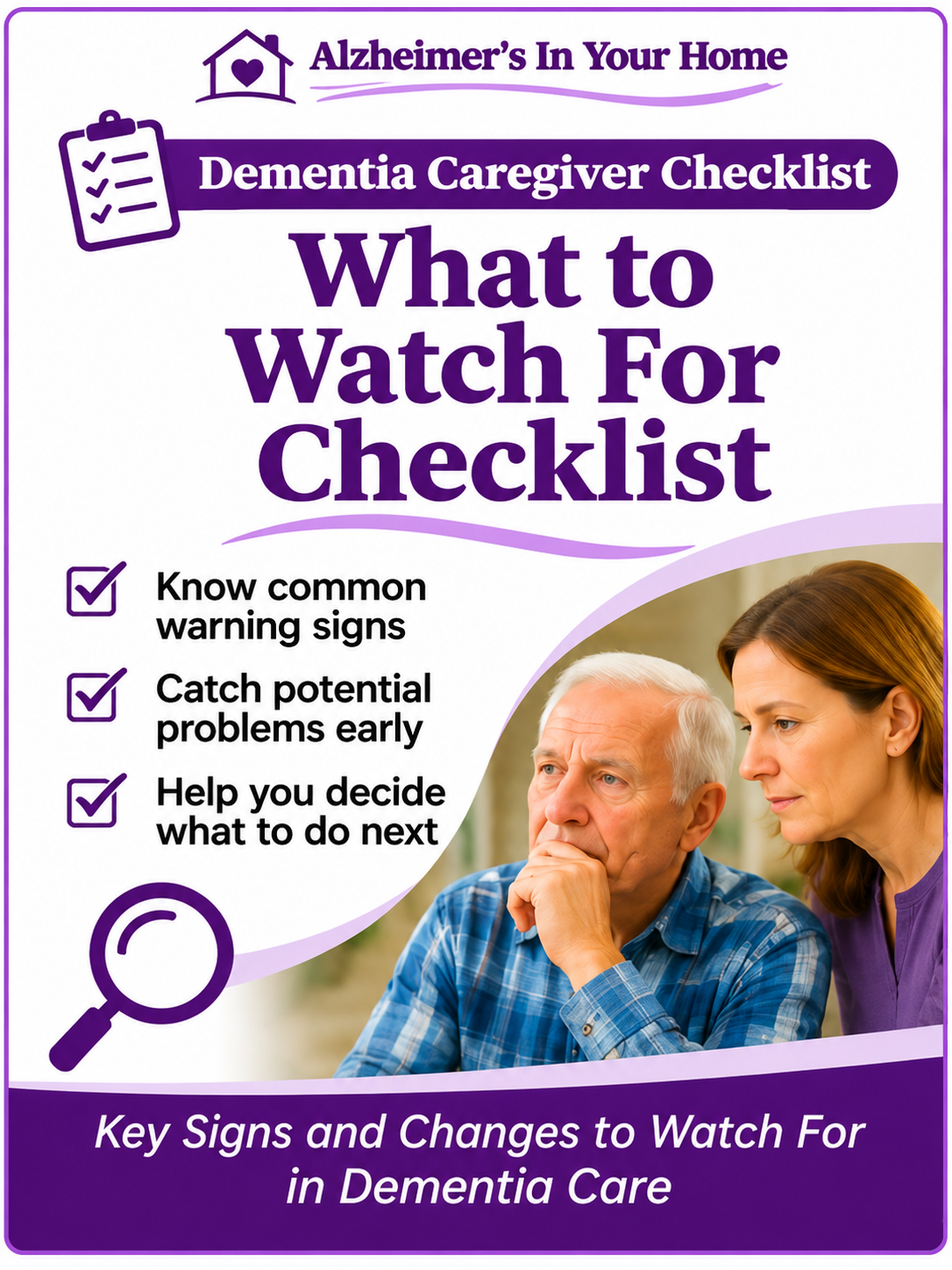
What to Watch For Checklist
Learn what changes to watch for in memory, behavior, health, and everyday activities.
🌅 Sundowning Tracker
Does your loved one become more confused, restless, or upset later in the day?
The Sundowning Tracker helps you record when these changes happen, what might be triggering them, and what seems to help. Over time, you may begin to notice patterns that can help you plan ahead.
Choose the printable or fillable version below.
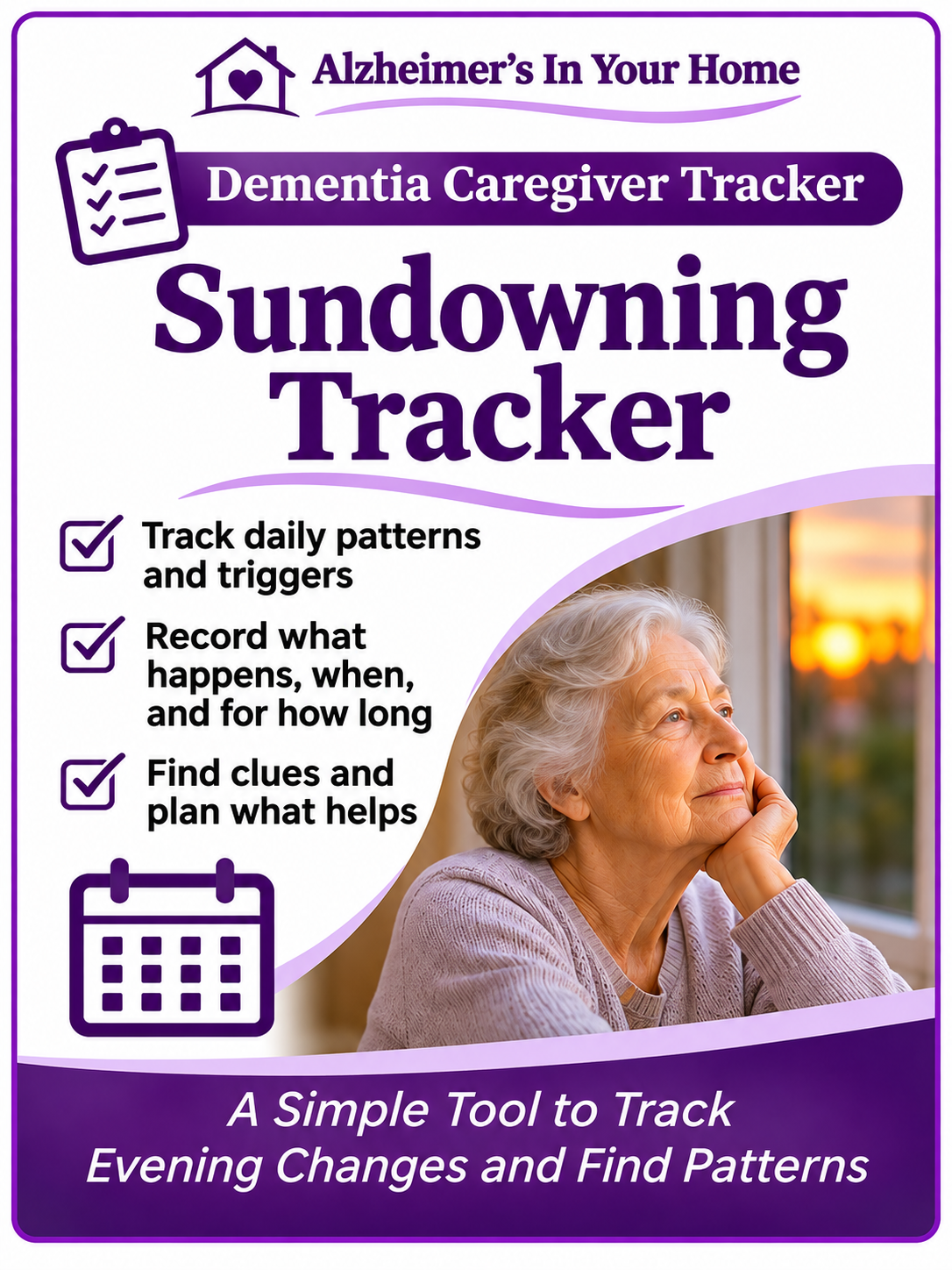
Sundowning Tracker
Track evening changes, notice patterns, and look for possible triggers so you can plan ahead and use strategies to help.
Printable Version
Print and use by hand
Fillable Version
Type in your notes and save or print.
🩺 Preparing for Doctor Visits
Have you ever walked out of a doctor’s appointment and realized you forgot to mention something important?
These free Doctor Update Forms help you organize your concerns, record changes, and share important information with your loved one’s healthcare team.
Choose the form that works best for you.
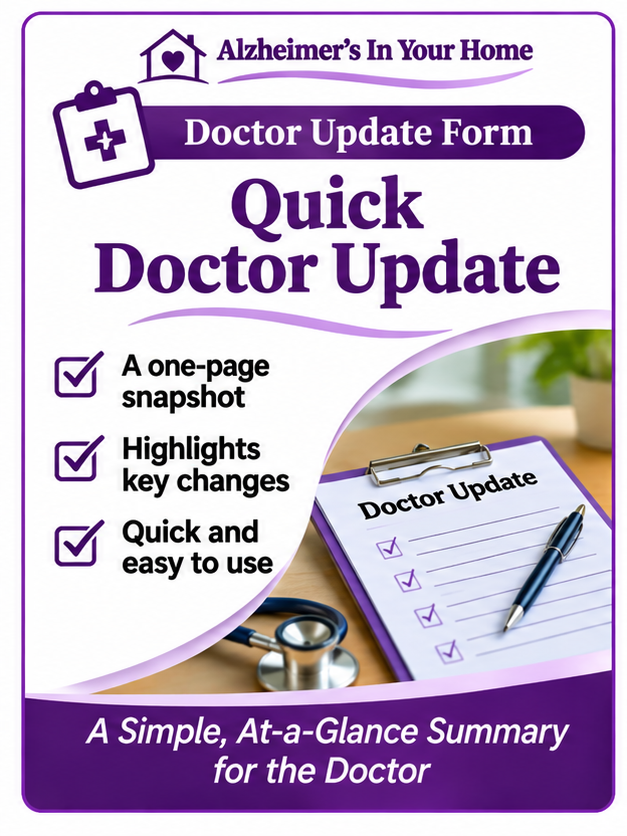
Quick Doctor Update Form
Organize your most important concerns and changes on one simple page so you don’t forget what to tell the doctor.
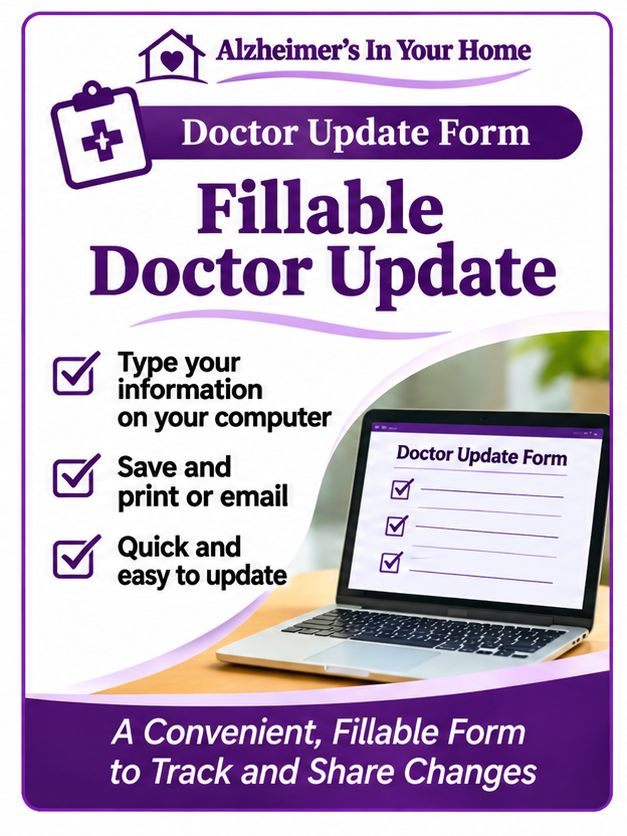
Fillable Doctor Update Form
Type your observations and concerns into this form, then save or print it to share with your loved one’s doctor.
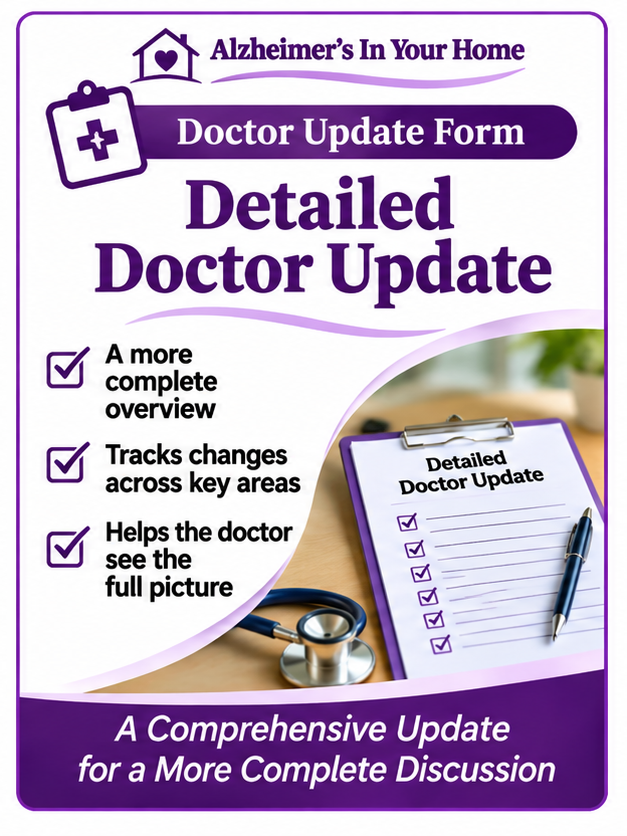
Detailed Doctor Update Form
Have several concerns to discuss? Use this longer form to organize changes, symptoms, and questions before the appointment.
🩺 Symptom & Health Checklists
When something changes, it can be hard to know what’s causing it or what to do next.
As a Dementia Detective, your job is to look for clues rather than assume every change is caused by dementia.
These checklists can help you recognize possible problems, record what happened, and share important details with the healthcare team.
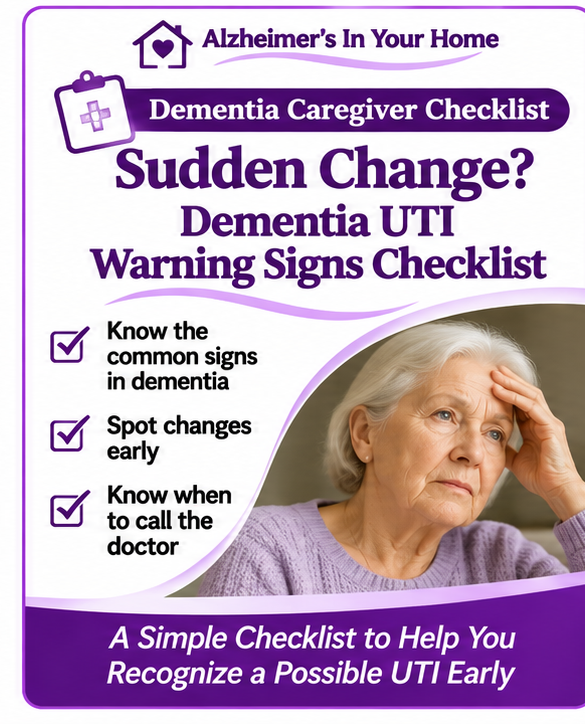
Sudden Change? Dementia UTI Warning Signs Checklist
Record sudden changes in your loved one’s condition and organize concerns to discuss with the doctor.

When to Call the Doctor About Pain
Learn to recognize possible signs of pain when your loved one has trouble telling you what hurts.
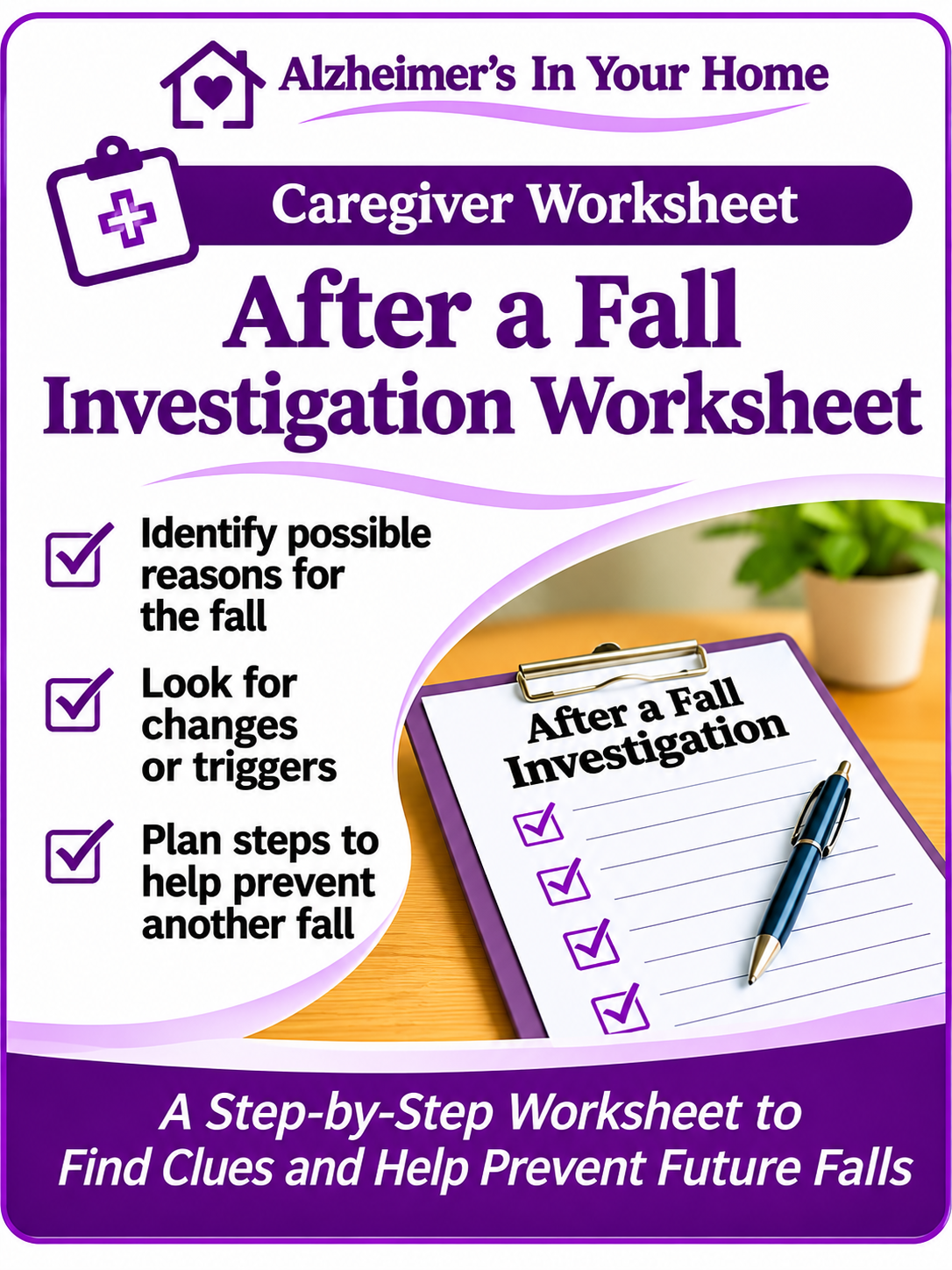
After a Fall Investigation Worksheet
Write down what happened before and after a fall. Look for clues that may help prevent another fall.

🛡️ Everyday Care & Safety Checklists
Bathing struggles, falls, and wandering can be stressful and sometimes frightening for caregivers.
But these challenges often have clues worth looking for.
These free checklists can help you identify possible causes, recognize safety risks, and find practical ways to make everyday care safer and more comfortable.

Dementia Bathing Checklist
Discover possible reasons bathing is difficult and find ways to make bath time safer and more comfortable.
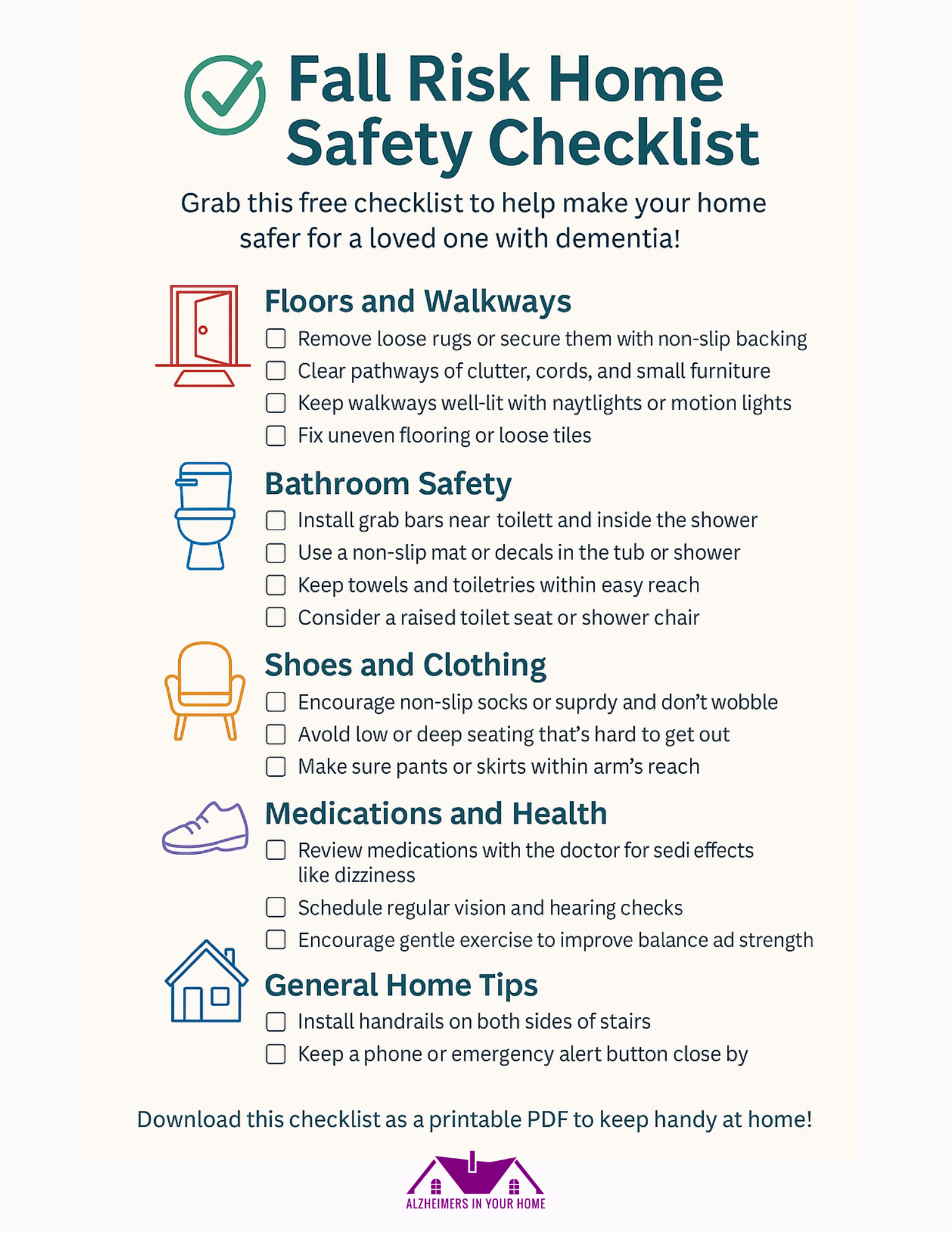
Fall Risk Safety Checklist
Look for hazards around the home and changes that may increase your loved one’s risk of falling.
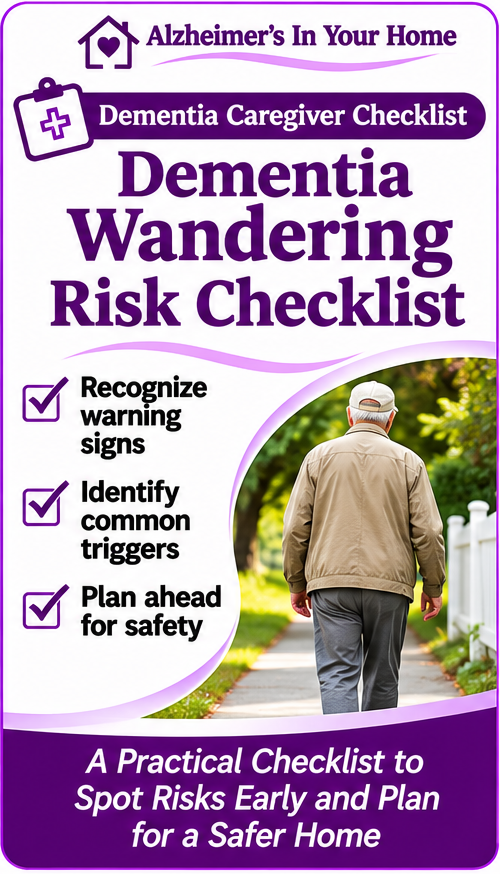
Dementia Wandering Risk Checklist
Recognize warning signs of wandering and make a safety plan before your loved one becomes lost.
🏥 Preparing for a Hospital Stay or Care Change
A hospital visit can be especially confusing and stressful for someone living with dementia.
Having important information ready can make a big difference.
These free resources help you prepare for an unexpected hospital visit, share your loved one’s needs with hospital staff, and help the care team understand the person behind the diagnosis.
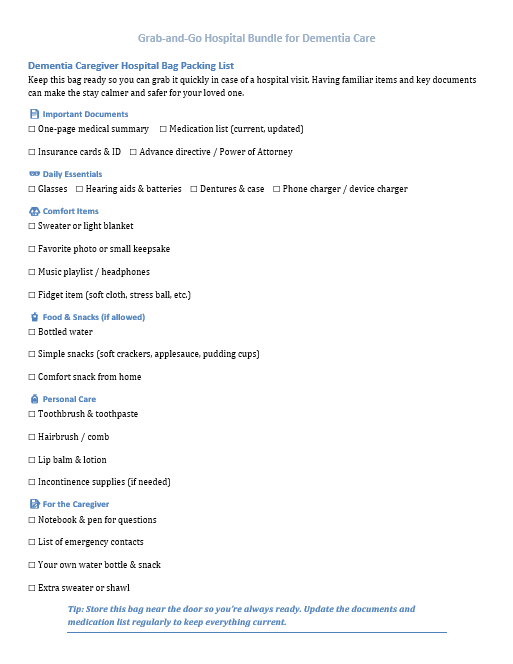
Hospital Go Bag List
Be prepared for an unexpected hospital visit. Know what to pack, including important information and comfort items.
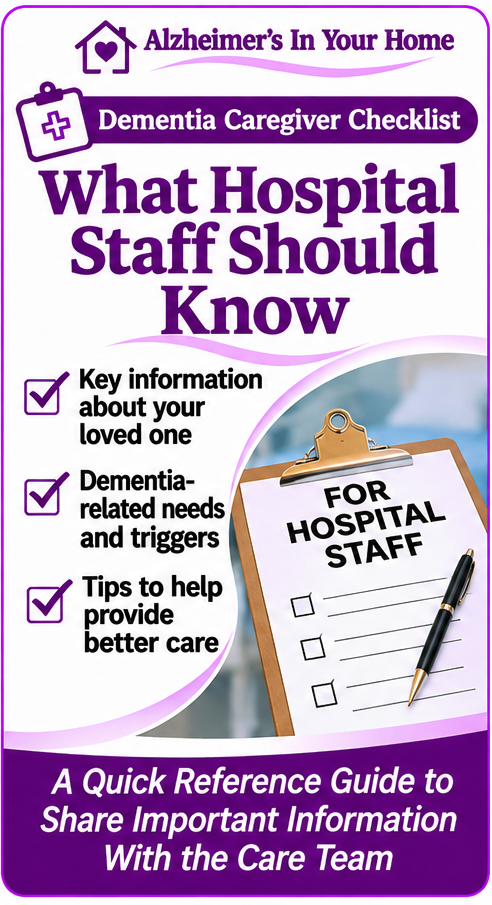
What Hospital Staff Should Know
Help hospital staff understand your loved one’s routines, communication needs, and what helps them feel safe.
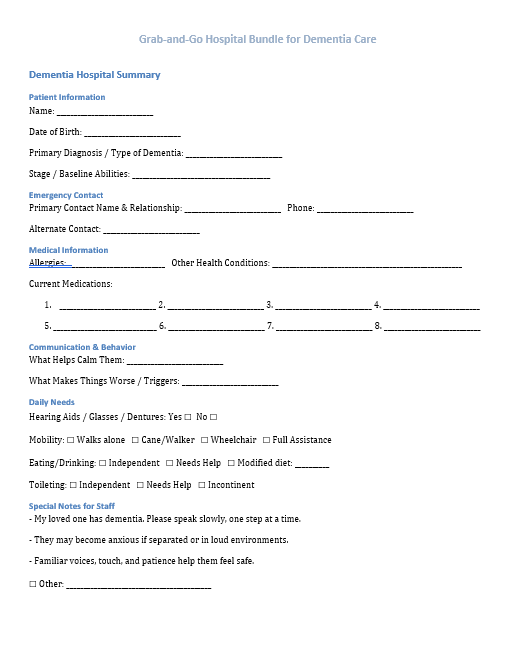
Dementia Care Summary
Keep important care information together so everyone caring for your loved one understands their needs.
💜 Planning for Changing Care Needs
As dementia progresses, your loved one’s needs may change. You may begin wondering whether it’s time for more help or what care options are available.
You don’t have to wait for a crisis to start planning.
These free guides can help you recognize changing needs, explore care options, and feel more prepared for decisions you may face along the way.
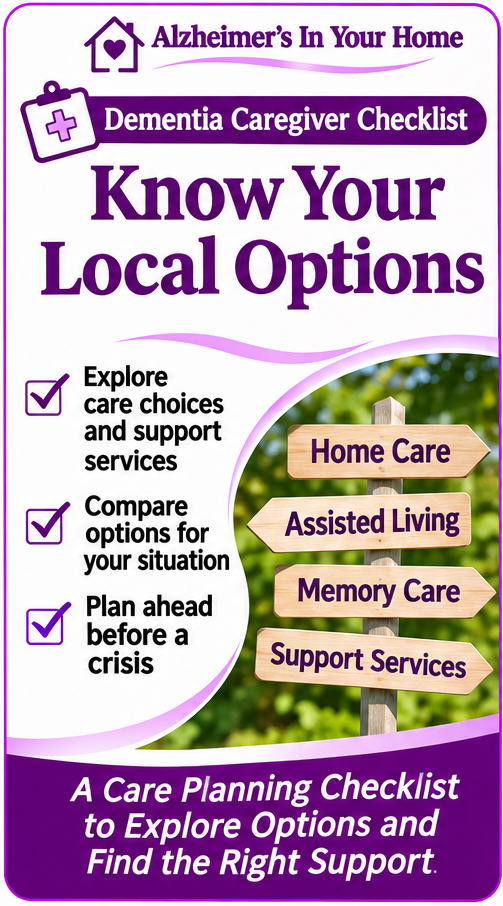
Know Your Local Options
Explore care options and support services before you need them. Planning ahead can make difficult decisions easier.
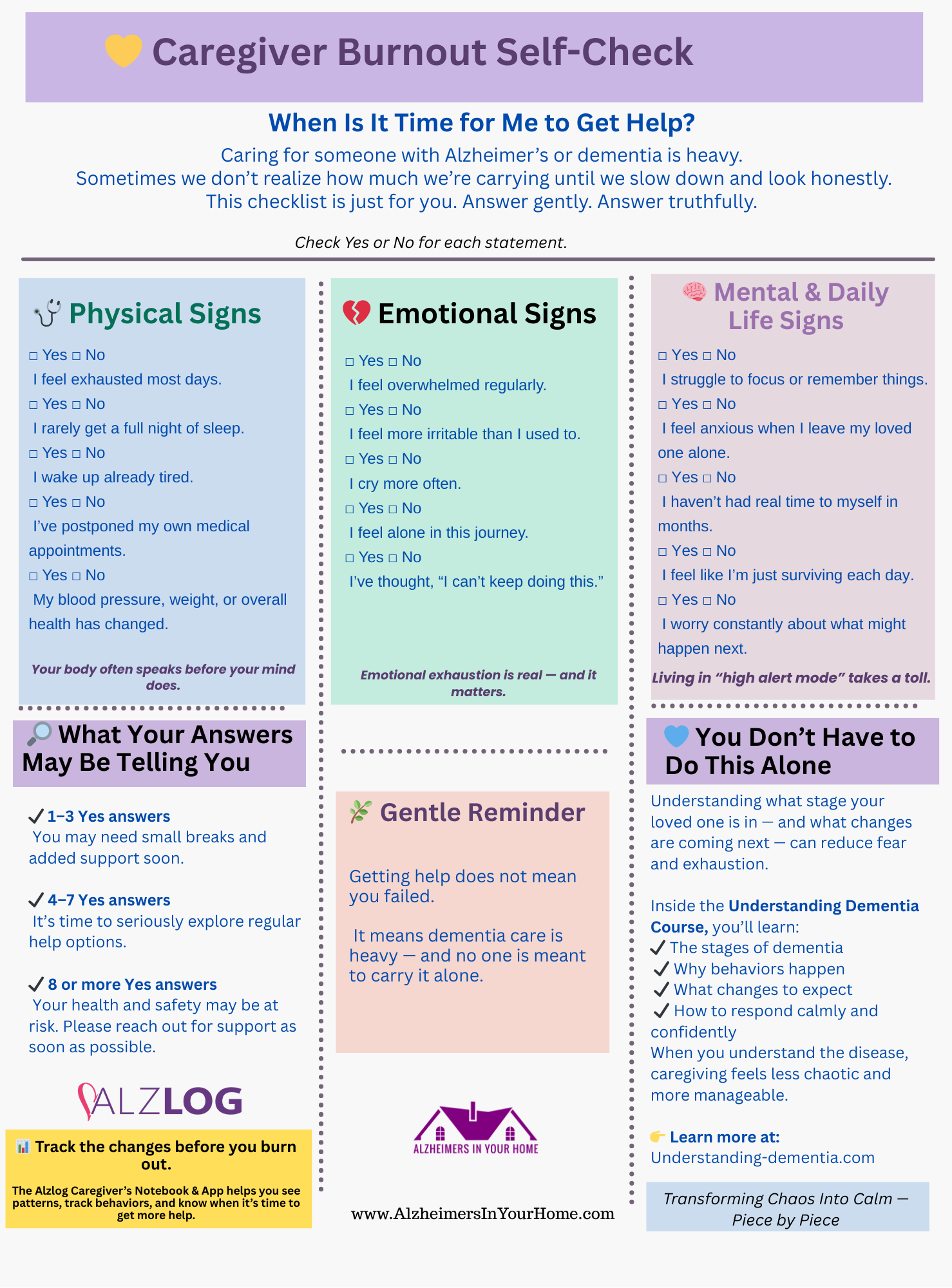
When It’s Time for More Help
Learn to recognize signs that your loved one may need more care and explore your options for getting support.
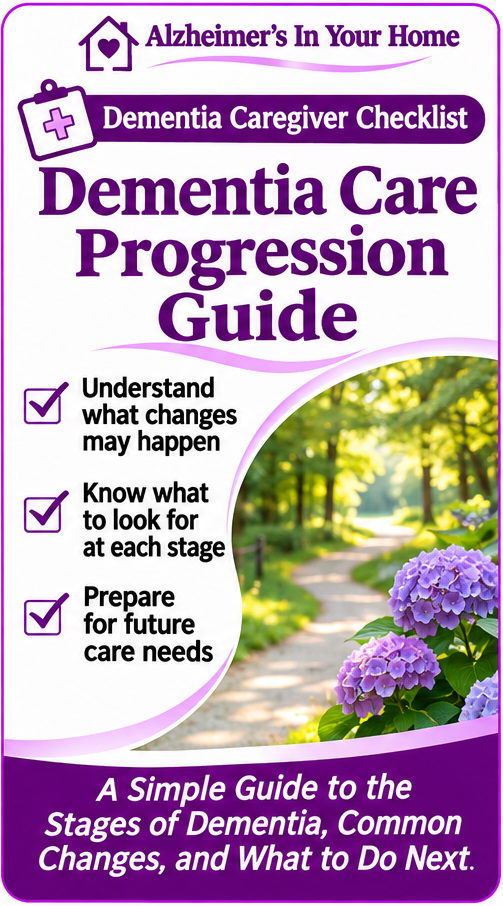
Dementia Care Progression Guide
Understand how dementia may change over time and what to watch for as your loved one’s care needs increase.
🏡 Help With Everyday Dementia Care
Sometimes the hardest part of caregiving is getting through an ordinary day.
A bath becomes a struggle. Mealtime takes longer. Your loved one asks the same question again and again.
Learning why these things happen can help you choose a different approach.
Bathing & Personal Care
Sleep & Sundowning
Toileting & Bathroom Changes
Walking, Falls & Wandering
Eating & Drinking
Communication & Connection
Pain & Behavior Changes
🎥 Watch Dementia Caregiver Videos
Sometimes it’s easier to understand something when you can see and hear it explained.
In my free video library, I share practical caregiving tips, real-life examples, and ways to become a better Dementia Detective.
Choose a video below or explore the full library to find help with what you’re facing today.

📓 Keep the Clues Together With the Caregiver’s Notebook
A note on the counter. A medication list in a drawer. A question you meant to ask the doctor.
When you’re caring for someone with dementia, important information can end up scattered everywhere.
The Dementia Caregiver’s Notebook helps you keep those important details together in one place.
Use it to:
- Track changes in sleep, eating, behavior, pain, and daily routines.
- Stay organized with medication lists, health information, and doctor visit notes.
- Share important details with family members, helpers, and healthcare providers.
The free checklists on this page are a great place to start. When you’re ready for a more complete system, the Notebook brings everything together.
Available as an instant PDF download or a printed binder.

💜 You Need Support, Too
Caregiving takes patience, energy, and heart. You deserve information and encouragement along the way.
Pearls of Wisdom
Receive practical caregiving tips and gentle reminders that you don’t have to do this alone.
Start with my free guide, Something Has Changed—Now What?, and receive ongoing support in your inbox.
Join Caregiver Group
Connect with other caregivers who understand the questions, frustrations, and small victories that come with dementia care.
Ask questions, share experiences, and find encouragement.
Understanding Dementia Course
Want to build a stronger foundation? This course offers step-by-step education to help you better understand dementia and approach care with more confidence.
Self-Paced Paid Course
🌿 One Step at a Time
You don’t have to use every tool on this page. You don’t have to become an expert overnight.
Choose one resource that helps with what you’re facing right now.
Write down one change. Prepare one question. Try one new approach.
Those small steps can help you better understand your loved one—and feel a little more prepared for the day ahead.
💜 You don’t have to have every answer to be a caring dementia partner.