
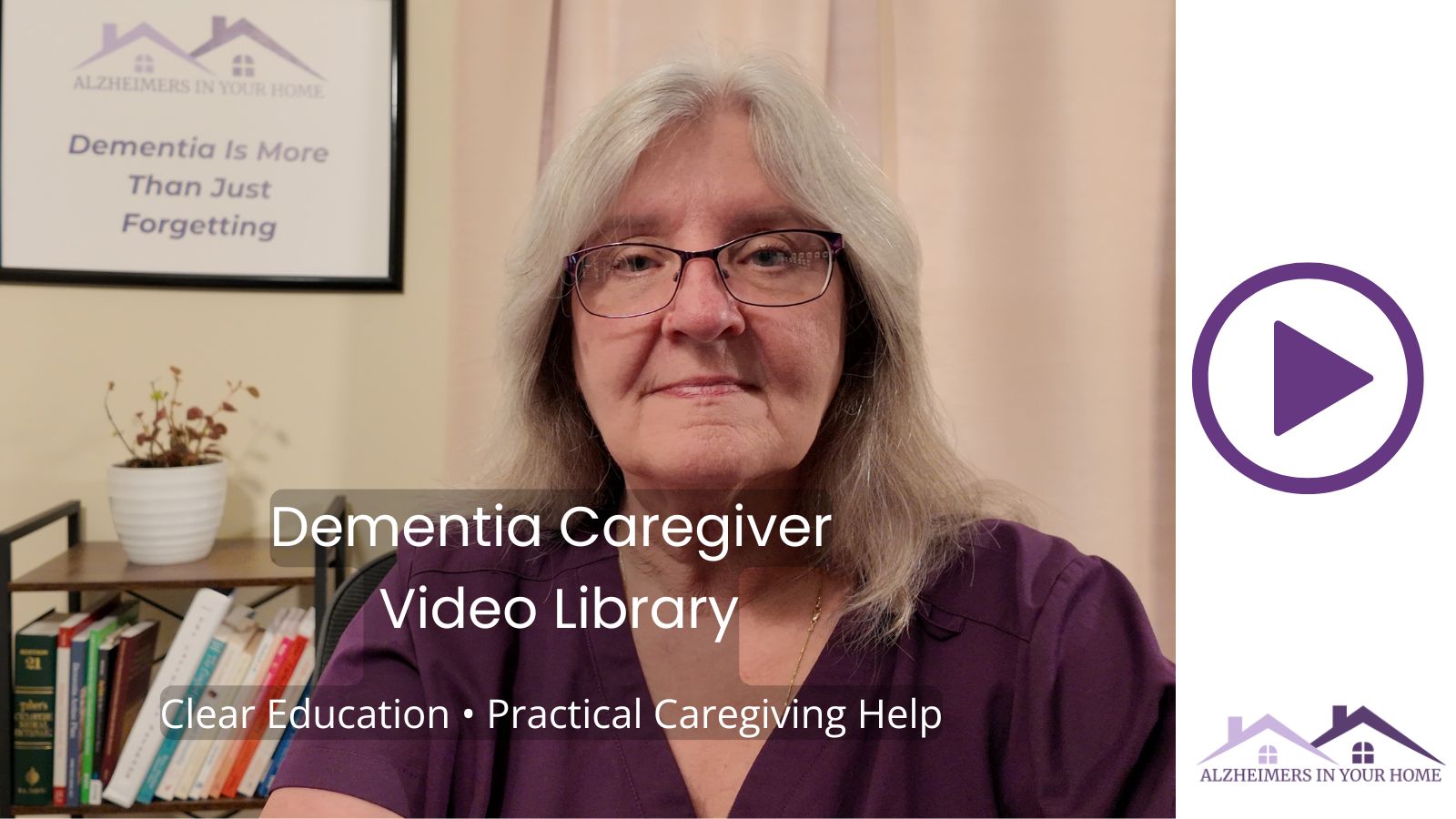
Dementia Caregiver Video Library
Clear Education • Practical Caregiving Help
Caring for someone with Alzheimer’s or another dementia can bring new questions every day.
Why are they doing that? Why doesn’t explaining seem to help anymore? Is this change part of dementia? What should I be watching for?
The Dementia Caregiver Video Library was created to help you find clear, easy-to-understand answers to those questions.
In these videos, I explain the WHY behind dementia and share practical caregiving tips you can use at home.
You can start with the first video and work your way through the library, or choose the topic you need help with today.
🧠 Start Here: Understanding Alzheimer’s & Dementia
If you are new to dementia caregiving, this is a great place to start.
Understanding what dementia is — and what it isn’t — can make many of the changes you are seeing easier to understand.
Alzheimer’s vs. Dementia: What’s the Difference? What Every Caregiver Needs to Know
People often use the words Alzheimer’s and dementia as if they mean the same thing, but they don’t.
In this video, I explain the difference between Alzheimer’s and dementia in simple terms, along with some of the different diseases that can cause dementia.
Understanding this difference gives you an important foundation for everything else you will learn about dementia care.
🧠 Understanding the Changing Dementia Brain
Once you understand what dementia is, the next step is understanding what it is doing to the brain.
Dementia is much more than forgetting.
Changes in the brain can affect communication, reasoning, judgment, decision-making, emotions, behavior, and the ability to complete everyday tasks.
What Dementia Really Does to the Brain (And Why Behavior Changes)
Why can’t they just follow the directions? Why does explaining sometimes make things worse? Why are they suddenly struggling with something they have done for years?
The answers often begin with the changing brain.
In this video, I explain how dementia affects more than memory and how those brain changes can show up in everyday life.
When you begin to understand what is happening inside the brain, many of the things happening on the outside start to make more sense.
💜 Changing Your Approach to Dementia Care
Once dementia changes the way the brain receives and processes information, we may need to change the way we communicate and provide care.
Sometimes a small change in our approach can make a big difference in their response.
Why Your Approach Changes Everything in Dementia Care
Your approach begins before you ever say a word.
Your facial expression, tone of voice, body language, speed, words, and timing can all affect how a person living with dementia responds.
In this video, I share practical ways to slow down, connect first, communicate more clearly, and make everyday caregiving interactions easier.
Remember:
Calm. Connect. Care.
🔎Understanding Dementia Behaviors
One of the hardest parts of dementia caregiving can be trying to understand behaviors that seem confusing, repetitive, or completely out of character.
But the behavior usually isn’t the whole story.
It may be a clue.
Dementia Behaviors: What Is Your Loved One Trying to Tell You?
Instead of only asking, “How do I stop this behavior?” I encourage caregivers to ask another question:
“What is my loved one trying to tell me?”
Pain, hunger, fear, overstimulation, boredom, illness, medication changes, difficulty communicating, and changes in the environment are just some of the things that can affect behavior.
In this video, I show you how to start thinking like a Dementia Detective by looking for clues and patterns that may help you find the WHY behind a behavior.
Look for the clue.
Write it down.
Watch for the pattern.
🏠 Understanding Dementia Falls
As dementia changes the brain, it can also change the way a person walks, judges distance, notices hazards, responds to their surroundings, and recognizes what their body is telling them.
That means a fall may be more than just an accident.
Sometimes, a fall is a clue that something has changed.
Why Did They Fall? Look for the Clue.
When someone with dementia falls, it’s natural to focus on the fall itself. But I also encourage caregivers to ask another question:
“WHY did they fall?”
Pain, illness, weakness, medication changes, poor vision, dehydration, bathroom needs, changes in balance, and hazards in the home are just some of the things that may increase fall risk.
In this video, I explain why dementia can increase the risk of falling and how to start looking for clues that may help you understand what happened.
You’ll also learn how to use the Dementia Detective process: NOTICE → LOOK → ASK → TRACK → CONNECT to look beyond the fall for possible causes and patterns.
A fall may be the clue. Finding the WHY may help you know what to do next.
Related Resources:
→ What to Do After a Dementia Fall
→ Download the Free After Fall Investigation Form

🛁 Understanding Bathing Problems in Dementia
As dementia progresses, something as familiar as taking a bath or shower can become confusing, frightening, uncomfortable, or overwhelming.
What looks like refusing to bathe may actually be the person’s way of telling us that something about bathing isn’t working anymore.
Why Someone With Dementia Refuses to Bathe — And What Helps
Does bath time suddenly lead to “No,” “I already took one,” fear, anger, or resistance?
Instead of thinking only, “How do I get them to take a shower?” it can help to ask:
“WHY has bathing become difficult?”
Bathing involves many steps. The person must understand what is happening, follow directions, manage temperature and water sensations, move safely, and allow another person into a very private part of their life.
In this video, I explain some of the reasons bathing can become difficult and practical changes caregivers can try to make bathing feel safer and less overwhelming.
You’ll also learn why a sudden change in bathing may sometimes be a clue to pain, illness, weakness, a skin problem, or another change that deserves a closer look.
Sometimes changing the approach works better than trying harder to get the shower done.
🍽️ Understanding Dementia Eating Problems
Eating may seem automatic, but it actually requires the brain to complete many different steps.
Dementia can affect recognizing hunger, recognizing food, using utensils, staying focused on the meal, chewing, swallowing, and even knowing what to do with the food that’s sitting on the plate.
When eating changes, there may be a reason.
Dementia Eating Problems: Why They Won’t Eat & How to Help
When someone with dementia starts eating less, refuses meals, or struggles at the table, our first thought may be:
“How do I get them to eat?”
But I encourage caregivers to ask another question:
“WHY has eating become difficult?”
Pain, illness, medication changes, constipation, dehydration, fatigue, distractions, changes in vision, problems using utensils, and difficulty chewing or swallowing are just some of the things that may affect eating.
In this video, I explain what caregivers can watch for during meals, warning signs that may need medical attention, and simple changes that may make mealtimes easier.
You’ll also learn how to use the Dementia Detective process: NOTICE → LOOK → ASK → TRACK → CONNECT to look for clues and patterns behind the change.
The goal isn’t just to get them to eat. It’s to understand WHY eating has become difficult.
💜 Recognizing Pain in Dementia
A person living with dementia may experience pain without being able to clearly tell you what hurts.
Instead, pain may appear as agitation, refusing care, eating less, poor sleep, changes in walking, guarding part of the body, or a sudden change in behavior.
Pain in Dementia: 8 Signs Caregivers May Be Missing
In this video, I explain how to look beyond the behavior for possible signs of pain.
You’ll learn signs caregivers may miss, common causes of pain, simple ways to improve comfort, questions to discuss with the healthcare provider, and how to use the Dementia Detective process: NOTICE → LOOK → ASK → TRACK → CONNECT.
The goal isn’t to diagnose the problem yourself.
It’s to notice what’s different, gather the clues, look for patterns, and share useful information with the healthcare provider.
Looking for ways to improve comfort?
🔎 Become a Dementia Detective
Once you understand that behavior may be communication, the next step is learning how to investigate what may be causing it.
How to Become a Dementia Detective: Find the Clues Behind Changes in Behavior
When a person with dementia cannot explain pain, fear, confusion, hunger, or another need, their behavior may become the clue.
In this video, I teach my five-step Dementia Detective process:
NOTICE → LOOK → ASK → TRACK → CONNECT
You will learn how to describe what changed, look for possible causes, track important details, and connect the clues to find patterns.
You do not need to have every answer. Start by noticing one clue.
Read the Full Article →
How to Become a Dementia Detective: Find the Clues Behind Changes in Behavior
🌙 Why Is My Loved One Up at Night?
Dementia Sleep Problems Explained
Is your loved one with dementia sleeping during the day but staying awake at night? Dementia can disrupt the brain’s internal clock, but pain, illness, hunger, bathroom needs, medication effects, daytime naps, and changes in routine may also affect sleep.
This video explains what caregivers can look for, how to use the Dementia Detective process, ways to make nighttime safer, and when a sudden sleep change should be reported to the healthcare provider.
A restless night is a clue. Look for the reason behind it.
💜 Where Should You Start?
If you are new to dementia caregiving, I recommend starting with the first video and working your way through the library.
Each lesson builds on an important idea:
1. Understand what dementia is.
↓
2. Understand how dementia changes the brain.
↓
3. Change your approach to match the changing brain.
↓
4. Look for the WHY behind dementia behaviors.
You don’t have to learn everything at once.
Start with what you need today, and come back when you’re ready for the next lesson.
More Dementia Caregiver Videos Are Coming
This Dementia Caregiver Video Library will continue to grow.
I’ll be adding more videos about dementia stages, communication, behaviors, doctor visits, daily care, tracking changes, caregiver challenges, and other topics families face while caring for someone with Alzheimer’s or another dementia.
Bookmark this page and come back as the library grows.
💌 Get Weekly Dementia Caregiver Tips
Would you like more dementia caregiving help?
Join me for Pearls of Wisdom for Dementia Caregivers, my weekly newsletter created to help you better understand dementia and feel more prepared for the changes that may come.
Each week, I share simple explanations, practical caregiving tips, and resources you can use while caring for someone you love.
Dementia Is More Than Forgetting
There is a lot to learn when someone you love has Alzheimer’s or another dementia.
But you don’t have to learn it all today.
The more you understand about how dementia changes the brain, the easier it becomes to stop asking:
“Why are they doing this?”
and start asking:
“What might their brain be having trouble with right now?”
That small change in how you look at dementia can make a big difference in how you provide care.
Larea McQueen, RN
Alzheimer’s In Your Home