

🔎 Become a Dementia Detective
Look Beyond the Behavior. Find the Clues. Better Understand Your Loved One.
When someone you love has Alzheimer’s or another dementia, everyday situations can become confusing.
Maybe your loved one suddenly refuses to bathe. They start waking up at night, become upset for no clear reason, or keep asking to go home.
You may wonder:
Why is this happening? What am I supposed to do? Am I missing something?
Here’s something I want every caregiver to understand:
Dementia behaviors are often clues that something is going on.
Your loved one may be experiencing pain, fear, confusion, discomfort, or an unmet need they can no longer explain.
Instead of focusing only on stopping the behavior, we can begin looking for the reason behind it.
That’s what becoming a Dementia Detective is all about.

💜 What Is a Dementia Detective?
A Dementia Detective is a caregiver who learns to look beyond what their loved one is doing and begins asking why it might be happening.
You don’t need medical training. You don’t need special equipment. And you certainly don’t need to have all the answers.
You just need to learn what to look for.
After more than 30 years of caring for people with dementia in hospitals, nursing homes, assisted living, home care, and hospice, I’ve learned something important:
When we understand what may be causing a behavior, we have a better chance of finding a way to help.
I’ve also experienced dementia in my own family, including both of my parents. I understand how confusing and emotional these changes can be.
That’s why I created the Dementia Detective approach—to help family caregivers feel less overwhelmed and more confident in their caregiving decisions.
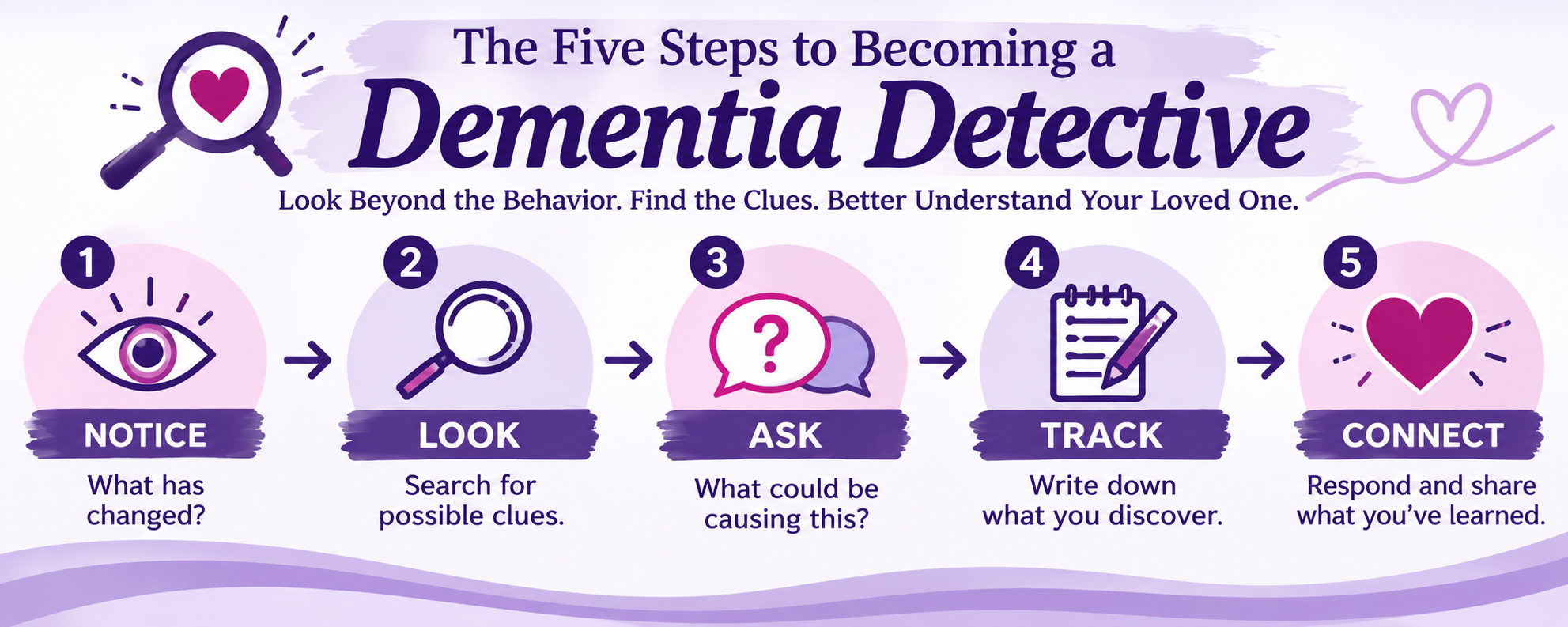
🔎 The Five Steps to Becoming a Dementia Detective
You don’t have to solve everything at once. Start with these five simple steps.
1. 👀 NOTICE — What Has Changed?
Pay attention when something seems different.
Is your loved one sleeping more? Eating less? Becoming upset during certain activities? Acting differently than usual?
Even small changes can be important clues.
Ask yourself: What am I noticing that wasn’t happening before?
2. 🔎 LOOK — Search for Possible Clues
Look beyond the behavior.
Could your loved one be in pain? Hungry? Tired? Frightened? Too hot or cold? Overwhelmed by noise?
Sometimes the problem isn’t dementia itself. It may be something happening around your loved one or inside their body.
Ask yourself: What might be making this situation difficult?
3. ❓ ASK — What Could Be Causing This?
Think about what happened before the change.
Did the behavior begin after a medication change? Does it happen at a certain time of day? Could an illness, discomfort, or a change in routine be involved?
Ask your loved one simple questions when possible. Talk with other caregivers and healthcare professionals when needed.
Ask yourself: What possible causes should I explore?
4. 📝 TRACK — Write Down What You Discover
Your memory can only hold so much, especially when you’re tired.
Write down what happened, when it happened, what was going on beforehand, and what seemed to help.
Over time, you may begin noticing patterns.
Ask yourself: Is this happening at the same time or under similar circumstances?
5. 💜 CONNECT — Respond and Share What You’ve Learned
Use the clues you’ve gathered to make thoughtful changes.
Maybe your loved one needs a quieter room, a different bathing routine, more rest, or a medical evaluation.
Share important changes and patterns with their healthcare team.
The goal isn’t to control every behavior.
The goal is to better understand your loved one’s needs and help them feel safe, comfortable, and supported.

💜 What Does Being a Dementia Detective Look Like in Real Life?
Imagine your mother has always enjoyed taking a shower.
But lately, every time you mention bath time, she becomes upset. She may yell, push your hands away, or refuse to enter the bathroom.
It’s easy to think she’s simply being difficult.
But a Dementia Detective looks for clues.
You notice that she becomes upset when the water starts running.
You look around the bathroom. Is the room cold? Is the water too hot? Does the sound of the shower frighten her? Could she be afraid of falling?
You begin trying small changes.
Maybe warming the bathroom, using a handheld showerhead, or offering a sponge bath makes the experience more comfortable.
You write down what works.
The behavior was a clue. Understanding the possible reason helped you find a different approach.
Not every problem has a simple solution, but looking for clues gives you a place to begin.

🎥 Watch and Learn: Dementia Detective Caregiving
Sometimes it’s easier to understand these ideas when you see real-life examples.
In my caregiver videos, I explain how dementia affects the brain, why common challenges happen, and what you can try at home.
You’ll learn how to investigate everyday situations involving:
-
Sleep problems and nighttime waking
-
Refusing baths or personal care
-
Changes in eating and drinking
-
Pain that may be difficult to recognize
-
Wandering and wanting to leave home
-
Communication problems and frustration
Each situation is different, but the same detective approach can help you begin asking better questions.
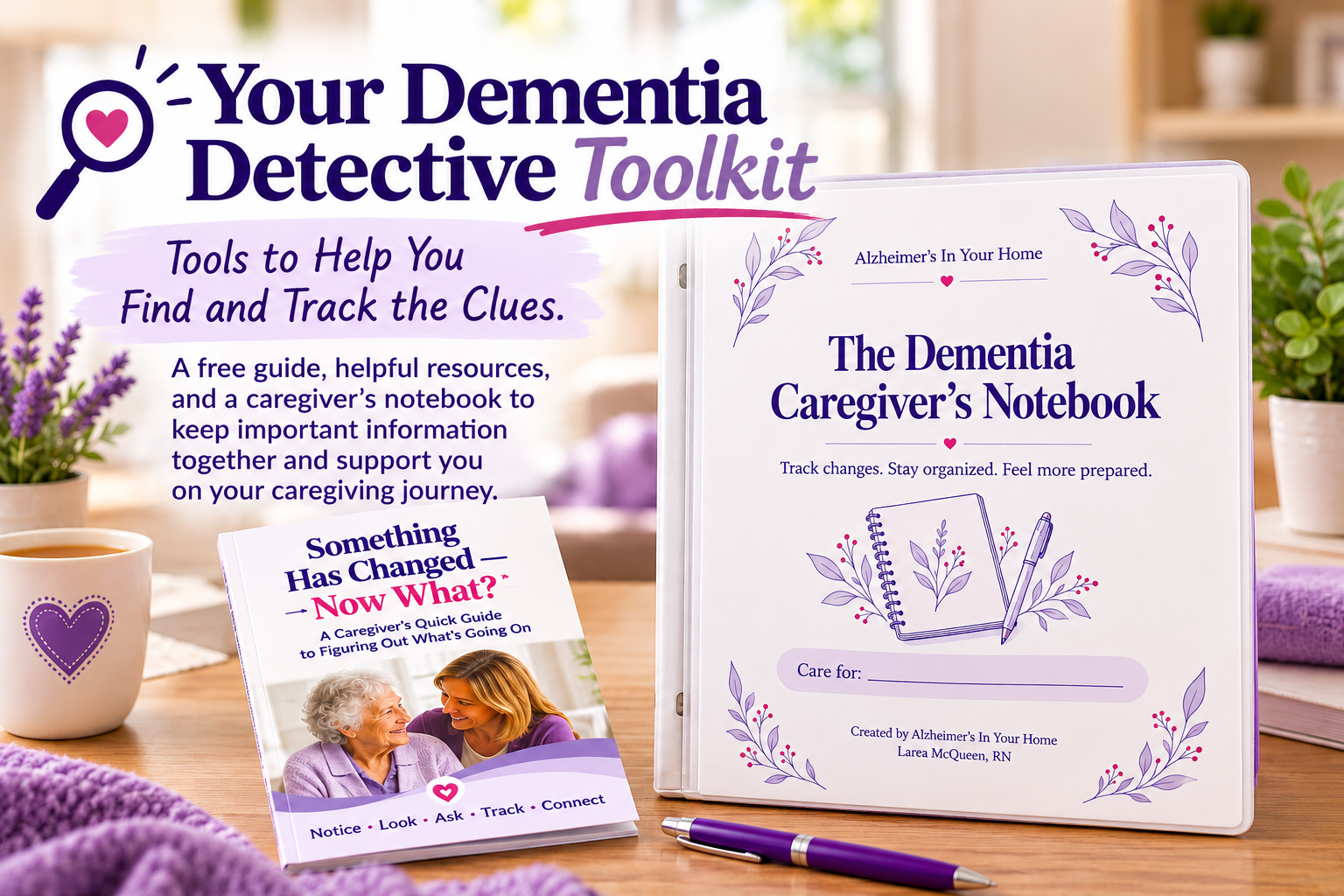
🎁 Start With My Free Dementia Detective Guide
Something Has Changed—Now What?
A Caregiver’s Quick Guide to Figuring Out What’s Going On
Have you noticed something different about your loved one but aren’t sure what it means?
Maybe they’re more confused than usual, sleeping differently, eating less, or behaving in a way you haven’t seen before.
My free guide can help you slow down, organize what you’re noticing, and decide what to do next.
Inside, you’ll learn how to:
-
Recognize changes worth paying attention to
-
Look for possible causes
-
Write down helpful clues
-
Prepare information to share with the healthcare team
-
Recognize when a change needs medical attention
You don’t have to figure everything out on your own.
📝 Your Dementia Detective Notebook
Turn Everyday Observations Into Helpful Information
As a Dementia Detective, one of your most valuable tools is a place to record what you notice.
That’s why I created the Dementia Caregiver’s Notebook.
This organized caregiver resource helps you keep important information together, track changes over time, and prepare for conversations with healthcare professionals.
Instead of trying to remember what happened three days ago, you can look back at your notes.
The Notebook includes tools for tracking things like:
-
Changes in behavior and daily routines
-
Sleep patterns
-
Pain and discomfort
-
Eating and drinking
-
Medications and health information
-
Questions and notes for doctor visits
The more clearly you can describe what has changed, the easier it may be for the healthcare team to understand your concerns.
Available as an instant download or printed binder.
💜 You Don’t Have to Have All the Answers
Caring for someone with dementia can feel like trying to solve a puzzle when the pieces keep changing.
Some days, you’ll discover a clue that makes everything clearer.
Other days, you may try several things and still not understand what’s happening.
That’s okay.
Being a Dementia Detective doesn’t mean you will always find the answer or prevent every difficult situation.
It means you’re learning to notice changes, look for possible reasons, and respond with greater understanding.
And remember, sudden changes in confusion, behavior, or physical health should never automatically be blamed on dementia. They may need prompt medical attention.
You are more than a caregiver. You are your loved one’s observer, advocate, and partner in care.
One clue at a time, you can make a difference.
Dementia is more than forgetting. 💜