

Your loved one may suddenly start pacing.
They may follow you everywhere, refuse a shower, accuse you of taking something, ask the same question over and over, become angry, try to leave the house, or insist they need to “go home.”
When you’re the caregiver dealing with the behavior, your first thought is often:
How do I get them to stop doing this?
But I want to help you learn to ask a different question:
WHY is this happening?
After many years of caring for people with dementia, I’ve learned that behaviors rarely tell us the whole story.
The behavior isn’t the whole story. It’s a clue.
And your job as a caregiver isn’t simply to stop the behavior.
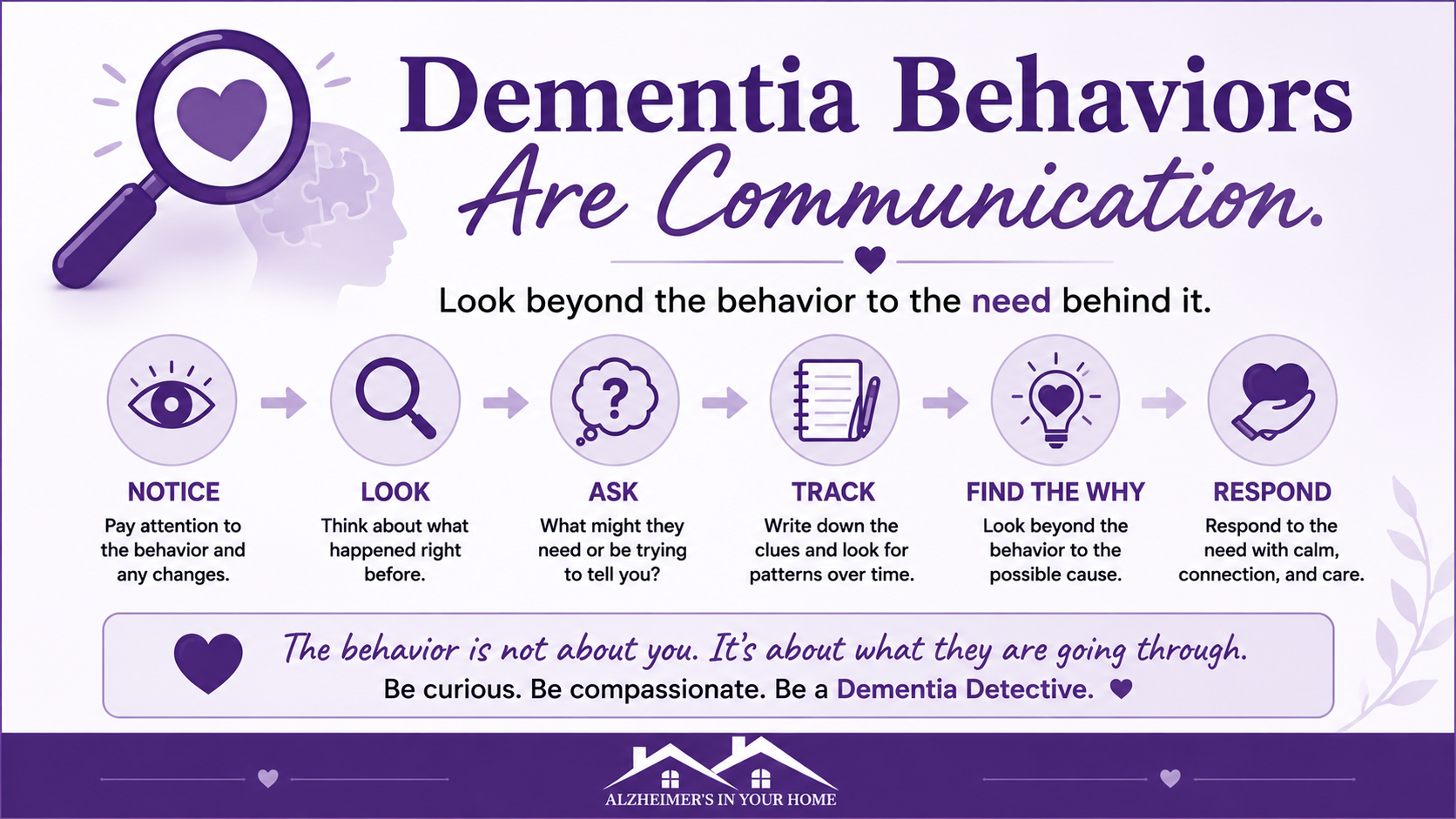
Sometimes, you have to become a Dementia Detective and figure out what your loved one may be trying to tell you.
🧠 Key Takeaways
The behavior isn’t the whole story. It’s a clue.
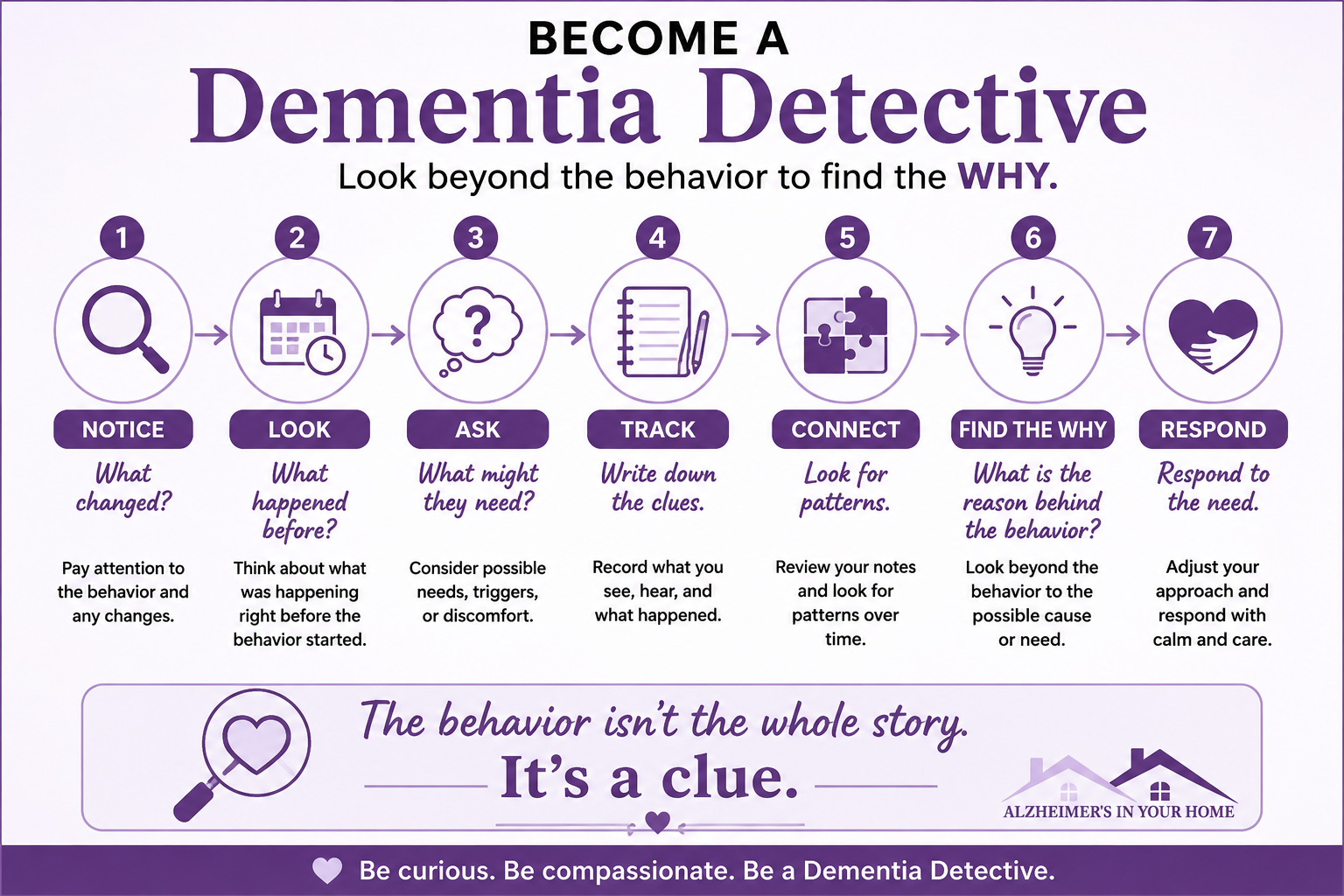
Dementia behaviors often have a reason. Instead of focusing only on stopping the behavior, become a Dementia Detective. Notice what changed, track the clues, look for patterns, and ask WHY the behavior may be happening.
Behavior → Clues → Track → Pattern → WHY → Response
🎥 Prefer to Watch?
In this video, I explain why dementia behaviors happen, how to become a Dementia Detective, and how tracking clues can help you recognize patterns and find the WHY.
Behavior Is Often Communication
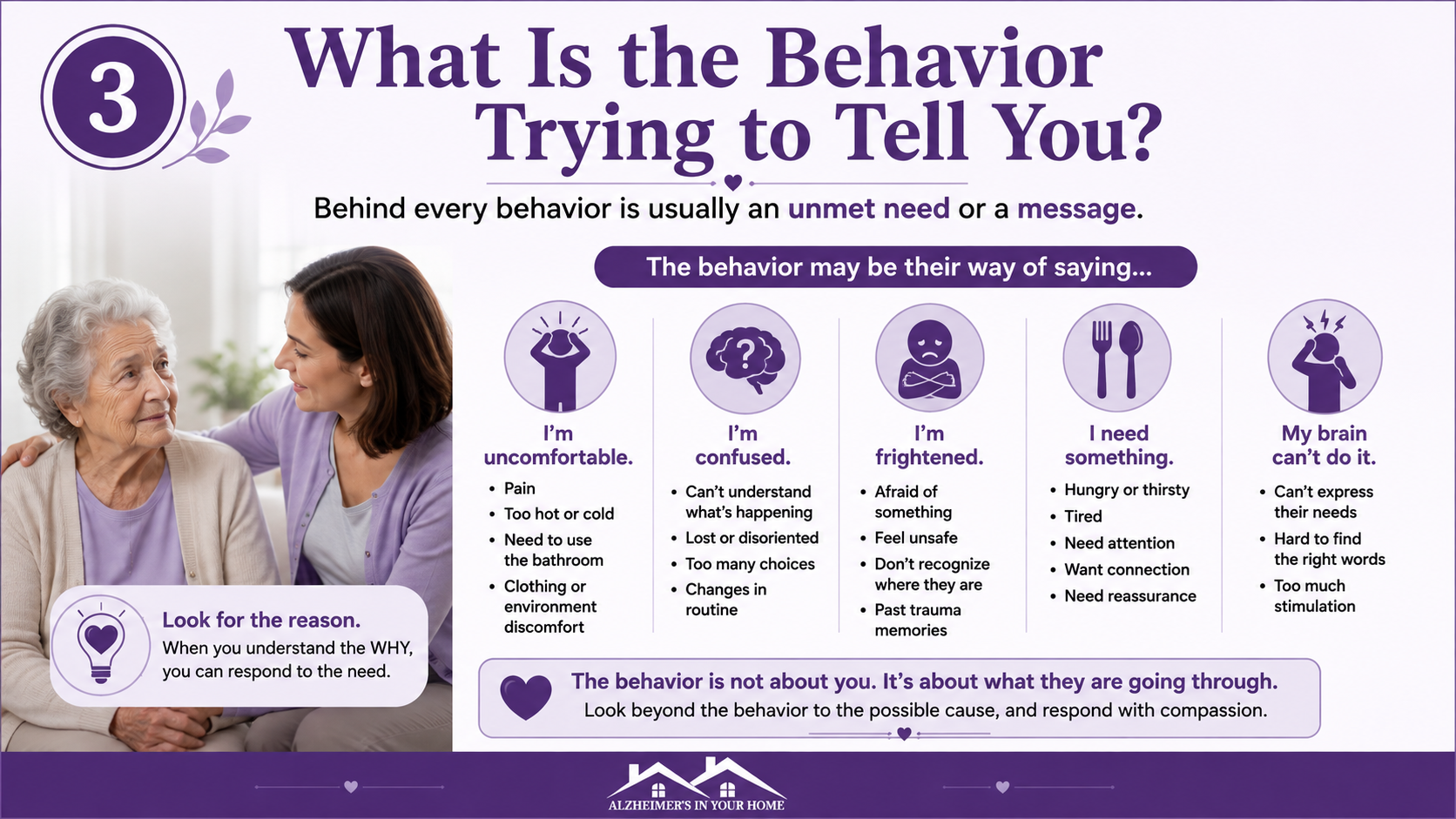
As dementia progresses, your loved one may lose the ability to explain what they need.
They may not be able to tell you:
I’m hurting.
I’m scared.
I’m hungry.
I don’t understand what you’re asking me to do.
There’s too much noise in here.
I don’t recognize this bathroom.
I need to use the toilet.
I’m exhausted.
But those needs don’t disappear just because they can’t explain them.
Instead, you may see:
- pacing
- yelling
- crying
- resistance
- agitation
- aggression
- repeated questions
- wandering
- following you everywhere
- refusing care
That’s why one of the most important things caregivers can learn is to look beyond the behavior.
Ask yourself:
What might my loved one be trying to communicate?
💜 “The behavior isn’t the whole story. It’s a clue.”
Become a Dementia Detective
When a new or difficult behavior happens, imagine that you’ve been handed a clue.
You don’t necessarily know what it means yet.
That’s okay.
Start investigating.
Step 1: Notice — What Changed?
Start with what you’re seeing.
Maybe Dad suddenly started pacing every afternoon.
Maybe Mom has begun fighting you during her shower.
Maybe your husband has started waking up several times during the night.
Don’t worry about solving it yet.
Just notice the change.
That’s your first clue.
💜 “Don’t just ask, ‘How do I stop this behavior?’ Ask, ‘WHY is this happening?’”
Step 2: Look — What Happened Before It?
Now look at what was happening before the behavior started.
Did someone ask your loved one to do something?
Was the television loud?
Were several people talking?
Had they just awakened?
Were they getting ready for a bath?
Had you left the room?
Was it getting dark outside?
Had their normal routine changed?
Sometimes the trigger happens only minutes before the behavior.
Other times you have to look further back.
Step 3: Ask — What Could They Need?
Now check for things your loved one may no longer be able to explain.
Could they be:
- in pain?
- hungry?
- thirsty?
- constipated?
- tired?
- too hot or cold?
- frightened?
- overstimulated?
- lonely?
- bored?
- needing the bathroom?
- confused about what is happening?
Also think about medications, illness, infections, poor sleep, or other physical changes.
Don’t assume every change is “just the dementia.”
Pain is one of the most easily missed causes of behavior changes in dementia. Learn the signs of dementia pain and what to watch for.
Step 4: Track — Write Down the Clues
This is the step caregivers often skip.
And I understand why.
You’re busy.
You’re already managing medications, meals, appointments, personal care, household responsibilities, and everything else that comes with caregiving.
Writing down that Mom didn’t sleep well or Dad became agitated at 4:30 may not seem very important at the time.
But here’s what I want you to remember:
Today’s little detail may become tomorrow’s important clue.
One difficult afternoon may not tell you anything.
But several days of information might.
That’s why I encourage caregivers to write down changes instead of trying to remember everything.
You aren’t documenting just for the sake of documenting.
You’re collecting clues.
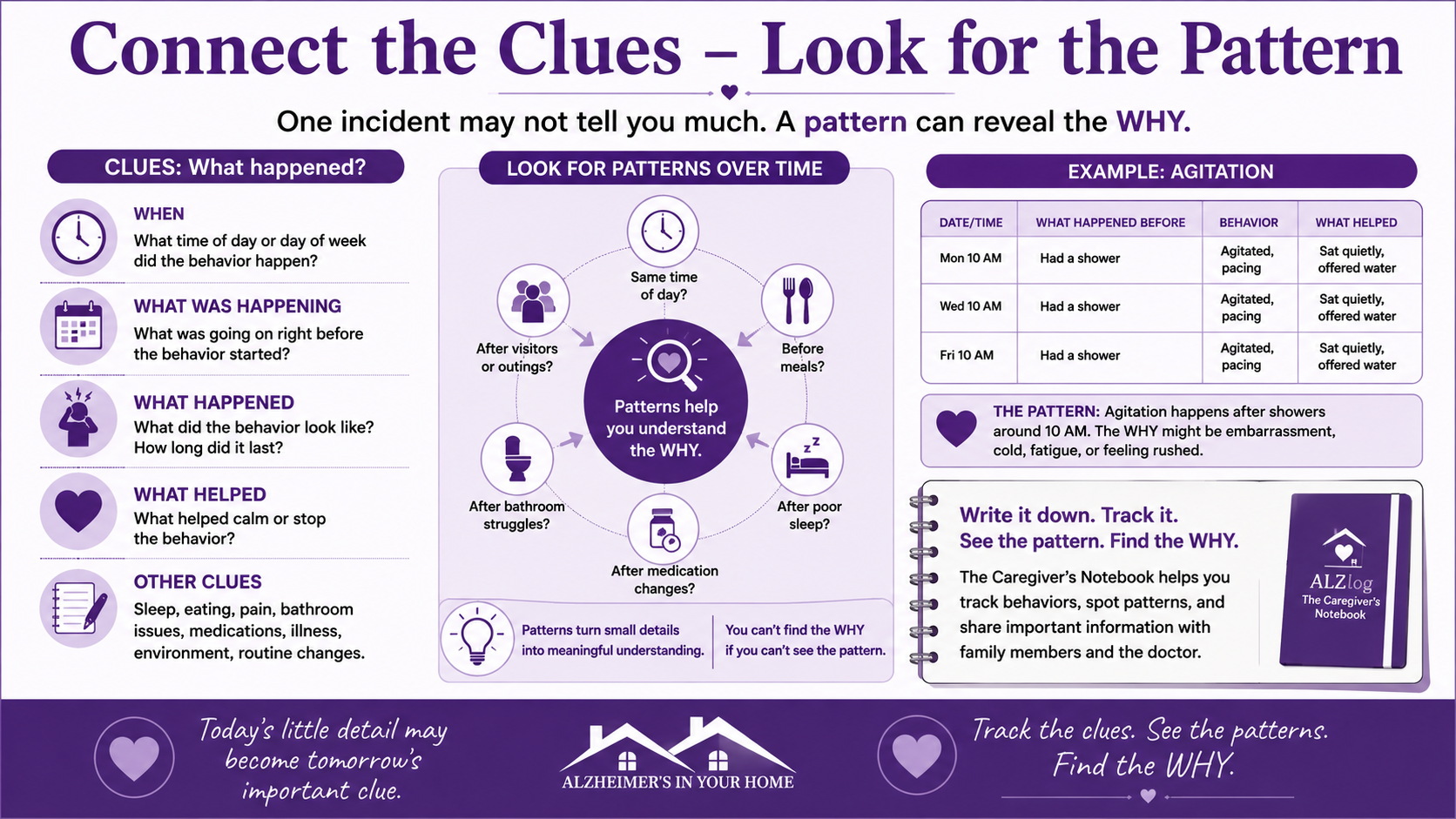
Step 5: Connect the Clues — Look for the Pattern
This is where tracking becomes powerful.
Imagine Mom becomes agitated one afternoon.
You might think:
Mom had another bad day.
But you’ve been writing things down.
After a couple of weeks, you notice something:
Mom doesn’t sleep well.
The next day she’s tired.
She eats very little at lunch.
Later that afternoon she begins pacing.
By dinner she’s agitated.
Suddenly, these aren’t several unrelated problems.
You can see a pattern.
Or maybe Dad becomes angry every time you try to help him shower.
When you look back, you notice it happens most often when you’re rushed and begin undressing him before explaining what you’re doing.
That’s another pattern.
Patterns give you information that one isolated behavior can’t.
You can’t find the WHY if you can’t see the pattern.
💜“You can’t find the WHY if you can’t see the pattern.”
Step 6: Find the WHY
Now you can start asking better questions.
Instead of:
How do I stop Mom from pacing?
You might ask:
Is Mom pacing because she’s tired, hungry, in pain, overstimulated, looking for the bathroom, or trying to find me?
Instead of:
Why is Dad being so difficult about showers?
You might realize:
Dad may not understand what I’m doing, and he’s frightened.
Sometimes you’ll find the reason.
Sometimes you won’t.
That’s important too.
Dementia is complicated, and caregivers shouldn’t feel like they’ve failed if they can’t solve every behavior.
The goal is to become curious about the behavior rather than automatically assuming your loved one is being difficult.
💜 “When you understand the WHY, you can respond to the need instead of simply reacting to the behavior.”
Step 7: Respond to the Need, Not Just the Behavior
Once you have an idea of what may be happening, you can try changing your response.
If they’re overwhelmed, reduce stimulation.
If they’re frightened, slow down and reassure them.
If they’re tired, let the task wait.
If they’re hungry, offer something to eat.
If they’re in pain, address the pain.
If they don’t understand what you’re asking, simplify your words.
If your approach is frightening them, change your approach.
This is where everything we’ve been learning comes together.
Calm. Connect. Care.
Sometimes changing what happens before the behavior can prevent the behavior from becoming as intense in the first place.
What Can Trigger Dementia Behaviors?
There are many possible triggers.
Physical Needs
Look for:
- pain
- hunger
- thirst
- constipation
- bathroom needs
- fatigue
- poor sleep
- illness
- infection
- medication changes or side effects
- being too hot or cold
A person who can no longer tell you, “My hip hurts,” may show you through agitation or resistance.
Confusion
Your loved one may not understand where they are, who someone is, what you’re asking them to do, or why something is happening.
Their reaction may make much more sense when you look at the situation from what their brain believes is happening.
Fear
Imagine someone you don’t recognize walking toward you and beginning to remove your clothes.
You might fight them too.
Ordinary caregiving tasks can become frightening when the brain can no longer understand what is happening.
Too Much Stimulation
Television, noise, visitors, clutter, bright lights, several conversations, or too many instructions can overwhelm a brain that has trouble processing information.
Changes in Routine
Routine helps create predictability.
Even small changes in meals, caregivers, appointments, sleeping arrangements, or daily activities can sometimes lead to distress.
Communication Problems
Your loved one may know something is wrong but no longer have the words to tell you.
Their behavior may become their communication.
Common Dementia Behaviors
Caregivers may experience:
- agitation
- aggression
- wandering
- repetitive questions
- shadowing
- resistance to care
- paranoia and accusations
- hallucinations and delusions
- rummaging
- hiding things
- hoarding
- sleep changes
- sundowning
- yelling or calling out
- inappropriate behaviors
- repeatedly asking to “go home”
Not everyone with dementia develops every behavior.
Behaviors can also change throughout the dementia journey.
Don’t Argue With the Behavior
Our natural instinct is often to correct something that isn’t true.
But logic doesn’t always work when dementia has changed the brain’s ability to reason.
If your mother says:
“I need to go home. My mother is waiting for me.”
Telling her that she’s already home and her mother died many years ago probably won’t solve what she’s feeling.
Look behind the words.
Maybe what she’s really communicating is:
I’m confused.
I don’t recognize this place.
I’m frightened.
I want to feel safe.
Respond to the feeling first.
You don’t always have to correct the facts.
Tracking Helps You Connect the Dots
As a nurse, tracking changes became second nature to me.
But family caregivers aren’t nurses, and I don’t expect you to become one.
You don’t need complicated charts or medical terminology.
You simply need a way to remember what you’re seeing.
Because when you’re caring for someone every day, it’s incredibly difficult to remember exactly when something started or recognize changes happening slowly over several weeks.
That’s one of the reasons I created The Dementia Caregiver’s Notebook.
I wanted caregivers to have one place to keep track of the little things that are so easy to forget — sleep, eating, bathroom changes, behaviors, medications, pain, appointments, and other changes.
Not because I want caregivers spending their day filling out paperwork.
Because those little details can become clues.
And when you put the clues together, you may begin to see a pattern.
Notice → Track → Find the Pattern → Find the WHY → Respond
That’s what tracking is really about.
💜 “Today’s little detail may become tomorrow’s important clue.”

Need Help Tracking the Clues?
You don’t have to keep all of this information in your head. The Dementia Caregiver’s Notebook gives you one place to track behaviors, sleep, pain, meals, medications and other changes so you can begin to recognize patterns over time.
When a Sudden Behavior Change Needs Medical Attention
Not every behavior should automatically be blamed on dementia.
If your loved one’s behavior suddenly changes from their usual pattern, something else may be going on.
Possible causes can include:
- infection
- pain
- dehydration
- constipation
- medication changes or side effects
- poor sleep
- illness
- injury
A sudden or dramatic change deserves attention.
Contact your loved one’s healthcare provider when you’re concerned about a significant change, especially when other symptoms are present.
When Behavior Becomes a Safety Problem
Some behaviors can become dangerous.
Aggression, unsafe wandering, severe hallucinations or delusions, or other unsafe actions may put your loved one — or you — at risk.
Your safety matters too.
If you’re no longer able to safely manage a behavior at home, talk with your loved one’s healthcare team about additional help.
Dementia Behaviors: Common Questions
❓Why do people with dementia have behavior changes?
Dementia changes parts of the brain involved in memory, judgment, communication, emotions, and understanding what is happening around them. Behavior changes can also be triggered by pain, hunger, fatigue, fear, confusion, illness, overstimulation, or an unmet need.
❓ Are dementia behaviors intentional?
Usually, it is more helpful to think of the behavior as a response rather than something your loved one is purposely doing to make things difficult. Their brain may no longer understand the situation or be able to communicate what they need.
❓What should I do when a difficult dementia behavior starts?
First, make sure everyone is safe. Then slow down and look for clues. Ask what happened before the behavior, whether your loved one could be uncomfortable or frightened, and what might have changed. Try to respond to the possible need rather than arguing about the behavior.
❓ Why should I track dementia behaviors?
One behavior may not tell you very much. Tracking what happened before, during, and after a behavior can help you notice patterns over time. Those patterns may give you clues about triggers and help you understand WHY the behavior is happening.
❓What should I track when a dementia behavior happens?
Write down what happened, when it happened, what was going on beforehand, and what helped afterward. Also watch for changes in sleep, eating, pain, medications, bathroom habits, illness, routine, and environment. You don’t have to track everything every minute—you’re looking for clues that may form a pattern.
❓When should I call the doctor about a dementia behavior change?
Contact the healthcare provider when there is a sudden or significant change from your loved one’s usual behavior, especially if there may be pain, illness, infection, dehydration, constipation, medication problems, injury, or another medical cause. Seek urgent help when someone’s immediate safety is at risk.
Learn More About Specific Dementia Behaviors
Every person with dementia is different, and every behavior can have a different reason behind it.
If you’re dealing with a specific behavior right now, use the guides below to learn more about why it may be happening, what clues to look for, and what you can do to help.
I’ll continue adding new behavior guides here, so you can come back whenever a new challenge appears.
Start Here: The 10 Most Common Dementia Behaviors
Not sure where to begin?
This guide covers 10 behaviors caregivers commonly experience, including wandering, aggression, agitation, paranoia, repetitive behaviors, hoarding, sundowning, resistance to care, hallucinations and delusions, and inappropriate behaviors.
Agitation
Is your loved one pacing, restless, irritable, resisting help, or suddenly becoming upset?
Agitation can be triggered by many things, including pain, fear, confusion, overstimulation, poor sleep, frustration, or difficulty communicating a need.
👉 What Causes Dementia Agitation? Signs, Triggers, and Caregiver Tips
Aggression
Yelling, swearing, hitting, pushing, grabbing, or other aggressive behavior can be frightening for caregivers.
Aggression may happen when someone with dementia feels threatened, confused, frustrated, overwhelmed, or physically uncomfortable. Learning to recognize the early signs and possible triggers can help you respond before the situation escalates.
👉 How to Handle Aggression in Alzheimer’s or Dementia
Shadowing — Following the Caregiver Everywhere
Does your loved one follow you from room to room or become upset when they can’t see you?
They may not be trying to annoy you or demand your attention. You may have become their safe person in a world that increasingly feels confusing and unfamiliar.
👉 Why Dementia Patients Follow Caregivers: Understanding Shadowing
Hallucinations
Your loved one may see people, animals, shadows, or objects that aren’t there. Some people may also hear voices, music, or other sounds.
Hallucinations can feel completely real to the person experiencing them. Instead of arguing about what they see or hear, first try to understand how the experience is making them feel.
👉 What Are Dementia Hallucinations and How to Handle Them
Sundowning and Late-Day Behavior Changes
Does your loved one become more confused, restless, anxious, agitated, or difficult to redirect later in the afternoon or evening?
This pattern is often called sundowning. Paying attention to the time of day, sleep, routine, activity, lighting, and stimulation can help you identify patterns and possible triggers.
👉 Understanding Alzheimer’s & Dementia Sundowning: How to Prevent and Manage It
Could Pain Be Behind the Behavior?
Pain is easy to miss when someone with dementia can no longer clearly tell you what hurts.
Instead of saying, “My back hurts,” your loved one may become restless, agitated, aggressive, resist care, sleep poorly, eat less, wander, or seem more confused.
That’s why a new behavior can sometimes be an important clue that something hurts.
Still Not Sure What’s Causing the Behavior?
That’s okay.
You won’t always find the WHY right away.
Go back to your Dementia Detective steps:
NOTICE — What changed?
LOOK — What happened before?
ASK — What might they need?
TRACK — Write down the clues.
CONNECT — Look for patterns.
FIND THE WHY — What could be behind the behavior?
RESPOND — Respond to the need.
The more you understand what happened before, during, and after a behavior, the better chance you have of recognizing a pattern.
Remember: The behavior isn’t the whole story. It’s a clue.
The Most Important Thing to Remember
Look for the clue.
Write it down.
Watch for the pattern.
And keep asking:
What is my loved one trying to tell me?
The behavior isn’t the whole story. It’s a clue. Look for the pattern, find the WHY, and respond to the need.
💜 Get a Little Dementia Caregiver Support Each Week
Caring for someone with dementia can bring a new question almost every day.
Join me each week for Pearls of Wisdom for Dementia Caregivers, where I share practical caregiving tips, simple dementia education, helpful resources, and encouragement for the journey ahead.
Related Articles You May Find Helpful
Understanding the Dementia Brain
→ understand why the brain changes
The Alzheimer’s Approach
→ learn how your approach affects the response
Dementia and Pain
→ learn about an often-missed cause of behavior
Caregiver’s Notebook
→ learn how to track changes
Top 10 Dementia Behaviors
→ explore specific behaviors