


Toileting problems are one of the most difficult and emotional challenges families face when caring for someone with Alzheimer’s or another type of dementia.
For many caregivers, the first accident comes as a shock.
One day everything seems normal. The next day your loved one suddenly urinates in the wrong place or cannot make it to the bathroom in time. It can leave caregivers feeling confused, embarrassed, and unsure of what to do next.
If you are experiencing this, please know something important.
You are not alone.
Bathroom accidents are extremely common as dementia progresses, and they are not something your loved one is doing on purpose. These changes happen because dementia affects the brain’s ability to recognize body signals, remember routines, and complete everyday tasks.
The good news is that with understanding, preparation, and a few practical strategies, many toileting problems can be managed.
💜 “Your loved one is not trying to make life harder — their brain is simply struggling to understand what their body is telling them.”
Why Toileting Problems Happen in Dementia
Dementia slowly damages parts of the brain responsible for memory, decision-making, and body awareness. Because of this, using the bathroom can become confusing or overwhelming.
Some of the most common reasons toileting problems happen include:
The Brain Stops Recognizing the Urge
The brain normally tells us when our bladder is full. In dementia, that signal may not be recognized until it is too late.
They Forget Where the Bathroom Is
Even in a familiar home, someone with dementia may suddenly become confused about where the bathroom is located.
Clothing Becomes Difficult
Buttons, belts, and complicated clothing can make it hard to undress quickly enough.
Mobility Slows Them Down
If walking has become slower or painful, they may not reach the bathroom in time.
They May Not Recognize the Toilet
In some stages of dementia, the brain may not process what the toilet is used for.
When caregivers understand that these problems are caused by changes in the brain, it becomes easier to respond with patience instead of frustration.

Understanding Dementia Course – created to help caregivers understand what is happening in the brain.
💜 💜 Want to better understand what dementia is doing to the brain?
When you understand why behaviors happen, caregiving becomes less frustrating and much more manageable.
My Understanding Dementia Course helps caregivers learn:
✔ how dementia affects the brain
✔ why behaviors happen
✔ what changes to expect
✔ how to respond with confidence
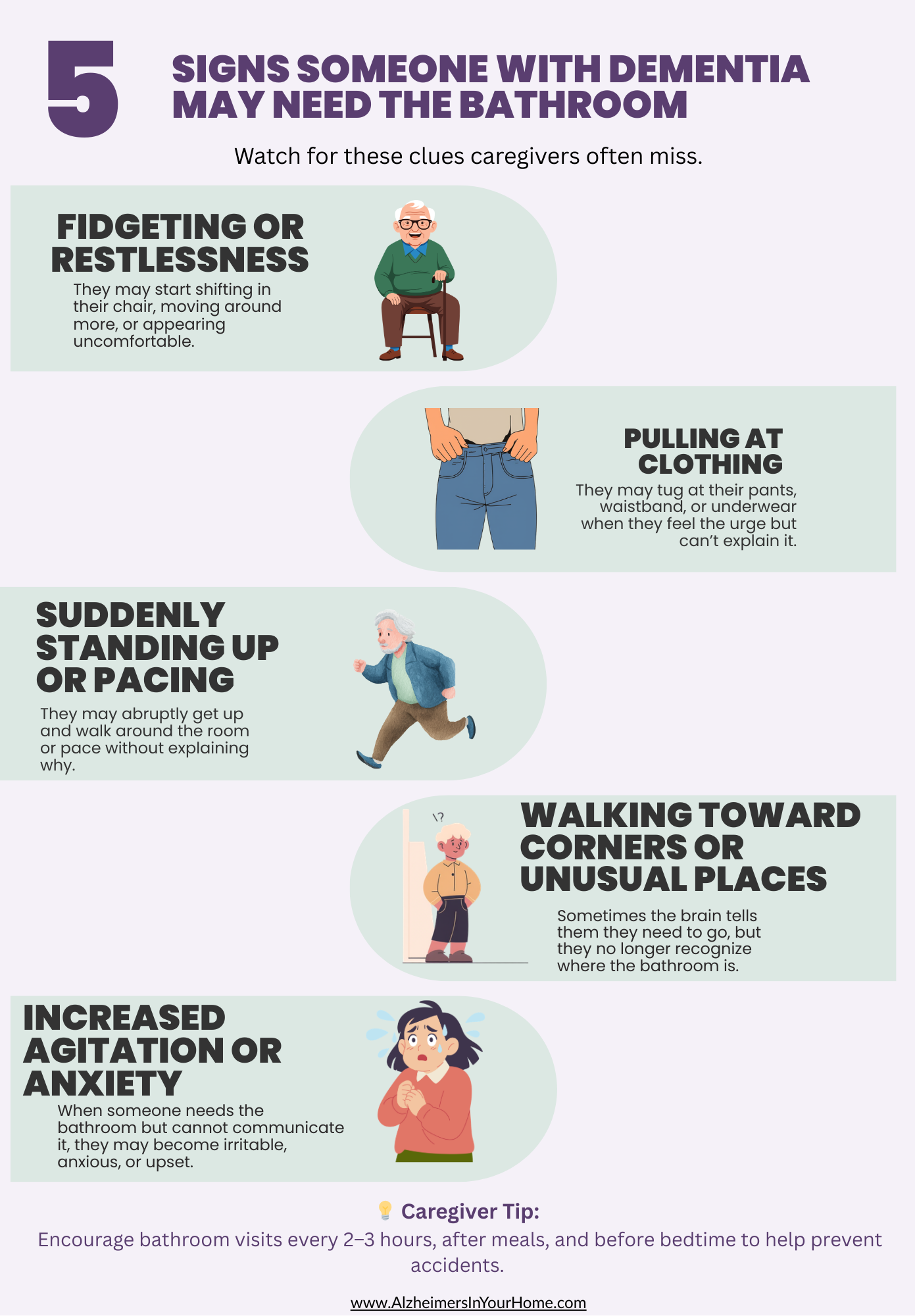
Early Signs Toileting Problems May Be Starting
Many caregivers notice small changes before accidents begin happening regularly.
Watch for signs such as:
• Fidgeting or pacing
• Pulling at clothing
• Standing up suddenly
• Walking into unusual corners or rooms
• Increased restlessness
Sometimes these behaviors are the person’s way of showing they need the bathroom but cannot express it clearly.
Learning to recognize these cues can help you guide them to the bathroom before an accident happens.
💜 “Dementia changes the brain, not the love between you.”
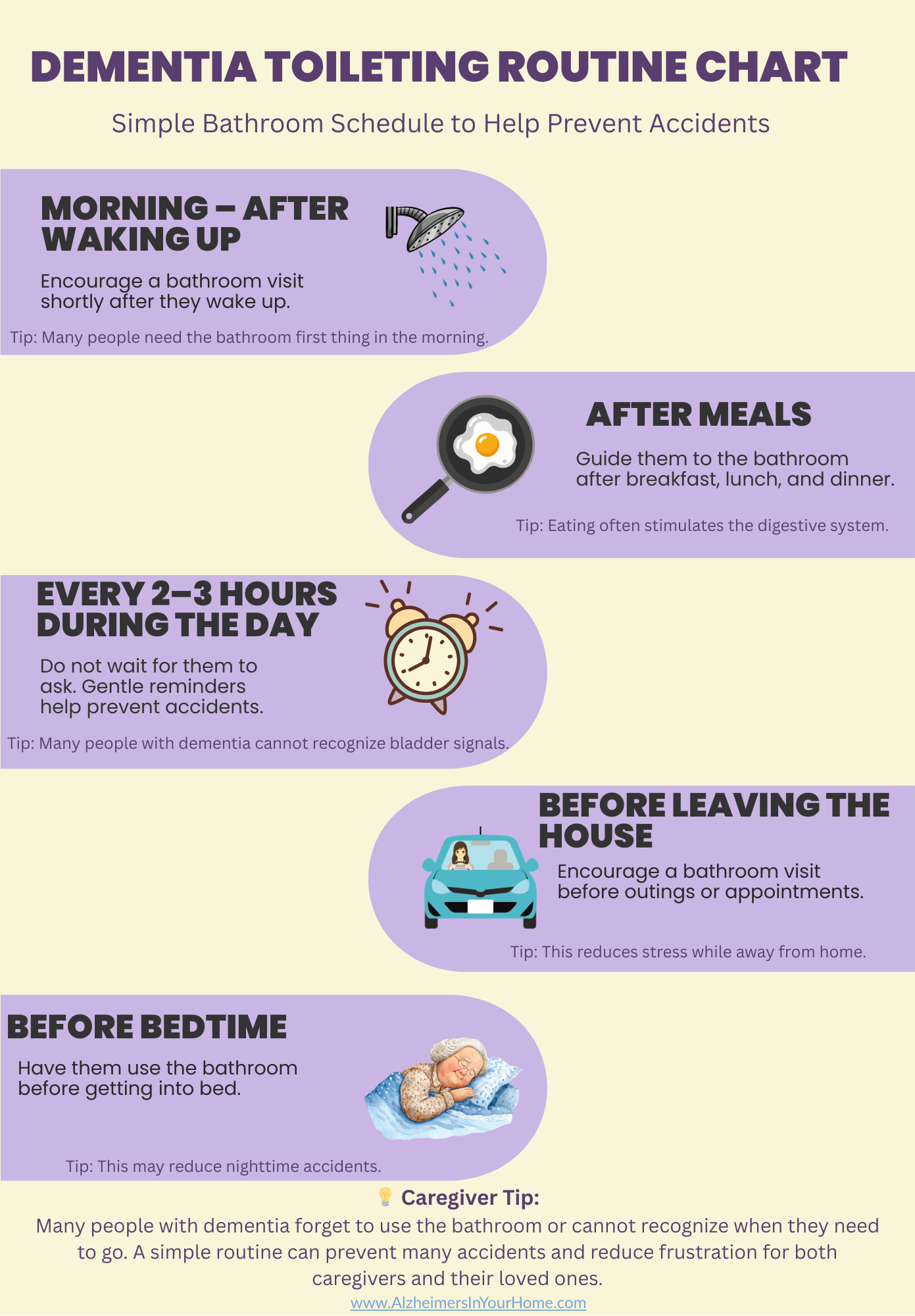
Creating a Toileting Routine
One of the most helpful strategies in dementia care is creating a simple and predictable routine.
Instead of waiting for your loved one to say they need the bathroom, it often works better to guide them regularly.
Try encouraging bathroom visits:
• After waking up
• After meals
• Before leaving the house
• Before bedtime
• Every two to three hours during the day
A routine helps train the body and reduces accidents.
Many caregivers find that once a schedule is established, bathroom trips become much smoother.
💜 “Small adjustments in routine can make a big difference in comfort and dignity.”
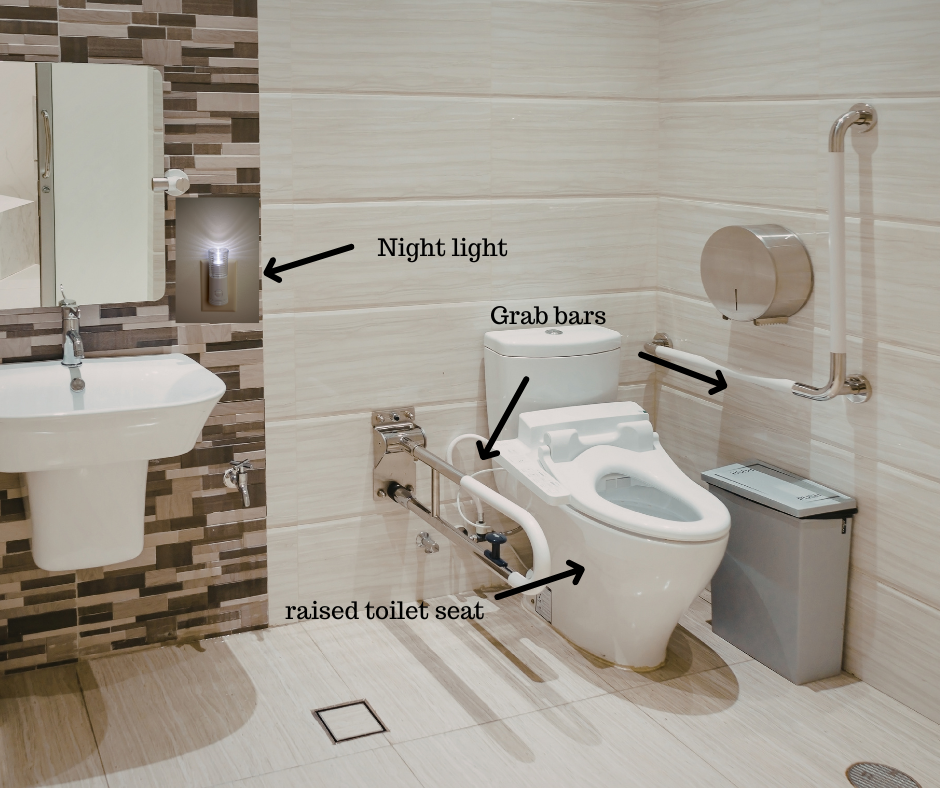
Bathroom Setup Tips That Can Help
Sometimes small changes in the environment can make a big difference.
Consider these helpful adjustments:
• Leave the bathroom light on at night
• Use a brightly colored toilet seat so it is easier to see
• Remove locks from bathroom doors
• Install grab bars near the toilet
• Keep the bathroom door open so it is easier to find
• Use nightlights in the hallway
These changes can reduce confusion and help your loved one locate the bathroom more easily.

Clothing Choices That Make Toileting Easier
Complicated clothing can make bathroom trips much harder.
Choosing simple clothing can help prevent accidents.
Helpful options include:
• Elastic waist pants
• Sweatpants or leggings
• Clothing without buttons or belts
• Easy-to-pull-down undergarments
Reducing the steps required to undress can make a big difference.

Planning for Accidents
Even with the best routines, accidents will still happen from time to time.
Preparing ahead can reduce stress.
Helpful items to keep nearby include:
• Disposable wipes
• Extra clothing
• Absorbent pads for chairs or beds
• Plastic bags for soiled items
Many caregivers also keep a small “go bag” ready if they leave the house.
Preparation helps you stay calm when accidents occur.
💜 “The goal isn’t perfection. The goal is caring with compassion, one moment at a time.”
Incontinence Products That Can Help
There are many products designed to help manage bathroom accidents.
Some common options include:
Pads – Light protection for small leaks.
Male Guards – Designed specifically for men.
Pull-Ups – Underwear-style protection that can be pulled up and down.
Adult Briefs – Maximum protection for heavier accidents.
Bed Pads – Protect bedding and furniture.
External Catheters – for both men and women
Finding the right product may take a little trial and error.
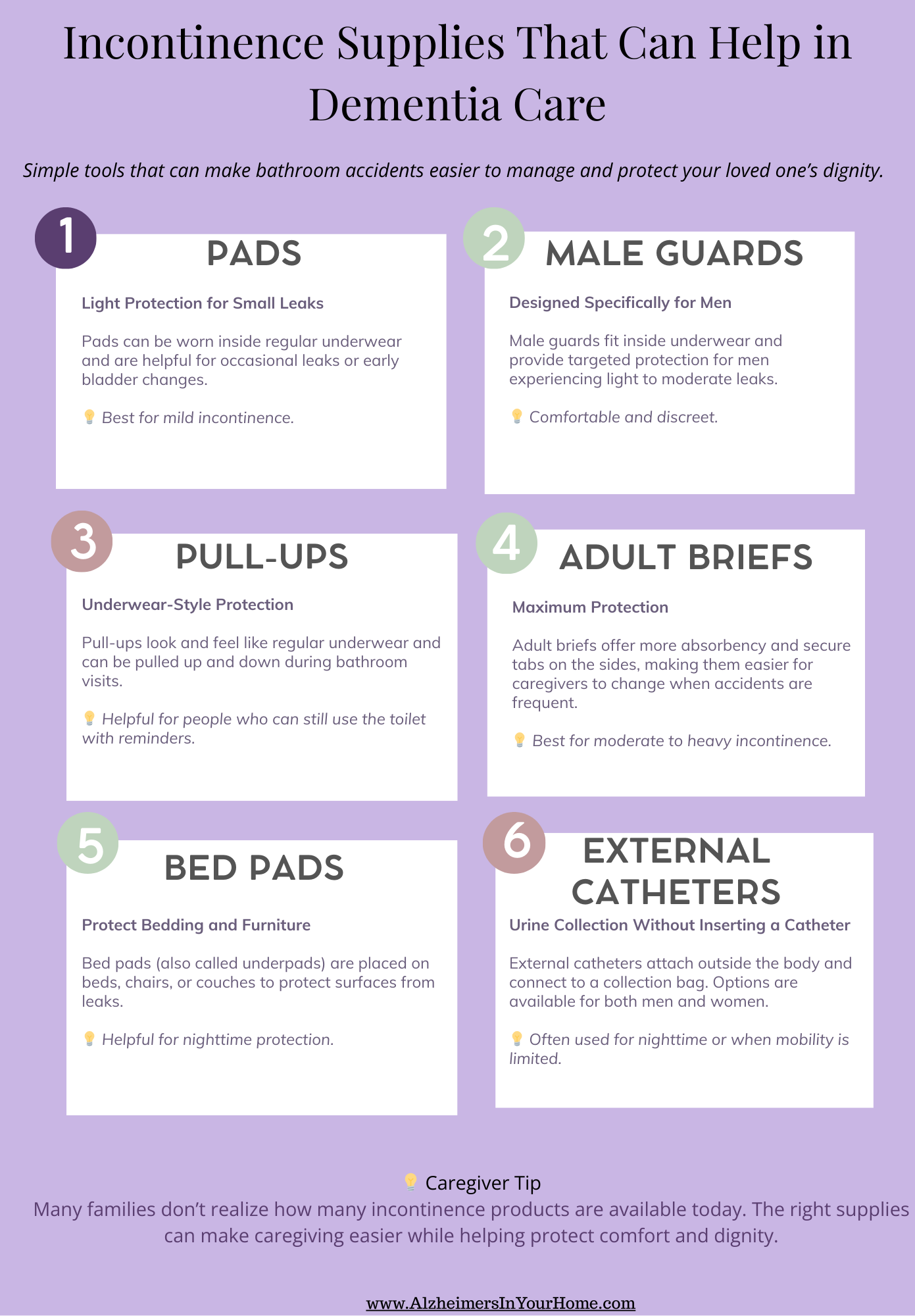
Many caregivers are surprised to learn how many products are available today to help manage bathroom accidents and protect dignity. From protective underwear and pads to waterproof bedding and bedside commodes, the right supplies can make caregiving much easier.
If you’re not sure what products are available, I’ve put together a caregiver resource page with some of the most helpful incontinence supplies and tools for dementia care.
➡️ You can explore those resources here: Dementia Resources & Supplies:
A Caregiver Story
One caregiver once shared that her mother began urinating in the hallway closet.
At first, the family thought she was acting out or being stubborn.
Later they realized something important.
The bathroom door was closed, but the closet door was open. Her mother’s brain simply could not find the bathroom anymore.
Once the family began leaving the bathroom door open and adding a nightlight in the hallway, the accidents decreased.
Sometimes small changes make a big difference.
💜 “Patience in caregiving often means learning to see the world through someone else’s changing mind.”
Tracking Bathroom Changes Can Help Doctors
Sudden changes in bathroom habits can sometimes signal other medical problems.
Urinary tract infections, constipation, medications, or dehydration can all affect toileting.
Keeping track of changes can help doctors identify problems sooner.
Many caregivers find it helpful to track:
• Frequency of accidents
• Changes in urine or bowel habits
• Pain or discomfort
• Changes in behavior
Tracking patterns can provide valuable information during medical visits.

📝 Tracking changes in dementia can help doctors identify problems earlier.
Many caregivers struggle to remember all the symptoms and changes they notice from day to day.
ALZlog helps you track:
✔ behavior changes
✔ sleep patterns
✔ mobility changes
✔ bathroom habits
✔ daily caregiving observations
10 Hidden Reasons Dementia Bathroom Accidents Happen
Many caregivers feel confused when bathroom accidents suddenly begin. It may seem like your loved one is ignoring the bathroom or refusing to cooperate.
But most of the time, something else is happening.
Dementia affects the brain in ways that make toileting much harder. Understanding the hidden causes can help you respond with patience and prevent many accidents.
Here are some reasons caregivers may not realize are contributing to bathroom problems.
1. The Brain No Longer Recognizes the Urge
Dementia can interfere with the brain’s ability to recognize signals from the bladder or bowels. Your loved one may not realize they need the bathroom until it is too late.
Tip: Encourage regular bathroom visits every few hours instead of waiting for them to ask.
2. They Forget Where the Bathroom Is
Even in a familiar home, dementia can make it difficult to recognize or remember the location of the bathroom.
Tip: Keep the bathroom door open and leave the light on so it is easier to find.
3. Clothing Is Too Complicated
Buttons, belts, and tight clothing can make it difficult for someone with dementia to undress quickly.
Tip: Choose elastic waist pants or clothing that is easy to pull down.
4. Mobility Has Slowed Down
If walking has become slower due to weakness, arthritis, or balance problems, your loved one may not reach the bathroom in time.
Tip: Consider placing a bedside commode nearby if the bathroom is far away.
5. They Don’t Recognize the Toilet
As dementia progresses, some individuals may no longer recognize the purpose of the toilet.
Tip: Use a brightly colored toilet seat or clear visual cues to help them identify it.
6. Poor Lighting Causes Confusion
Dark hallways or bathrooms can make it difficult to locate the toilet, especially at night.
Tip: Add nightlights in the hallway and bathroom.
7. Constipation Is Causing Problems
Constipation is very common in people living with dementia and can lead to bowel accidents or discomfort. If you’d like to understand this issue better, you can read more in my article “The Truth About Dementia Poop Problems.”
Tip: Monitor hydration, diet, and bowel patterns.
8. A Urinary Tract Infection (UTI)
Sudden increases in accidents can sometimes be caused by a urinary tract infection.
Tip: If toileting habits change suddenly, talk with a doctor.
9. Medications Affect the Bladder
Some medications increase urination or cause drowsiness, making bathroom trips harder.
Tip: Review medications with the doctor if new problems appear.
10. Anxiety or Distraction
Someone with dementia may simply become distracted and forget to go to the bathroom.
Tip: Gentle reminders and a consistent routine can help.
How to Clean Up Dementia Bathroom Accidents Without Stress or Embarrassment
Bathroom accidents can be one of the most emotional and overwhelming parts of dementia caregiving. Many caregivers feel embarrassed talking about it, but the truth is that almost every family caring for someone with dementia will face this challenge at some point.
The most important thing to remember is that your loved one is not doing this on purpose. Their brain simply cannot recognize the signals or complete the steps the way it once could.
Approaching these moments with calmness and dignity can make a big difference for both of you.
Here are a few gentle strategies that can help.
Stay Calm and Reassuring
If your loved one senses frustration or embarrassment, it may increase anxiety or agitation.
Try to keep your voice calm and reassuring.
You might say something like:
“Let’s get you cleaned up and comfortable.”
Avoid scolding or pointing out the accident.
Move Them to the Bathroom First
Help your loved one get cleaned up in the bathroom or shower if possible. This keeps the focus on helping them feel comfortable rather than on the accident itself.
Simple steps often work best:
• help remove soiled clothing
• assist with washing or wiping
• provide fresh clothing
Protect Surfaces Ahead of Time
Many caregivers find it helpful to prepare ahead of time.
Helpful items include:
• disposable wipes
• absorbent pads
• mattress protectors
• waterproof chair covers
• disposable gloves
Preparation can make accidents much easier to manage.
Keep a Small Cleanup Kit Ready
Some caregivers keep a small basket or container with supplies such as:
• wipes
• disposable bags
• clean underwear
• gloves
• odor-neutralizing spray
Having everything in one place reduces stress when accidents happen. Take an emergency bag with you when leaving the house. It is always better to have it and not need it than to need it and not have it.
Focus on Protecting Dignity
These moments can feel embarrassing for your loved one, even if they cannot fully express it.
A calm and respectful approach helps protect their dignity.
Sometimes simply speaking gently and moving through the cleanup quickly can help them feel less uncomfortable.
Gentle Reminder for Caregivers
Bathroom accidents are not a failure on your part.
They are a common part of how dementia affects the brain and body.
With patience, preparation, and the right tools, these situations can become easier to manage over time.
You are doing an incredibly important job caring for someone who depends on you.
💜 Feeling overwhelmed by all the changes dementia brings?
Understanding what to expect can make caregiving much less stressful.
My free caregiver guide helps families learn how dementia progresses and how to prepare for the changes ahead.
Inside the guide you’ll learn:
✔ what changes to expect
✔ how to respond to behaviors
✔ practical caregiving tips
✔ ways to prepare for the stages ahead
Frequently Asked Questions About Dementia Toileting Problems
Why do people with dementia have bathroom accidents?
Bathroom accidents happen because dementia affects the brain’s ability to recognize body signals, remember routines, and complete everyday tasks. A person may not realize they need the bathroom, forget where it is, or have trouble removing clothing in time. These changes are part of the disease, not something the person is doing on purpose.
At what stage of dementia does incontinence begin?
Toileting problems can begin at different stages depending on the person and the type of dementia. Some people start having occasional accidents in the middle stages when memory and mobility decline. In later stages, many individuals need full assistance with toileting and personal hygiene.
How can I prevent bathroom accidents in someone with dementia?
Creating a regular toileting routine is one of the most helpful strategies. Encourage bathroom visits every two to three hours and after meals. Keeping the bathroom easy to find, using simple clothing, and watching for signs that they need to go can also reduce accidents.
How do I get someone with dementia to use the toilet?
Gentle reminders and a calm approach often work best. Instead of asking if they need to go, try guiding them by saying something like, “Let’s go to the bathroom before we sit down.” Keeping a consistent routine and avoiding rushed or stressful situations can help them cooperate more easily.
When should I talk to a doctor about toileting changes?
If toileting habits suddenly change, it’s important to talk with a doctor. Sudden accidents can sometimes be caused by medical problems such as urinary tract infections, constipation, medication changes, or dehydration. Tracking bathroom patterns can help doctors identify these issues more quickly.

Conclusion
Toileting accidents can be one of the hardest parts of dementia caregiving.
They can feel embarrassing, stressful, and overwhelming at times.
But these changes are a normal part of how dementia affects the brain.
Your loved one is not trying to make things difficult. Their brain is simply struggling to recognize signals, remember routines, and complete tasks that once felt automatic.
With patience, preparation, and the right strategies, many toileting problems can be managed.
Small changes like creating a routine, adjusting clothing, improving bathroom visibility, and preparing for accidents can make a big difference for both you and your loved one.
Most importantly, remember that you are doing something incredibly meaningful.
Every act of care you provide helps protect your loved one’s dignity and comfort as they navigate this difficult disease.



0 Comments