


Practical Ways to Reduce Pain and Improve Comfort in Dementia
Pain is common in older adults, but it is often overlooked in people living with Alzheimer’s disease and other forms of dementia.
One of the biggest challenges caregivers face is that their loved one may no longer be able to clearly explain what hurts. Instead of saying, “My back hurts,” or “My knee is bothering me,” the pain may show up as agitation, poor sleep, refusal of care, appetite changes, pacing, or increased confusion.
In my previous article, The Truth About Alzheimer’s or Dementia and Pain: Why It Is Often Missed, we talked about how caregivers can become detectives and recognize the signs of pain.
Now let’s talk about the next step:
What do you do when you think your loved one is in pain?
The good news is there are many ways to improve comfort and quality of life. Some involve medications, while others are simple comfort measures that can make a remarkable difference.
💜 “Comfort is one of the greatest gifts we can give someone living with dementia.”

Why Pain Matters
Pain affects much more than physical comfort.
Untreated pain can contribute to:
- Agitation
- Aggression
- Restlessness
- Poor sleep
- Appetite loss
- Increased confusion
- Withdrawal
- Falls
- Resistance to care
- Reduced mobility
Many behaviors that appear to be “dementia behaviors” may actually be a response to discomfort.
When pain is properly managed, caregivers often notice improvements in mood, sleep, participation in activities, and overall quality of life.
💜 “Sometimes relieving pain also relieves the behavior.”
A Caregiver Roadmap for Managing Pain
When you suspect pain may be affecting your loved one, follow these simple steps.
Step 1: Make Sure Pain May Be the Problem
Before trying to manage pain, look for changes in your loved one’s behavior, movement, facial expressions, sleep, appetite, or response to touch.
If you’re not sure what to look for, start with my complete guide:
👉 Pain in Dementia: Why It Is Often Missed
It explains the hidden signs of pain and shows you how to use the Dementia Detective process to find the clues.
🎥 Watch: Recognizing and Managing Pain in Dementia
Pain management starts with recognizing that something may hurt.
In this video, I explain how pain can appear through behavior, how caregivers can gather clues, simple ways to improve comfort, questions to ask about pain medications, and how to determine whether what you tried may be helping.
Prefer to keep reading? Continue below for the step-by-step guide to managing pain and improving comfort.
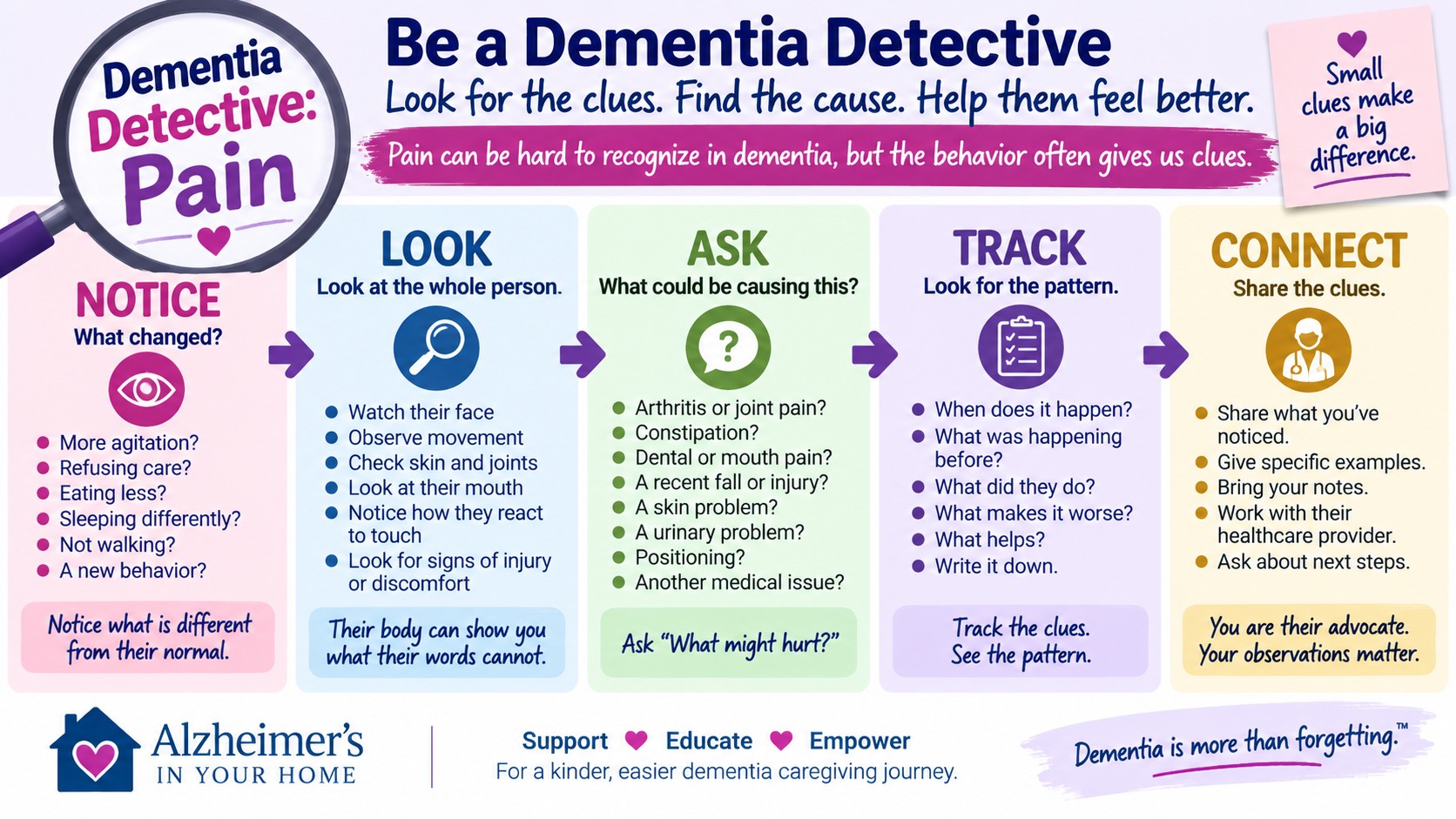
Step 2: Use Your Dementia Detective Clues
If you suspect pain, think about the clues you’ve already gathered:
Where? Where does your loved one seem uncomfortable?
When? Does it happen during walking, bathing, dressing, meals, bedtime, or certain movements?
What makes it worse? Touch? Movement? Standing? Eating?
What helps? Rest? Repositioning? Heat or cold? Gentle movement?
These clues can help you decide what to try next—and what information to share with the healthcare provider.
💜 “The more clues you gather, the easier it becomes to uncover the cause of the behavior.”
💜 Match the Comfort Measure to the Clue
Not every comfort measure is right for every kind of pain.
If you don’t know why your loved one is hurting—or there has been a new injury, swelling, significant pain, or sudden change—contact their healthcare provider before trying to treat the problem yourself.
Step 3: Start With Simple Comfort Measures
Simple comfort measures may sometimes help reduce discomfort.
Sometimes the smallest changes can make a meaningful difference.
Repositioning
Remaining in one position for too long can increase discomfort.
Try:
- Adjusting pillows
- Elevating legs
- Changing chairs
- Repositioning in bed
- Encouraging movement throughout the day
Heat Therapy
Warm packs may help:
- Arthritis pain
- Muscle aches
- Joint stiffness
Safety Tips
- Never place directly on the skin.
- Check skin frequently.
- Avoid use if sensation is impaired.
Cold Therapy
Cold packs may help:
- Swelling
- Inflammation
- New injuries
Always wrap cold packs in a towel before use.
Gentle Massage
Massage can help:
- Relax tight muscles
- Improve circulation
- Promote comfort
- Reduce stress
Even a simple hand massage can be soothing.

Movement and Exercise
Many caregivers are surprised to learn that movement often helps pain.
Examples include:
- Walking
- Chair exercises
- Gentle stretching
- Range-of-motion exercises
💜 “Motion is lotion for stiff joints.”
Caregiver Pearl:
For many people with arthritis or joint stiffness, gentle movement and regular activity may help reduce discomfort. Ask the healthcare provider or therapist what type and amount of movement is appropriate for your loved one.
Music, Relaxation, and Distraction
Pain isn’t always purely physical.
Sometimes reducing stress helps reduce discomfort.
Try:
- Favorite music
- Photo albums
- Meaningful activities
- Television
- Deep breathing
- Aromatherapy
Comfort comes in many forms.
Step 4: Pain Medications
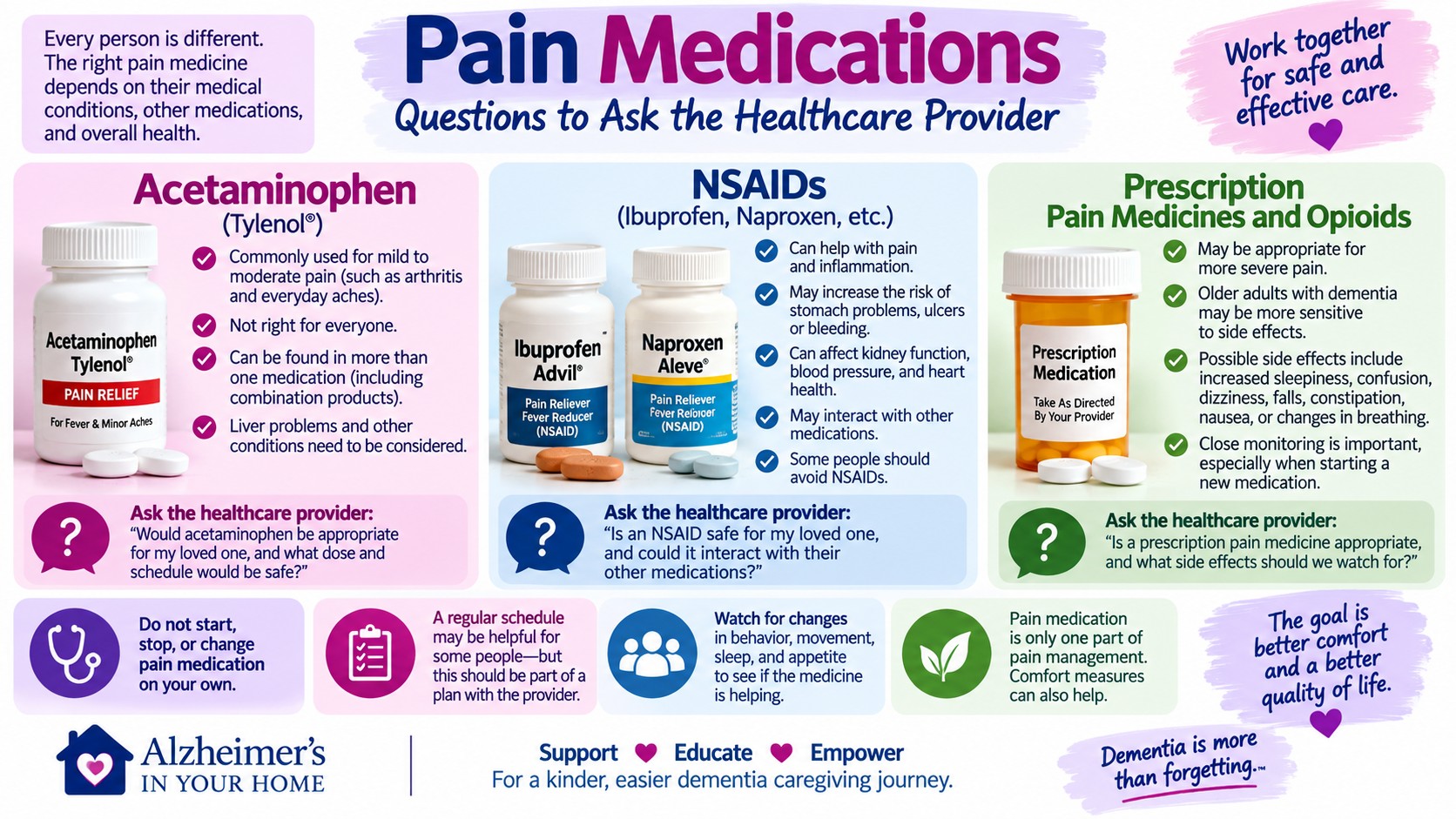
Medication may be part of a pain-management plan, but choosing the right medication can be more complicated for an older adult living with dementia.
Age, kidney and liver function, other health conditions, fall risk, and medications they are already taking can all affect which pain medicine is safest.
This is why it is important to work with your loved one’s healthcare provider rather than starting, stopping, or changing pain medicine on your own.
Acetaminophen (Tylenol)
Acetaminophen is commonly used for mild to moderate pain, including arthritis, muscle aches, and other everyday discomforts.
However, acetaminophen isn’t right for everyone. Liver problems, other medical conditions, and other medications need to be considered.
It is also important to remember that acetaminophen can be found in more than one medication, including some prescription and over-the-counter combination products. This can make it easy to accidentally give more than intended.
Ask the healthcare provider:
“Would acetaminophen be appropriate for my loved one, and what dose and schedule would be safe?”
Don’t Always Wait for Them to Ask for Pain Medicine
This is especially important in dementia care.
As dementia progresses, your loved one may no longer be able to recognize pain, remember that pain medicine is available, or tell you when they need it.
If they have an ongoing painful condition, the healthcare provider may sometimes recommend giving pain medicine on a regular schedule rather than waiting until the person appears to be in significant pain.
The important point is that scheduled pain medication should be part of a plan made with the healthcare provider.
Ask:
“If my loved one has ongoing pain, should we wait for signs of pain, or would a regular schedule be more appropriate?”
That is a very useful question to bring to an appointment.
NSAIDs: Ibuprofen, Naproxen and Similar Medicines
NSAIDs include medicines such as ibuprofen (Advil, Motrin) and naproxen (Aleve).
These medicines can help certain types of pain and inflammation, but they may carry additional risks for older adults.
Depending on the person, NSAIDs may increase the risk of problems such as:
- Stomach irritation, ulcers, or bleeding
- Kidney problems
- Fluid retention
- Increased blood pressure
- Heart-related problems
- Interactions with other medications
Some people should avoid NSAIDs altogether.
Don’t assume that an over-the-counter medication is automatically safe just because you can buy it without a prescription.
Ask the healthcare provider or pharmacist whether an NSAID is safe for your loved one and whether it could interact with their other medications.
Prescription Pain Medicines and Opioids
Sometimes pain is severe enough that a healthcare provider may recommend a prescription pain medicine, including an opioid.
These medications can be appropriate in certain situations, but older adults—and especially people living with dementia—may be more sensitive to their side effects.
Watch for changes such as:
- Increased sleepiness
- Dizziness
- Increased confusion
- Delirium or a sudden change in thinking
- Unsteadiness or increased fall risk
- Nausea
- Constipation
- Changes in breathing
If a new medication is started, watch for changes from your loved one’s normal.
Report new or concerning symptoms to the healthcare provider.
💜 Medication Is Only One Part of Pain Management
Pain management doesn’t always mean simply giving another pill.
Depending on what is causing the pain, comfort may also come from things such as:
- Changing position
- Supporting painful joints
- Gentle movement
- Heat or cold when appropriate
- Massage
- Rest
- Treating constipation
- Addressing dental problems
- Treating an injury, infection, or other underlying medical problem
This is another reason finding the cause of the pain matters.
A pain medicine may reduce discomfort, but it doesn’t necessarily fix what is causing the pain.
Keep Asking: “Did It Help?”
After following the healthcare provider’s pain-management plan, continue watching your loved one.
If they can’t tell you whether the medicine helped, look for changes.
Are they:
Moving more easily?
Sleeping better?
Less restless or agitated?
More willing to eat?
More comfortable during bathing or dressing?
Less likely to grimace, guard an area, or pull away?
Those changes can be clues that their pain has improved.
Write down what you notice and share it with the healthcare provider.
💜Remember: When someone with dementia can’t reliably tell us whether a pain treatment is working, their behavior may help us answer the question.
Step 5: Try → Watch → Track
After trying a comfort measure or following the healthcare provider’s treatment plan, watch what happens.
Ask:
Are they calmer?
Are they moving more easily?
Did they sleep better?
Did they eat better?
Did the behavior improve?
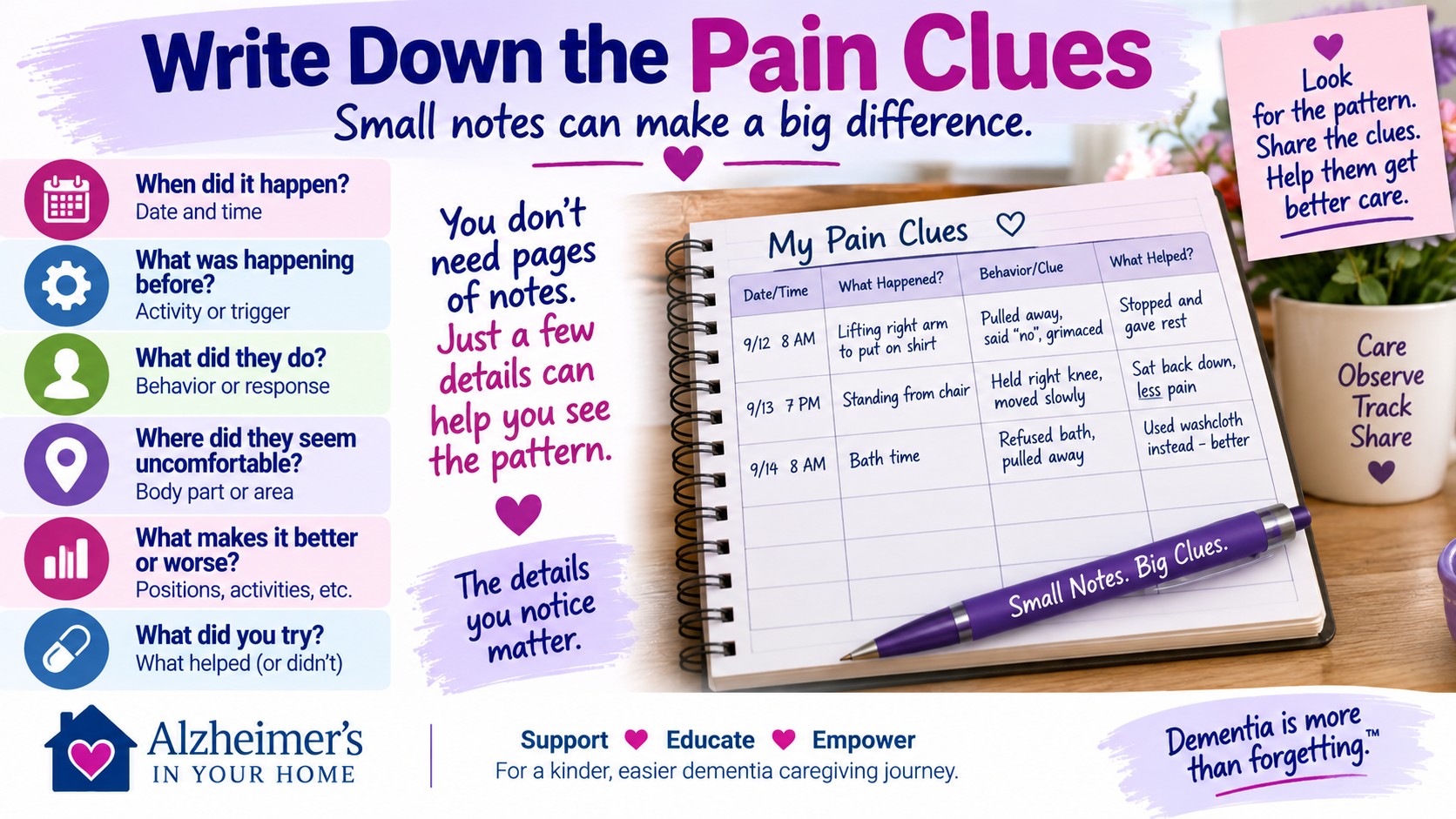
Then write it down.
What you tried + what happened afterward is another clue.
💜 “Every intervention is a clue.”
📒 See the Pattern Over Time
One painful moment may not tell you very much. Several observations over days or weeks may reveal a pattern.
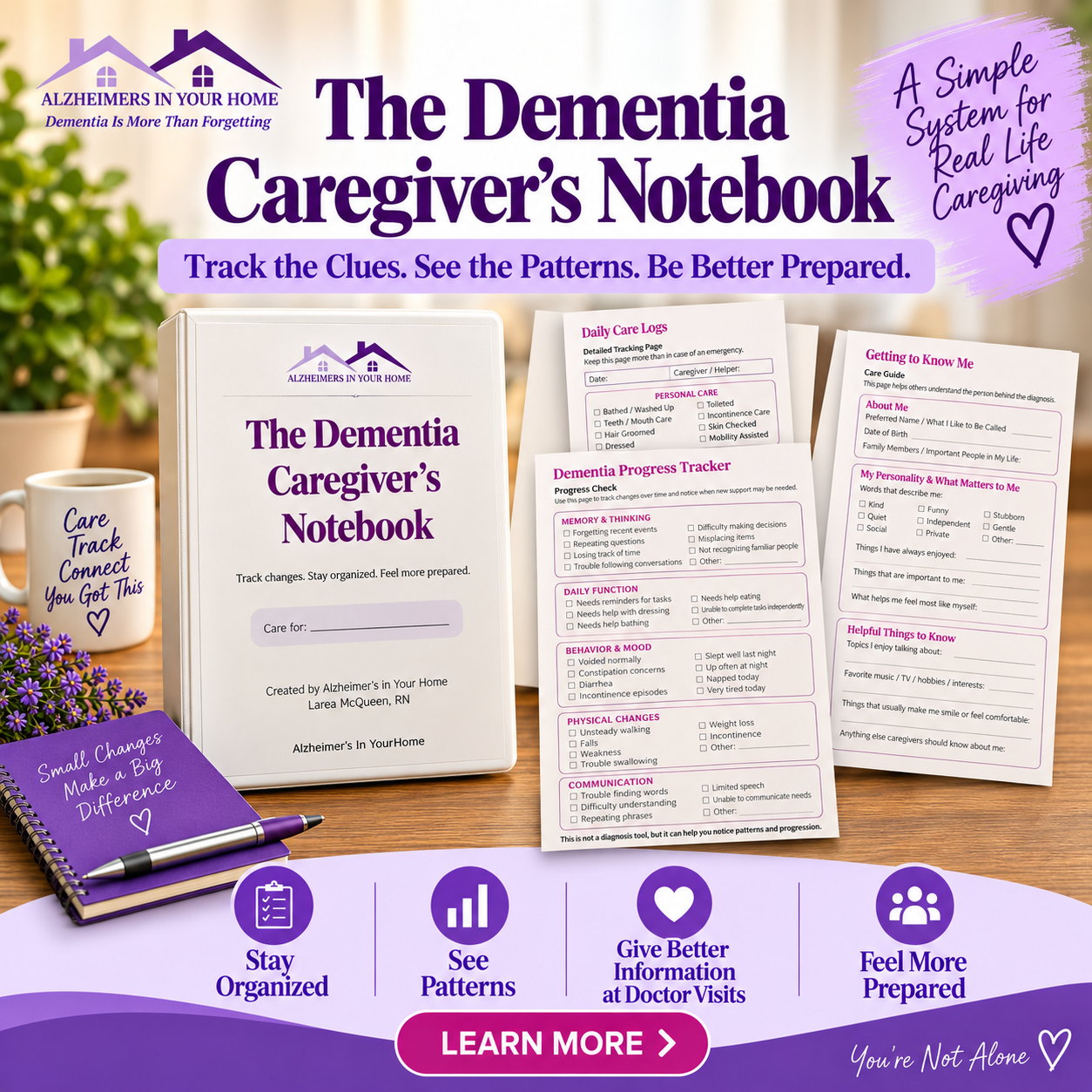
The Dementia Caregiver’s Notebook gives you one place to track pain, behaviors, medications, sleep, meals, bowel patterns and other changes you may need to share with the healthcare team.
🧰 Share the Pain Clues With the Healthcare Provider
When you contact the healthcare provider, specific details can make a big difference.
The free Dementia Caregiver Doctor Update Form can help you organize changes, concerns, and questions before an appointment.

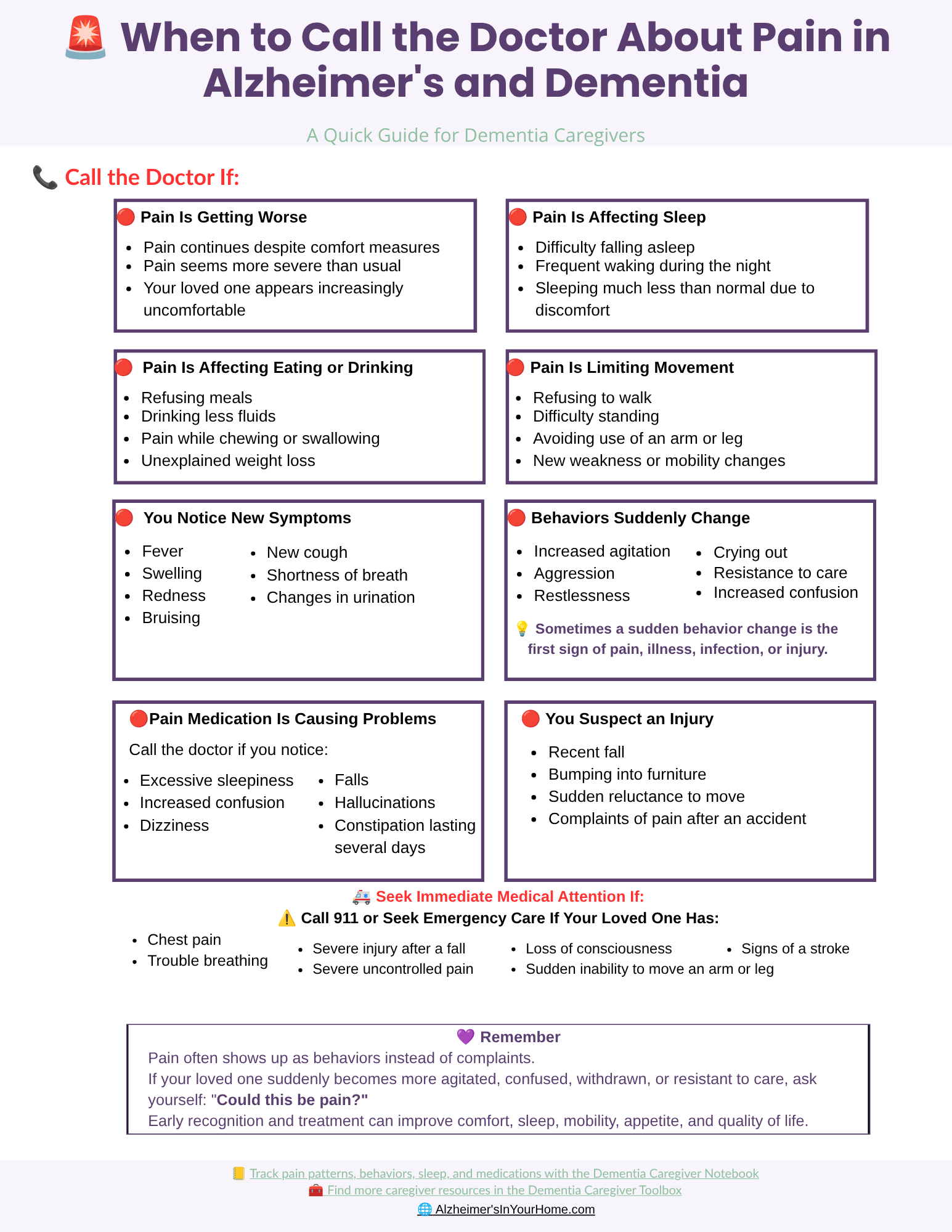
Step 6: Know When to Call the Healthcare Provider
Sometimes it’s difficult to know whether discomfort can be managed with simple comfort measures or whether your loved one needs medical attention.
Contact the healthcare provider if:
- Pain is worsening
- Pain interferes with sleep
- Pain affects eating or drinking
- Your loved one refuses to walk
- New symptoms appear
- Comfort measures are not helping
- You are unsure what is causing the pain
Frequently Asked Questions About Managing Pain in Dementia
❓How can I help someone with dementia who is in pain?
Start by trying to determine what may be causing the discomfort. Simple measures such as repositioning, rest, gentle movement, heat or cold when appropriate, massage, or a calming activity may help. New, unexplained, severe, or ongoing pain should be discussed with the healthcare provider.
❓ What pain medicine is safest for someone with dementia?
There isn’t one pain medicine that is safest for everyone. The best choice depends on the person’s health conditions, medications, kidney and liver function, type of pain, and other factors. Ask the healthcare provider or pharmacist which medication, dose, and schedule are appropriate for your loved one.
❓ Is Tylenol safe for someone with dementia?
Acetaminophen (Tylenol) is commonly used for mild to moderate pain, but it isn’t appropriate for everyone. It can also be included in more than one medication, making it possible to accidentally give too much. Ask the healthcare provider what amount and schedule are safe for your loved one.
❓Should pain medicine be given on a schedule if someone has dementia?
Sometimes. A person with dementia may no longer be able to recognize pain or ask for medicine when they need it. For ongoing pain, a healthcare provider may recommend a regular medication schedule rather than waiting for obvious signs of pain. Ask the provider whether scheduled medication is appropriate for your loved one.
❓How do I know if pain treatment is working when they can't tell me?
Watch their behavior. Are they moving more easily? Sleeping better? Eating better? Less agitated? More comfortable during bathing or dressing? Less likely to grimace, guard an area, or pull away? These changes can help you determine whether they are more comfortable.
❓Can untreated pain make dementia behaviors worse?
Pain and discomfort can contribute to agitation, restlessness, resistance to care, sleep problems, decreased activity, eating changes, and other behaviors. A new behavior shouldn’t automatically be blamed on dementia.
❓When should I call the healthcare provider about pain?
Contact the healthcare provider for new, unexplained, persistent, or worsening pain or when pain is interfering with walking, eating, sleeping, or daily care. Also contact them if you notice a significant change after starting or changing a medication. Serious symptoms or injuries may require urgent or emergency medical care.
❓What should I track when my loved one is in pain?
Write down when the problem happens, what was happening beforehand, where they seem uncomfortable, what they did, what made it worse, what you tried, and what helped. These details can reveal patterns and give the healthcare provider useful information.
Not sure whether your loved one is in pain?
Pain doesn’t always look like pain in dementia. Agitation, refusing care, eating less, sleep changes, or suddenly not wanting to walk may be clues.
🌿 Final Thoughts
Managing pain isn’t about eliminating every ache and pain.
It’s about improving comfort, preserving dignity, and helping your loved one enjoy the best quality of life possible.
Sometimes relief comes from medication.
Sometimes it comes from movement.
Sometimes it comes from a warm blanket, a favorite song, or a caring touch.
The important thing is to keep looking for ways to improve comfort.
Because when someone is more comfortable, everything else often becomes a little easier.
💜 “Comfort care isn’t giving up. It’s caring deeply about how someone feels.”