


Dehydration can be easy to miss in someone living with Alzheimer’s disease or another dementia.
Your loved one may not tell you, “I’m thirsty.”
They may not recognize that they are thirsty. They may forget to drink, have trouble finding or using their cup, or no longer know how to tell you what they need.
Sometimes, the first clue isn’t thirst at all.
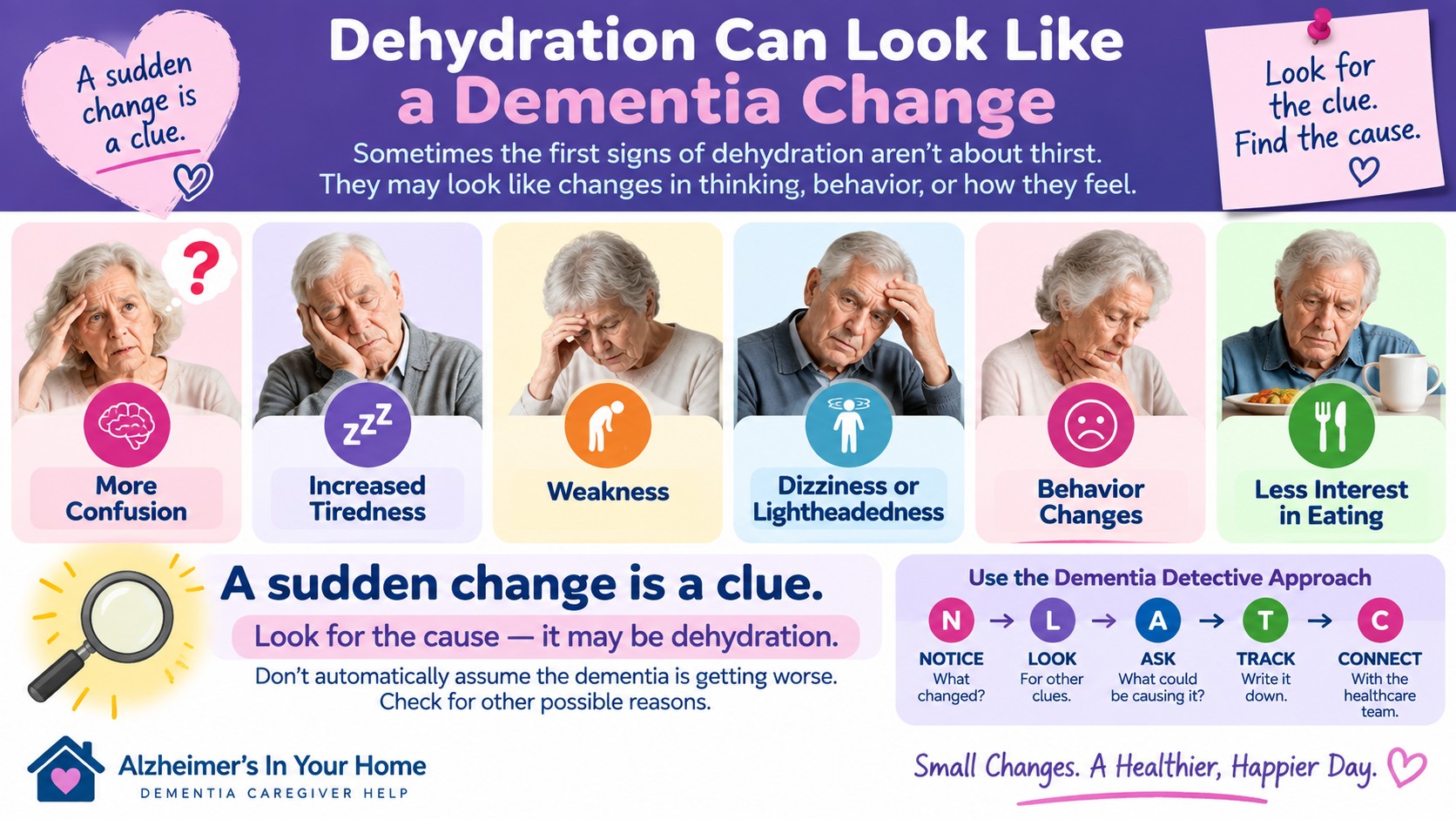
It may be more confusion, weakness, sleepiness, dizziness, constipation, or a change in behavior.
That is why caregivers need to know what to watch for.
Caregiver Pearl:
A sudden change doesn’t always mean the dementia suddenly got worse. It may be a clue that something else is going on.
Why Are People With Dementia at Higher Risk for Dehydration?
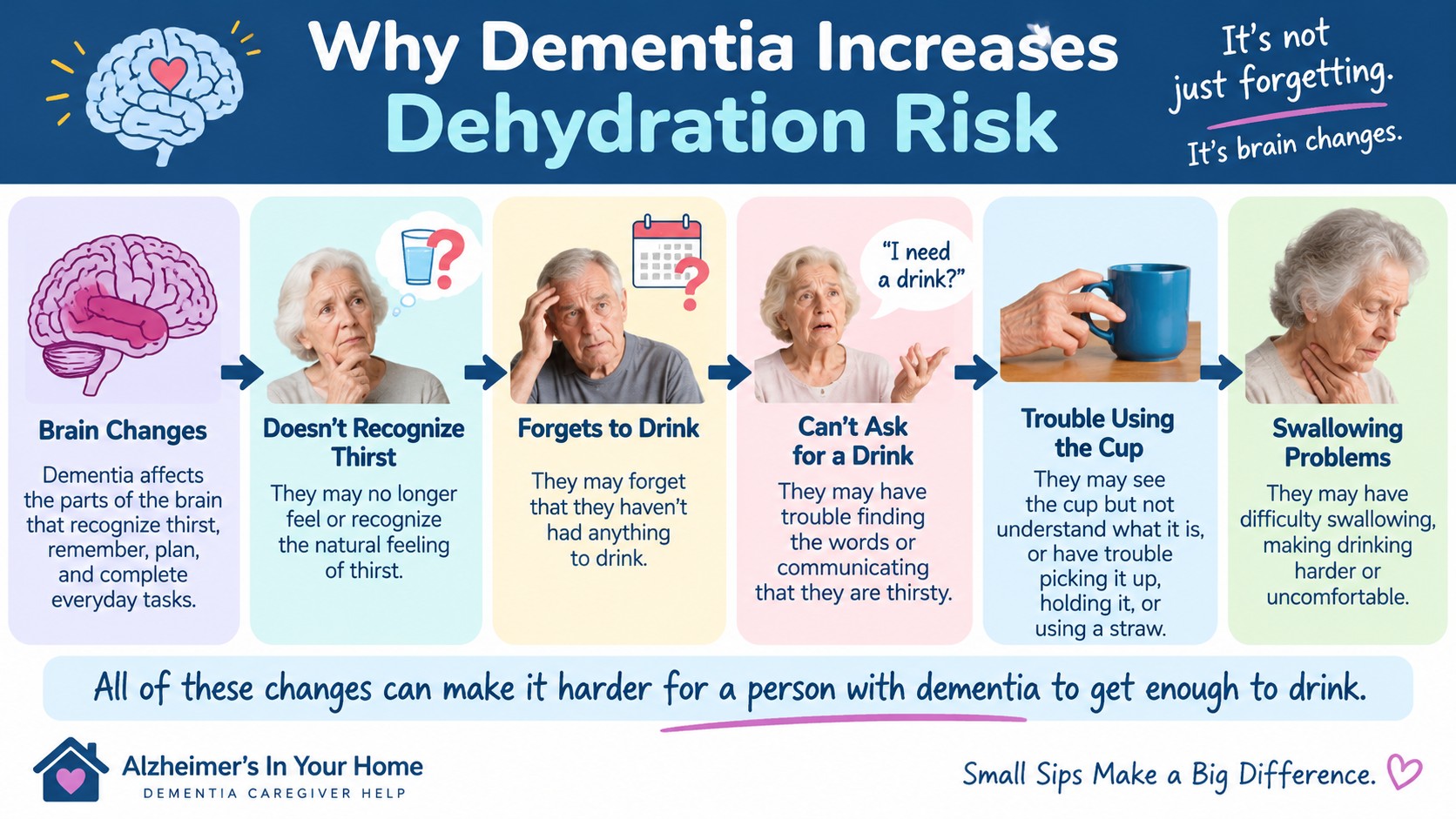
As dementia changes the brain, something as simple as getting a drink can become much more difficult.
Your loved one may:
- Not recognize the feeling of thirst
- Forget that they haven’t had anything to drink
- Forget where drinks are kept
- See a glass but not understand what it is
- Have trouble picking up or holding a cup
- Have difficulty using a straw
- Have trouble asking for a drink
- Refuse drinks they once enjoyed
- Have difficulty swallowing
- Depend on someone else to offer and prepare drinks
Age can add another challenge. Older adults may not feel thirst as strongly as younger adults.
Certain illnesses and medications can also increase the risk of dehydration.
Vomiting, diarrhea, fever, hot weather, increased sweating, and medications that increase urination can all cause the body to lose more fluid.
💜 Dementia Is More Than Forgetting
Your loved one may not simply forget to drink.
Their changing brain may no longer correctly recognize thirst, understand what to do about it, or complete all the steps needed to get a drink.
What Does Dehydration Look Like in Someone With Dementia?
Don’t depend on your loved one to tell you they are thirsty.
Instead, watch for changes.
Possible signs of dehydration include:
- Dry mouth or dry lips
- Dark or strong-smelling urine
- Urinating less often than usual
- Increased tiredness
- Weakness
- Dizziness or lightheadedness
- Headache
- Increased confusion
- Sleepiness or being less alert than usual
One of the most important things for dementia caregivers to remember is that a change from your loved one’s normal can be a clue.
A Sudden Change Is a Clue
Imagine your dad is usually able to walk into the kitchen for breakfast.
Today, he seems much more tired. He’s unsteady when he stands up. He doesn’t want breakfast, and he seems more confused than he did yesterday.
It would be easy to think:
“His dementia is getting worse.”
But don’t stop there.
Put on your Dementia Detective hat.
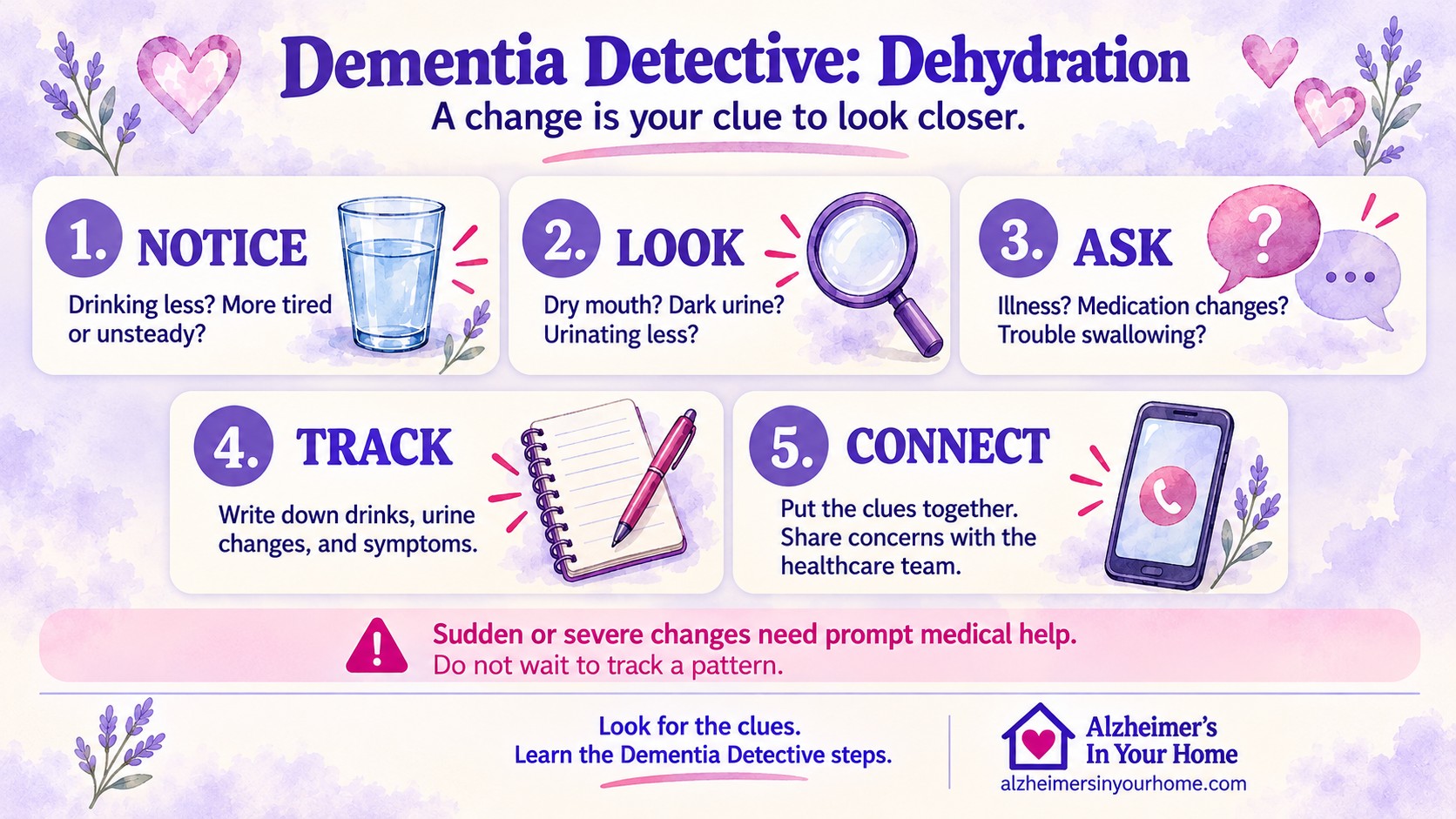
NOTICE
What changed?
Dad is weaker, sleepier, more confused, and unsteady.
LOOK
Look for other clues.
Has he been drinking?
Is his mouth dry?
Is his urine darker than usual?
Is he urinating less?
Has he had vomiting or diarrhea?
Has the weather been unusually hot?
ASK
What could be contributing to the change?
Is he sick?
Could he be in pain?
Was a medication recently started or changed?
Could he be having trouble swallowing?
TRACK
Write down what you are seeing.
Track how much he is drinking, changes in urination, symptoms, behaviors, and anything else that seems different.
CONNECT
If you are concerned about the changes you’re seeing, connect with his healthcare provider and share what you’ve noticed.
NOTICE → LOOK → ASK → TRACK → CONNECT
A sudden change in confusion or behavior should not automatically be blamed on dementia.
🔎 Become a Dementia Detective
Your loved one may not be able to explain what feels wrong. A change in their drinking, bathroom habits, or behavior may be your first clue.
NOTICE → LOOK → ASK → TRACK → CONNECT
These steps can help you look beyond the change, write down useful details, and share what you’re seeing with the healthcare team.
Want to learn how to use this approach with other everyday caregiving challenges? I’ll walk you through the Dementia Detective steps, with examples to help you get started.
Don’t Wait for Them to Ask for a Drink
This is one of the biggest changes caregivers may need to make.
In the past, your loved one probably got a drink when they were thirsty.
Dementia can take away that ability.
Instead of waiting for them to ask, offer drinks regularly throughout the day.
Try connecting drinks to things that already happen:
Wake up → Drink
Breakfast → Drink
Morning medications → Drink
Lunch → Drink
Afternoon snack → Drink
Dinner → Drink
Building drinks into the daily routine means your loved one doesn’t have to remember.
How Much Should Someone With Dementia Drink?
A general goal often used is around 6–8 cups or glasses of fluid throughout the day.
But this is not the right amount for everyone.
Some people with heart disease, kidney disease, or other medical conditions may need their fluids limited or have different recommendations.
Ask your loved one’s healthcare provider how much fluid is appropriate for them if you are unsure.
The goal isn’t to make someone drink a huge glass of water at once.
Small amounts offered frequently throughout the day may be much easier.
Water Isn’t the Only Way to Get Fluids
If your loved one doesn’t like drinking plain water, don’t turn hydration into a battle over water.
Other choices may include:
- Milk
- Flavored water
- Juice
- Smoothies
- Tea
- Coffee
- Soup or broth
- Popsicles
- Yogurt
- Gelatin
- Fruit with a high water content
Think about what your loved one enjoys.
Someone who refuses a glass of water may happily drink a favorite cup of tea or eat a bowl of soup.

Caregiver Pearl:
The best drink isn’t always water. Sometimes it’s the drink your loved one will actually drink.
If their healthcare provider has given them dietary or fluid restrictions, follow those recommendations.
Make Drinking Easier
Before assuming your loved one simply doesn’t want to drink, look at the task itself.
Can they see the cup?
Can they reach it?
Can they pick it up?
Is it too heavy?
Can they figure out how to drink from it?
Would a straw help?
Would a different cup be easier?
Dementia can make everyday objects harder to recognize and use.
Try:
- Keeping a drink where it is easy to see
- Handing the drink directly to them
- Using a lightweight cup
- Trying a clear glass so they can see what is inside
- Trying a brightly colored cup if it helps draw their attention
- Offering a straw if they can safely use one
- Sitting down and having a drink with them
- Offering small amounts more often
- Offering familiar favorite drinks
- Giving simple reminders such as, “Here’s your tea.”
Sometimes changing how you offer the drink makes all the difference.
An Empty Cup Doesn’t Always Mean They Drank It
This is an important caregiver clue.
You gave Mom a full glass of water.
An hour later, the glass is empty.
Did she drink it?
Maybe.
But she may also have spilled it, poured it into the sink, moved it somewhere else, or someone else may have emptied it.
If hydration is becoming a concern, don’t rely only on empty glasses.
Pay attention to what your loved one is actually drinking.
This becomes especially important when several family members or caregivers are helping throughout the day.
Track the Pattern
You don’t need pages of notes.
Keep it simple.
Write down:
- What drinks were offered
- Approximately how much was consumed
- Times your loved one refused drinks
- Changes in urine
- Vomiting or diarrhea
- Fever or illness
- Increased confusion
- Weakness or dizziness
- Swallowing problems
- What worked
After a few days, you may begin to see a pattern.
Maybe Mom drinks much better from her favorite coffee mug.
Maybe Dad drinks very little in the morning but accepts drinks in the afternoon.
Maybe drinking suddenly dropped after a medication change.
Those details can help you make changes at home and give the healthcare provider better information.
💜 Track the Clues. See the Patterns.
When you’re caring for someone with dementia, it can be difficult to remember every change you notice.
The Dementia Caregiver’s Notebook gives you one place to track meals, medications, symptoms, behaviors, bowel movements, sleep, vital signs, personal care, and other changes you may need to discuss with the healthcare team.

Eating and Drinking Problems Often Go Together
If your loved one is drinking less, take a look at what is happening with eating too.
Are they eating less?
Have their food preferences changed?
Are they having trouble chewing?
Do they cough while eating or drinking?
Are meals taking much longer?
Are they losing weight?
Eating and drinking are both complex tasks. As dementia progresses, brain changes can make these everyday activities much more difficult.
READ: EATING PROBLEMS IN DEMENTIA — WHAT CAREGIVERS NEED TO KNOW
Watch for Swallowing Problems
Sometimes drinking less isn’t about thirst or memory.
Drinking may have become difficult or frightening.
Watch for:
- Coughing while drinking
- Choking
- A wet or gurgly voice after swallowing
- Holding liquid in the mouth
- Taking a very long time to swallow
- Refusing drinks
- Frequent throat clearing
- Difficulty managing food or liquids
If you notice new swallowing problems, contact your loved one’s healthcare provider.
They may recommend a swallowing evaluation by a speech-language pathologist.
Do not automatically thicken liquids or make major changes in food or drink consistency without professional guidance.
When Should You Call the Healthcare Provider?
Contact your loved one’s healthcare provider if you notice a concerning change, especially if they:
- Are drinking much less than usual
- Are urinating much less than usual
- Have very dark urine
- Are unusually weak or dizzy
- Become much more confused than usual
- Are much sleepier or less active
- Have ongoing vomiting or diarrhea
- Cannot keep fluids down
- Develop new swallowing problems
- Have other sudden changes that concern you
Severe dehydration can become a medical emergency.
Seek urgent medical help if your loved one becomes difficult to wake, faints, cannot safely drink or keep fluids down, develops severe weakness or severe confusion, or you believe they may be seriously dehydrated.
When in doubt, contact their healthcare provider for guidance.
Hydration in Late-Stage Dementia
Eating and drinking often change as dementia reaches the later stages.
A person may eat and drink less, sleep more, have difficulty swallowing, or no longer show the same interest in food and drinks.
This can be very upsetting for families.
If your loved one is in late-stage dementia, hospice care, or approaching the end of life, talk with their healthcare or hospice team about what you are seeing.
The goal may begin to shift from trying to reach a certain number of ounces each day to focusing more on comfort, safe swallowing, mouth care, and your loved one’s individual needs and wishes.
These decisions are personal and should be made with guidance from the healthcare team.
The Big Takeaway for Caregivers
Dehydration isn’t always obvious in someone living with dementia.
Your loved one may never tell you:
“I’m thirsty.”
Instead, you may notice that something just seems different.
More confused.
More tired.
More unsteady.
Less interested in eating.
Urinating less.
That is your clue to look a little deeper.
Don’t automatically assume every new change is dementia.
NOTICE the change.
LOOK for clues.
ASK what could be causing it.
TRACK what you see.
CONNECT with the healthcare team when needed.
Sometimes behavior is the first way a person with dementia tells us something isn’t right.
💜 Noticing changes in your loved one?
Get my FREE guide, “Something Has Changed—Now What?” Learn how to look for clues and know where to start. You’ll also receive my weekly caregiver tips.
.
More Dementia Caregiver Help
🍽️ Eating Problems in Dementia
Learn why dementia can change appetite, eating, food preferences, and mealtimes—and what caregivers can do to help.
🧰 Free Dementia Caregiver Resources
Find free checklists, printables, forms, and caregiver guides to help you manage dementia care at home.
VISIT THE CAREGIVER SUPPORT TOOLBOX
📒 Dementia Caregiver’s Notebook
Keep important dementia care information together and track the changes and patterns you may need to share with the healthcare team.
LEARN ABOUT THE CAREGIVER’S NOTEBOOK
🎓 Understanding Dementia
Learn what dementia is doing to the brain, why behaviors happen, how dementia progresses, and ways to become a better Dementia Partner.
This information is for caregiver education and is not a substitute for medical advice. Individual fluid needs and medical recommendations can vary. Contact your loved one’s healthcare provider with questions or concerns about their health.
Larea McQueen, RN
Over 30 years of nursing experience helping families understand and care for people living with dementia.



0 Comments